Smartphone Screen Protector Market Revenue Opportunities and Gross Margin Analysis

Smartphone Screen Protector Industry Overview

The global smartphone screen protector market size is expected to reach USD 84.96 billion by 2030, according to a new report by Grand View Research, Inc. It is expected to expand at a CAGR of 6.8% from 2022 to 2030. The demand for smartphone screen protectors is projected to be influenced by the rising concerns over the safety of smartphones from screen damage caused by high-impact drops and scratches over the forecast period.

U.S. smartphone screen protector market size, by price range, 2020 - 2030 (USD Billion)

A large number of individuals use smartphones all across the world. Because of their increasing popularity, a variety of add-on devices have been developed to improve the overall functionality of smartphone devices. One such item is a smartphone screen protector, which, as the name implies, shields the phone's screen against scratches and other forms of damage. In the coming years, technological improvements in product development, such as the increased use of 3D technology, which improves user experience, are expected to provide profitable prospects for smartphone screen protector makers.

Smartphone Screen Protector Market Segmentation

Grand View Research has segmented the global smartphone screen protector market on the basis of material, price range, and region:

Based on the Material Insights, the market is segmented into Tempered Glass, Polyethylene Terephthalate, and Thermoplastic Polyurethane

  • The tempered glass segment accounted for the largest revenue share of over 90.0% in 2021. The segment growth can be attributed to the benefits of employing glass, as opposed to PT and TPU.
  • The oleophobic layer on tempered glass reduces fingerprints and provides the phone the sense of real glass while in use. These glasses feature superior light transmittance than other options, reduce glare, and scatter reflections.
  • The market trends will be fueled by mobile phone users' consistent adoption of tempered glass.
  • The thermoplastic polyurethane segment is projected to register a CAGR of 5.4% from 2022 to 2030. Among the benefits of using this type of screen protector is the fact that it's resistant to scratches, oil buildup, and grease.

Based on the Price Range Insights, the market is segmented into Below USD 175, USD 175 - 250, USD 250 - 450, USD 450 - 550, USD 550 - 700, and Above USD 700

  • The USD 550 - 700 segment dominated the market and held a revenue share of over 20.0% in 2021. It is also expected to expand at the fastest CAGR from 2022 to 2030.
  • The below USD 175 segment is anticipated to grow over the forecast period due to the increased demand from low-income people.
  • The above USD 700 segment is expected to register a significant CAGR from 2022 to 2030. The segment is expected to rise to over 475 million units by 2024 due to the rising demand for premium smartphones over the projected period.
  • Furthermore, increased concerns over the safety of high-priced cellphones are predicted to fuel product growth.

Smartphone Screen Protector Regional Outlook

  • North America
  • Europe
  • Asia Pacific
  • South & Central America
  • Middle East & Africa (MEA)

Key Companies Profile & Market Share Insights

The market includes both international and domestic participants. Key market players focus on strategies such as innovation and new products to enhance their portfolio offering in the market. For instance, in September 2021, Belkin, a global consumer electronics leader, unveiled two new screen protectors for the iPhone 13 Pro, iPhone 13 Pro Max, iPhone 13, and iPhone 13 small. Belkin's extensive screen protection portfolio for iPhone includes the UltraGlass Screen Protector and Anti-Glare Screen Protector.

Some prominent players in the global Smartphone Screen Protector market include:

  • IntelliARMOR
  • AZ Infolink Private Limited
  • Halloa Enterprise Co. Ltd.
  • ZAGG Inc.
  • Belkin International, Inc.
  • Corning Inc.
  • Ryan Technology Co. Ltd.
  • NuShield Inc.
  • Xtreme Guard
  • Free S.speed International Co., Ltd.
  • Clarivue
  • Jiizii Glass
  • Protek
  • FeYong Digital Technology Limited
  • Shenzhen Yoobao Technology Co. Ltd.

Order a free sample PDF of the Smartphone Screen Protector Market Intelligence Study, published by Grand View Research.
Skin Care Products Market Application Outlook and Research Report

Skin Care Products Industry Overview

The global skin care products market size is expected to reach USD 196.20 billion by 2030, according to a new report by Grand View Research, Inc. It is expected to expand at a CAGR of 4.6% from 2022 to 2030. The rising concerns over skin problems are driving the skincare products industry. The growing demand for concern-specific skincare products such as face creams, body lotions, shaving lotions and creams, and face sunscreens is likely to fuel the overall demand.

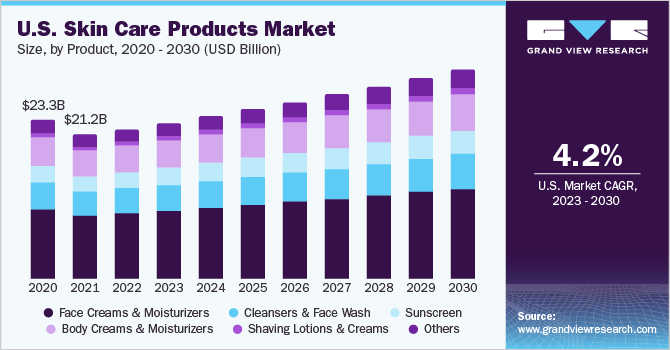
U.S. skin care products market size, by product, 2020 - 2030 (USD Billion)

Rising awareness regarding the various benefits of using skincare products has resulted in a rise in their demand over the last few years. Moreover, an inclination toward natural and organic skincare products is observed, making it a major sector in the cosmetics and wellness industry. Organic products are derived from natural resources and are free from harmful chemicals.

Skin Care Products Market Segmentation

Grand View Research has segmented the global skin care products market on the basis of gender, product, distribution channel, and region:

Based on the Gender Insights, the market is segmented into Male and Female

  • The female segment held the largest revenue share of over 60.0% in 2021 and is expected to maintain its lead over the forecast period.
  • Women are increasingly adding personal grooming products to their daily routines to enhance their confidence and appearance, which is significantly contributing to the segment growth.
  • The male segment is projected to register the fastest CAGR of 5.0% from 2022 to 2030. The growing awareness among males regarding personal hygiene and regular grooming, increased product launches, celebrity endorsements, and rising disposable income are the major factors fuelling the expansion of the men's skincare

Based on the Products Insights, the market is segmented into Face Creams & Moisturizers, Cleansers & Face Wash, Sunscreen, Body Creams & Moisturizers, Shaving Lotions & Creams, and Others

  • Face creams and moisturizers held the largest revenue share of over 40.0% in 2021 and are expected to maintain their lead over the forecast period.
  • Furthermore, with a rising number of consumers opting for cruelty-free skincare products due to their increased consciousness about animal welfare and the environment, the demand for vegan or blends of plant-based ingredients in skincare products has increased.
  • The shaving lotions and creams segment is projected to register the fastest CAGR of 5.5% from 2022 to 2030. The growth is mainly owing to an increasing number of people becoming a part of corporate culture and giving importance to personal grooming.

Based on the Distribution Channel Insights, the market is segmented into Supermarkets & Hypermarkets, Convenience Stores, Pharmacy & Drugstore, Online, and Others

  • The supermarkets and hypermarkets segment held the largest revenue share of over 40.0% in 2021. Supermarkets and hypermarkets offer significant advantages to consumers, such as freedom of selection, lower prices, and high visibility of international brands, which makes them a suitable platform for all types of customers.
  • The convenience stores channel is projected to register a CAGR of 4.9% from 2022 to 2030. Some customers choose to buy these products from such stores because of the ease of purchase, their extensive network, and the ability to purchase the same products on a regular basis. Such stores accommodate more cosmetic and skin-oriented products owing to the growing consumer preference for the same.

Skin Care Products Regional Outlook

  • North America
  • Europe
  • Asia Pacific
  • South & Central America
  • Middle East & Africa (MEA)

Key Companies Profile & Market Share Insights

The market is characterized by the presence of a few established players and new entrants. Companies have been expanding their product portfolios by incorporating new and innovative skin care products to widen their consumer base. For instance, in July 2021, Shiseido Co. Ltd. announced the launch of ULTIMUNE Power Infusing Concentrate III in Japan, which is a renewal of the iconic serum ULTIMUNE Power Infusing Concentrate N. The product will be available in approximately 380 stores nationwide and on its beauty website watashi+.

Some prominent players in the global Skin Care Products market include:

  • L’Oréal S.A.
  • Beiersdorf AG
  • Shiseido Co., Ltd.
  • Procter & Gamble (P&G)
  • Unilever
  • Johnson & Johnson Services, Inc.
  • Avon Products, Inc.
  • Coty Inc.
  • Colgate-Palmolive Company
  • Revlon

Order a free sample PDF of the Skin Care Products Market Intelligence Study, published by Grand View Research.
Chilled & Deli Foods Market Growth Drivers, Vendor Landscape and Raw Material Outlook

Chilled & Deli Foods Industry Overview

The global chilled & deli foods market is expected to reach USD 350.9 billion by 2030, registering at a CAGR of 5.5% from 2022 to 2030, according to a new report by Grand View Research, Inc.Rising preference of consumers for chilled & deli products along with consumer focus in gaining knowledge & desire to understand various nutritional contents is one of the key trends driving the market. A busy lifestyle coupled with shifting consumer preference towards prepared meals, owing to the convenience offered by them, is poised to remain one of the key trends stoking market growth in the forecast period.

U.S. chilled & deli foods market size, by product 2020 - 2030(USD Billion)

Manufacturers are launching a wide range of chilled & deli foods in the healthier segment with claims vegan gluten and dairy-free in order to cater to the rising customer demand, which is increasing the scope of chilled & deli foods in the global market. For instance, in July 2021 Veroni, a manufacturer of Italian cured meats and specialties launched its new snack line offering a selection of authentic Italian salami with provolone cheese, dried fruit, and breadsticks.

Chilled & Deli Foods Market Segmentation

Grand View Research has segmented the global chilled & deli foods market based on the product, meal-type, distribution channel, and region.

Based on the Product Insights, the market is segmented into Meat & Meat Alternatives, Cheese, Bread & Bakery Products, Prepared Meals & Sides, Sauces, Dips & Hummus, and Others

  • The meat & meat alternatives segment held the largest market share in 2021 and is expected to maintain its dominance during the forecast period.
  • The prepared meal & sides segment is projected to register the fastest CAGR from 2022 to 2030. Prepared meals are likely to gain traction amongst consumers because of the convenience and longer shelf-life.
  • The inclination of the consumers, especially millennials toward prepared meals due to hectic lifestyles is likely to bode well with the growing demand.
  • Major brands operating in the segment are likely to capitalize on this product segment to obtain a larger market share by launching new prepared meals.

Based on the Type Insights, the market is segmented into Conventional and Organic

  • The conventional segment held a larger market share in 2021 and is expected to maintain its dominance over the forecast period.
  • As demand for chilled & premium foods increases amongst the consumers, the conventional segment is likely to dominate the supermarket shelves in the major countries such as the U.S. and U.K.
  • Strategic partnerships, product launches, and expansion strategies in the conventional segment by major players in the market likely to bode well with the future market growth.
  • However, the organic type segment is projected to register faster growth during the forecast period.

Based on the Distribution Channel Insights, the market is segmented into Supermarkets & Hypermarkets, Convenience Stores, Online, and Others

  • Supermarkets & hypermarkets distribution channels made the largest contribution to the global market in 2021.
  • The supermarket in the U.S. includes Wegman’s, Fresh Thyme, HEB, Whole Foods, Giant Food, Ralph’s stores, and more offering plant-based meats, deli sandwiches made from real vegetables, and protein-rich grains.
  • An online distribution channel is anticipated to grow at a higher rate during the forecast period. Delicatessen brands have embraced online distribution channels and many deli brands now sell products online.
  • The virtual platform provides groceries such as bread, ready meals, and delis and helped consumers during the restrictions on retail and restaurants. Such initiatives are likely to bode well with the future segment growth.

Chilled & Deli Foods Regional Outlook

  • North America
  • Europe
  • Asia Pacific
  • South & Central America
  • Middle East & Africa (MEA)

Key Companies Profile & Market Share Insights

The market holds immense potential for international as well as regional players. Emerging entrants, especially in developing countries, are expected to gain increased opportunities to enter the market. The rising establishment of government initiatives and increasing foreign investments in developing the sector, mainly in China and India, are expected to boost industry growth in the coming years. Overall, the global market is highly competitive and dependent on technological advancements along with product development. Industry players strive to achieve the local taste and gain a competitive advantage over others. The presence of local players poses a significant threat to large multinational companies in terms of product quality and the price offered to customers.

Some prominent players in the global Chilled & Deli Foods market include:

  • General Mills, Inc.
  • PepsiCo
  • The Kraft Heinz Company
  • Nestlé
  • The Kellogg Company
  • Unilever
  • Calbee
  • Intersnack Group GmbH & Co. KG
  • Conagra Brands, Inc.
  • ITC Limited

Order a free sample PDF of the Chilled & Deli Foods Market Intelligence Study, published by Grand View Research.
Athletic Footwear Market Size, Challenges Analysis, Porter’s Five Forces Study and Forecast

Athletic Footwear Industry Overview

The global athletic footwear market size is expected to reach USD 196.1 billion by 2030, according to a new report by Grand View Research, Inc. It is expected to expand at a CAGR of 4.9% from 2022 to 2030. Athletic shoes have also been tailored for the casual market, and are popular, especially with young people. Athletic footwear is built for high performance and is considered a part of an athlete’s gear along with clothing and equipment. Athletic shoes provide sports-specific levels of cushioning, flexibility, stability, traction, and durability. Cushioning minimizes the force of impact.

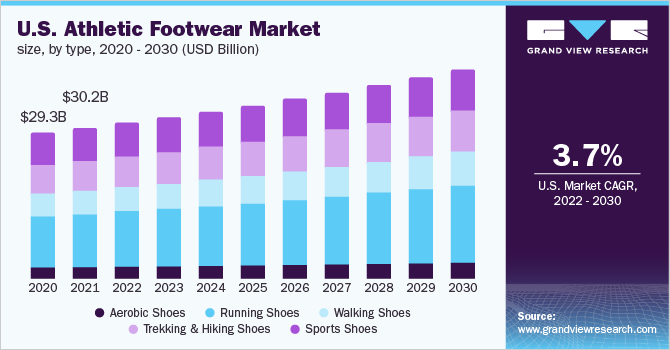
U.S. athletic footwear market size, by type, 2020 - 2030 (USD Billion)

Increasing awareness regarding the health benefits of sports and fitness activities that helps to reduce the risks of various illnesses, such as obesity, depression, and diabetes, is expected to fuel the growth of the market. Moreover, changing consumer lifestyles, a rise in the disposable income of consumers, and the growing retail e-commerce sector worldwide are some other factors expected to boost the market growth during the forecast period.

Athletic Footwear Market Segmentation

Grand View Research has segmented the global athletic footwear market on the basis of type, end user, and region:

Based on the Type Insights, the market is segmented into Aerobic Shoes, Running Shoes, Walking Shoes, Trekking & Hiking Shoes, and Sports Shoes

  • The running shoe segment dominated the market in 2021 with a revenue share of over 35.0%, which can be attributed to the daily usage of running shoes and the availability of these shoes in a wide range of prices ranging from affordable athletic shoes to highly luxurious athletic shoes.
  • The sports shoe segment has been further reviewed based on prominent sports in each of the regions.
  • The trekking and hiking shoe segment is anticipated to exhibit a healthy growth rate during the forecast period owing to technological advancements that have ensured more comfort and flexibility for hikers.

Based on the End-user Insights, the market is segmented into Men, Women, and Children

  • The men's segment held the largest revenue share of over 55.0% in 2021. The segment will continue to dominate the market until 2030.
  • Women’s footwear is catching up gradually as the popularity of sports continues to grow among women, particularly in markets previously unexplored.
  • In addition, the overall level of awareness regarding fitness among women is considerably high in advanced countries as compared to developing countries.
  • However, the scenario is changing gradually in developing countries in line with efforts being carried out by respective countries’ governments to encourage women to participate actively in sports and other fitness-related activities. This is likely to boost the sales of women’s athletic footwear considerably in emerging markets.

Athletic Footwear Regional Outlook

  • North America
  • Europe
  • Asia Pacific
  • Central & South America
  • Middle East & Africa (MEA)

Key Companies Profile & Market Share Insights

The market includes both international and domestic participants. Key market players focus on strategies such as innovation and new product launches to enhance their portfolio offering in the market. In March 2021, a Kanye west inspired line of sneakers was launched by Adidas as the Yeezy series 450 as a sequel to Yeezy 350 series. In June 2021, Kiko Kostadinov’s ASICS GEL-Quantum Levitrack was launched, with a GEL midsole.

Some prominent players in the global Athletic Footwear market include:

  • Adidas AG
  • ASICS Corporation
  • Fila Inc.
  • Under Armour, Inc.
  • Lotto Sport Italia S.p.A
  • New Balance Athletics, Inc.
  • Vans, Inc.
  • Nike, Inc.
  • Puma SE
  • Reebok International Ltd.

Order a free sample PDF of the Athletic Footwear Market Intelligence Study, published by Grand View Research.
Organic Skin Care Market Driver, Restraint, Challenges and Opportunities Study

Organic Skin Care Industry Overview

The global organic skin care market size is expected to reach USD 21.16 billion by 2030, registering a CAGR of 8.9% from 2022 to 2030, according to a new report by Grand View Research, Inc. Rising consumer inclination toward non-synthetic and herbal beauty & skin care products coupled with growing utilization of environmentally sustainable products is expected to fuel the market growth in the forthcoming years.

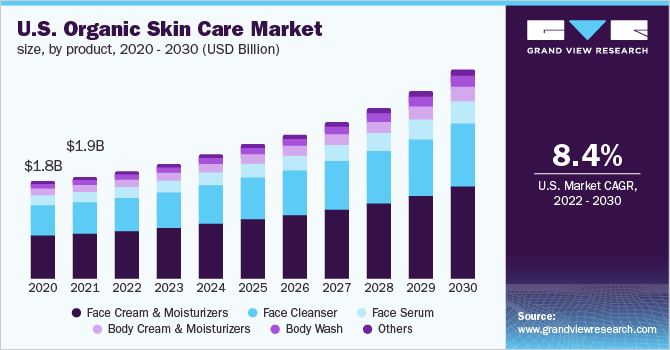
U.S. Organic Skin Care Market size, by product, 2020 - 2030 (USD Billion)

Rising consumer awareness regarding the potential impact of organic skin care products on health and the environment has augmented the sale of these products in the past few years. Furthermore, it reduced the consumption of skincare products with harmful chemicals including aluminum salts, parabens and phthalates are allowing companies to manufacture products with organic ingredients. The rise in this trend coupled with the consumer shift toward sustainable and healthy skin care products will drive the market in the forecast period.

Organic Skin Care Market Segmentation

Grand View Research has segmented the global organic skin care market based on product, distribution channel, and region:

Based on the Product Insights, the market is segmented into Face Cream & Moisturizers, Face Cleanser, Face Serum, Body Cream & Moisturizers, Body Wash, and Others

  • The face cream & moisturizers segment held the largest market share of more than 49.4% in 2021 and is expected to maintain dominance over the forecast period.
  • The face serum segment is projected to register the fastest growth during the forecast period with a CAGR of 10.0% from 2022 to 2030.
  • Organic face serums contain active ingredients namely grapeseed oil, mulethi, ashwagandha, and walnut that help fight the above-mentioned skin issues and even our skin tone. Owing to the benefits offered by these facial serums, the sale of products will witness a rise in the forthcoming years.

Based on the Distribution Channel Insights, the market is segmented into Supermarket/Hypermarket, Pharmacy & Drugstore, Online, and Others

  • The hypermarket/supermarket was a larger distribution channel with a revenue share of around 43.9% in 2021.
  • The majority of the brands launch their products through supermarket chains such as Walmart and Target to reach maximum customers.
  • The online channel is anticipated to register a rapid CAGR of 9.2% from 2022 to 2030. E-commerce offers benefits to local as well as regional players by allowing a wider consumer reach.

Organic Skin Care Regional Outlook

  • North America
  • Europe
  • Asia Pacific
  • Central & South America
  • Middle East & Africa (MEA)

Key Companies Profile & Market Share Insights

The market is growing with fragmented key players across regions, where new entrants are launching products keeping sustainability and increasing awareness regarding non-synthetic skin care products in mind. Nowadays, beauty regime products with organic ingredients appeal the most to consumers, thus, manufacturers are focused on launching products with these attributes.

Some prominent players in the global Organic Skin Care market include:

  • Shiseido Company Limited
  • Natura & Co.
  • The Estee Lauder Companies
  • Yves Rocher
  • True Botanicals
  • Tata Harper
  • The Hain Celestial Group
  • Weleda AG
  • Arbonne International
  • Purity Cosmetics (100% Pure)

Order a free sample PDF of the Organic Skin Care Market Intelligence Study, published by Grand View Research.
Energy Drinks Market COVID-19 Impact Insights, Vendor Landscape and End-Use Outlook by 2030

Energy Drinks Industry Overview

The global energy drinks market size is expected to reach USD 177.58 billion by 2030, according to a new report by Grand View Research, Inc. It is expected to expand at a CAGR of 8.3% from 2022 to 2030. Consumption of energy drinks has been increasing drastically in recent years, particularly among adolescents and young adults, as they remain one of the most popular functional beverages in the market that offer consumers more physical and mental energy, through ingredients such as caffeine, taurine, guarana, ginseng, and B vitamins.

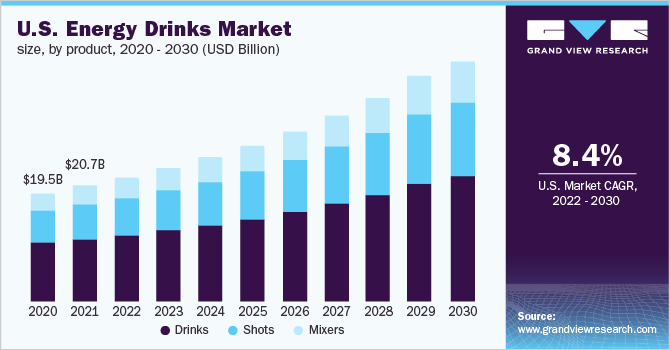
U.S. energy drinks market size, by product, 2020 - 2030 (USD Billion)

Manufacturers recently have shifted their target consumer focus from athletes to young people, which has been driving the product consumption. According to the National Library of Medicine, in the U.S., energy drinks are the second most common dietary supplement used by young people; about 30% consume energy drinks on a regular basis. Such trends are expected to drive the market demand.

Energy Drinks Market Segmentation

Grand View Research has segmented the global energy drinks market on the basis of product, type, packaging, distribution channel, and region:

Based on the Product Insights, the market is segmented into Drinks, Shots, and Mixers

  • The drinks segment held the largest revenue share of over 50.0% in 2021 and is expected to maintain its lead over the forecast period.
  • Consumers have the liberty to drink these beverages at work, after exercising, and during leisure activities, as they are functional in nature, which drives the product demand.
  • The mixers segment is anticipated to witness considerable growth over the forecast period. The growing availability of the product as a mixer has been driving the segment. Furthermore, consumers are opting for mixers to make premium cocktails and alcoholic drinks.

Based on the Type Insights, the market is segmented into Conventional and Organic

  • The conventional segment held the largest revenue share of over 60.0% in 2021 and is expected to maintain its lead over the forecast period.
  • Lack of consumer awareness regarding organic products is expected to favor the growth of the conventional segment over the forecast period.
  • The organic segment is anticipated to expand at a higher CAGR over the forecast period as organic drinks are generally perceived to contain more nutrients and antioxidants than conventional ones.
  • The COVID-19 pandemic has further led to a surge in interest and raised consumer awareness regarding the consumption of organic drinks as they are viewed as healthier and safer than conventional ones, which is likely to have a positive influence on the segment growth in the upcoming years.

Based on the Packaging Insights, the market is segmented into Cans, Bottles, and Others

  • The cans segment held the largest revenue share of over 50.0% in 2021 and is expected to maintain its lead over the forecast period. Consumers have become more sophisticated with their choices and taste and are hence increasingly opting for these beverages over canned wine and other alcoholic drinks. Young consumers prefer metal cans as they are more portable and do not break like glass.
  • The bottles segment is anticipated to expand at the second-highest CAGR over the forecast period. Furthermore, the rise in awareness regarding water and land pollution caused by beverages packaged in plastic bottles has led to an increased demand for the product in glass bottles.
  • The demand for the product in glass bottles is increasing owing to the convenience they offer and rising awareness among consumers regarding the adverse impact of plastic bottles on the environment. This has also led to the introduction of the product in glass bottles, which is expected to gain popularity and help increase product demand.

Based on the Distribution Channel Insights, the market is segmented into On-trade and Off-trade

  • The off-trade segment accounted for the largest revenue share of over 70.0% in 2021 and remains the primary source of consumption of the product. The increase in product sales is driven by the rise in the consumption of energy beverages.
  • The on-trade channel is expected to register a considerable growth rate from 2022 to 2030. An increasing number of bars, pubs, resorts, cafés, restaurants, and clubs are offering a wide range of these beverages, which is driving the segment.

Energy Drinks Regional Outlook

  • North America
  • Europe
  • Asia Pacific
  • South & Central America
  • Middle East & Africa (MEA)

Key Companies Profile & Market Share Insights

The market is characterized by the presence of a few well-established players and several small and medium players. The majority of the market share is captured by key players. These manufacturers are adopting various strategies, including new product launches, the expansion of product portfolios, and mergers & acquisitions.

Some prominent players in the global Energy Drinks market include:

  • Red Bull
  • Taisho Pharmaceutical Co. Ltd.
  • Inc.
  • Monster Energy
  • Lucozade
  • The Coco-Cola Company
  • Amway
  • AriZona Beverages USA
  • Living Essentials LLC
  • Xyience Energy

Order a free sample PDF of the Energy Drinks Market Intelligence Study, published by Grand View Research.
Sports Equipment Market Application Outlook, Impact of COVID-19 and Share Insights by 2030

Sports Equipment Industry Overview

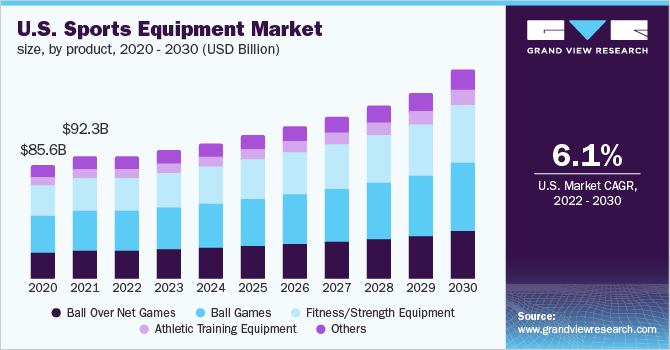
The global sports equipment market size is expected to reach USD 578.9 billion by 2030, according to a new report by Grand View Research, Inc. The market is expected to expand at a CAGR of 6.4% from 2022 to 2030. Rising awareness regarding general health and fitness is one of the primary factors driving the market. Also, constant improvements in materials used for manufacturing of sports equipment are helping enhance product performance, thereby boosting the adoption rate. For instance, with advancements in sensor technologies, consumers are increasingly demanding equipment that can provide them with relevant insights into performance.

U.S. sports equipment market size, by product, 2020 - 2030 (USD Billion)

Moreover, various research and development programs have been introduced by manufacturers to improve quality of sports equipment. Nowadays, carbon fiber is increasingly used in manufacturing sports equipment, which is projected to positively influence the growth of the market over the forecast period. Additionally, the sensor technology has evolved to an extent that it can be incorporated into a multitude of sports equipment such as golf clubs, fishing rods, tennis rackets, and swimming goggles which will augment the growth of the market.

Sports Equipment Market Segmentation

Grand View Research has segmented the global sports equipment market on the basis of product, distribution channel, and region:

Based on the Product Insights, the market is segmented into Ball over net games, Ball games, Fitness/Strength Equipment, Athletic Training Equipment, and Others

  • The ball games segment dominated the market for sports equipment and accounted for the largest revenue share of 34.0% in 2021.
  • Since ball games are popularly watched all over the world, the revenue generated from this segment is notably higher than rest of the segments.
  • The segment is expected to witness a CAGR of over 6.3% over the forecast period. Burgeoning global popularity of events such as cricket, basketball, and football is projected to be one of the key factors contributing to the growth of the segment.
  • On the other hand, fitness/strength equipment segment is projected to witness highest CAGR over the forecast period.
  • Growing health concerns coupled with rising disposable incomes of consumers are further boosting their inclination towards sports and fitness.

Based on the Distribution Channel Insights, the market is segmented into Online retail, Specialty & sports shops, and Department & discount stores

  • The specialty and sports shops segment dominated the market for sports equipment and accounted for revenue share of 45.0% in 2021.
  • These stores have a broad portfolio of branded products and provide required support and information to consumers through expert customer service personnel.
  • Moreover, convenience provided by this distribution channel and its ability to stock popular brands has been supplementing the growth of this segment.
  • The online retail segment is projected to register a CAGR of 7.4% in the sports equipment market from 2022 to 2030. Rising internet penetration amongst consumers and target marketing done by companies to reach all customer touchpoints are likely to fuel the growth of this segment.
  • In addition, increasing use of smartphones, increasing consumer spending, growing penetration of internet and online shopping from e-commerce platforms are factors likely to drive segment growth over the forecast period.

Sports Equipment Regional Outlook

  • North America
  • Europe
  • Asia Pacific
  • South & Central America
  • Middle East & Africa (MEA)

Key Companies Profile & Market Share Insights

The market includes both international and domestic participants. Key market players focus on strategies such as innovation and new product launches in retails, expanding distribution channel, entering in department and discount stores, and collaborating with the celebrities in order to gain maximum customer penetration.

Some prominent players in the global Sports Equipment market include:

  • Adidas AG
  • Amer Sports
  • Callaway Golf Co.
  • Sumitomo Rubber Industries Limited
  • Nike, Inc.
  • Puma SE
  • Mizuno Corporation
  • Sports Direct International PLC
  • Under Armour
  • Yonex Co., Ltd.

Order a free sample PDF of the Sports Equipment Market Intelligence Study, published by Grand View Research.
Halal Food and Beverage Market Business Drivers, Prominent Companies and Impact of COVID-19

Halal Food and Beverage Industry Overview

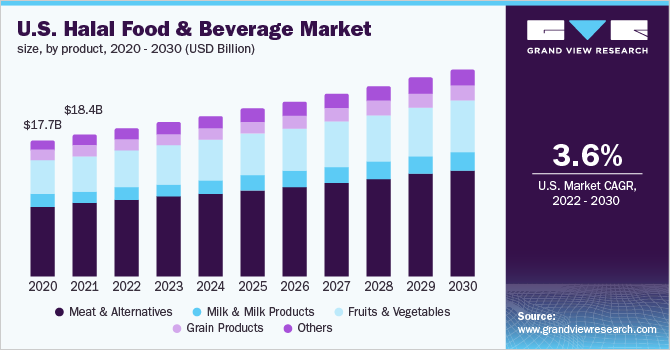
The global halal food and beverage market is expected to reach USD 1063.11 billion by 2030, according to a new report by Grand View Research, Inc. The global halal food industry is expected to witness a CAGR of 3.6% during the forecast period owing to the increasing Muslim population and their substantially increasing expenditure on food & beverages, which is considered the main driving force of this market. According to an article published in Salaam Gateway, in November 2019, 63.6% of Muslims globally spend USD 2.2 trillion on halal and Islamic food and lifestyle products.

U.S. halal food & beverage market size, by product, 2020 - 2030, (USD Billion)

Governments of the Islamic, as well as the non-Islamic nations and the manufacturers of halal-certified food products, have been taking various initiatives in terms of marketing & educating consumers about these products. The confidence of consumers in halal brands has been the most influential factor in the actual purchase of these products. According to an article published in Salam Gateway, in November 2020 Egypt’s council of ministers introduced the ‘Halal in Egypt’ mark for Egyptian halal exports, while the Philippines’ Department of Trade and Industry (DTI) also launched an official national logo.

Halal Food and Beverage Market Segmentation

Grand View Research has segmented the halal food And beverage market based on product, distribution channel, and region.

Based on the Product Insights, the market is segmented into Meat & Alternatives, Milk & Milk Products, Fruits & Vegetables, Grain Products, and Others

  • The meat & alternatives segment held the largest market share of 51.6% in 2021 and is expected to maintain dominance during the forecast period.
  • Growing consumer preference for bacteria-free meat owing to health, hygiene, and safety concerns, the demand for these products will witness a rise in the foreseeable period.
  • Moreover, respect for the welfare of animals, and a degree of acculturation are also some of the vital influencers in the growth of the segment.
  • However, grain products are projected to register the fastest growth during the forecast period with a CAGR of 4.3% from 2022 to 2030.
  • Cereals or grain products are gaining momentum among consumers due to their nutritional benefits. These products include wheat, rice, pasta, bread, and breakfast cereals.

Based on the Distribution Channel Insights, the market is segmented into Supermarkets/Hypermarkets, Departmental Stores, Online, and Others

  • Hypermarket & supermarket was a larger distribution channel with a market share of around 75.5% in the global revenue in 2021. An increasing number of these stores across various regions have experienced a surge in the distribution of halal food in the market.
  • Further, the convenience of physically verifying halal-certified products in these stores will vouch for the growth of this segment.
  • The online distribution channel is anticipated to register faster growth during forecast years with a CAGR of 5.0% from 2022 to 2030.
  • The rapid digital transformation brought on by Muslim and non-Muslim consumers looking for healthy, flavorful, and convenient meals that can be delivered at home, will boost the segment growth.

Halal Food and Beverage Regional Outlook

  • North America
  • Europe
  • Asia Pacific
  • South & Central America
  • Middle East & Africa (MEA)

Key Companies Profile & Market Share Insights

The halal food & beverage market is highly fragmented with the presence of a large number of regional and local players. Companies have been implementing various expansion strategies, such as partnerships and new product launches, to stay ahead in the game. For instance, in August 2021, Crescent Foods, an American pioneer in premium hand-cut halal meat and poultry products launched a turnkey foodservice program for college and university dining halls, nationwide. The company will offer a wide range of products including hand-cut beef, lamb, turkey (seasonally), and chicken products for on-campus dining, including restaurants.

Some prominent players in the global Halal Food and Beverage market include:

  • Nestlé S.A
  • Cargill, Incorporated
  • Unilever
  • American Halal Company, Inc.
  • Al-Falah Halal Foods
  • Prima Agri-Products
  • One World Foods Inc.
  • Midamar Corporation
  • QL Foods
  • Rosen's Diversified Inc.

Order a free sample PDF of the Halal Food and Beverage Market Intelligence Study, published by Grand View Research.
Diabetic Food Market Analysis Report by Product and Distribution Channel, 2030

Diabetic Food Industry Overview

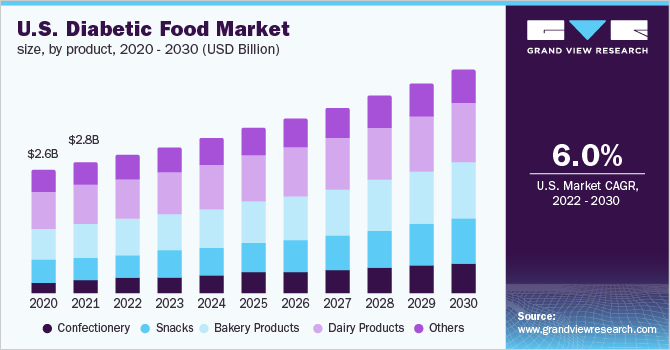
The global diabetic food market size is expected to reach USD 20.6 billion by 2030, according to a new report by Grand View Research, Inc. The market is expected to expand at a CAGR of 5.9% from 2022 to 2030. Growing awareness of diabetes coupled with preventive measures taken by consumers is anticipated to spur market growth. Increasing use of artificial sweeteners including acesulfame potassium, aspartame, and neo-tame as a substitute for sugar is expected to positively impact market growth.

U.S. diabetic food market size, by product, 2020 - 2030, (USD Billion)

Rising health concerns and an uptrend in the occurrence of diabetes among youngsters, and health issues such as obesity, diabetes, and digestive disorders have prompted consumers to opt for diabetic food solutions. Moreover, increasing cases of juvenile diabetes among children and youth owing to lack of physical activity is expected to fuel the demand. Moreover, some health-conscious consumers are also attracted towards diabetic food in order to maintain their general health and wellness.

Diabetic Food Market Segmentation

Grand View Research has segmented the global diabetic food market on the basis of product, distribution channel, and region:

Based on the Product Insights, the market is segmented into Confectionery, Snacks, Bakery Products, Dairy Products, and Others

  • The dairy product segment dominated the market for diabetic food and held the largest revenue share of more than 25.0% in 2021.
  • Greek yogurt, string cheese, and grass-fed dairy options are opted for by consumers suffering from diabetes. The increasing number of product launches in this segment bode well for future growth.
  • However, the confectionery segment is projected to register the fastest growth during the forecast period. Product launches in the confectionery segment by key brands and startups around the globe have been supporting the overall growth.

Based on the Distribution Channel Insights, the market is segmented into Supermarkets/Hypermarkets, Specialty Stores, Online, and Others

  • The supermarkets and hypermarkets segment led the market for diabetic food and accounted for the largest revenue share of more than 65.0% in 2021. The sheer volume of supermarkets and hypermarkets spread across the globe is the primary factor for its large value generation in 2021.
  • Furthermore, new launches in the product segments such as bakery, dairy, and confectionery at supermarkets are likely to bode well with the future segment growth.
  • The online delivery channel is however expected to show the fastest growth during the forecast. Major retailers such as Amazon, Walmart.com, and Target.com witnessing a significant shift toward online ordering is likely to favor the segment’s growth.
  • Moreover, brands and companies operating in the market for diabetic food prefer launching products through third-party e-commerce retailers.

Diabetic Food Regional Outlook

  • North America
  • Europe
  • Asia Pacific
  • South & Central America
  • Middle East & Africa (MEA)

Key Companies Profile & Market Share Insights

The market for diabetic food is fragmented with the presence of global and regional players. These players are engaging in major acquisitions and mergers, awareness campaigns, and product launches to increase their customer base and brand loyalty. Furthermore, these players are innovating new products including white oats, oat bran, barley porridge, and 100.0% natural ingredients with no chemical and harmful content in the diabetes foods.

Some prominent players in the global Diabetic Food market include:

  • Nestlé
  • Unilever
  • The Kellogg Company
  • Conagra Brands, Inc.
  • Fifty 50 Foods, Inc.
  • Mars Inc.
  • Tyson Foods
  • Sushma Gram Udyog
  • The Hershey Company
  • Hain Celestial Group

Order a free sample PDF of the Diabetic Food Market Intelligence Study, published by Grand View Research.
Ready to Drink Tea and Coffee Market Value Chain Analysis Report by 2030

Ready to Drink Tea and Coffee Industry Overview

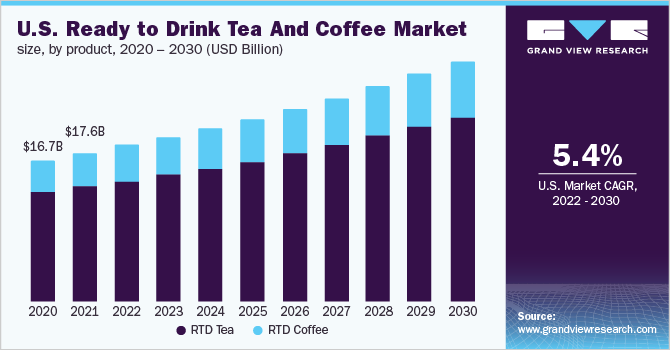
The global ready to drink tea and coffee market size is expected to reach USD 167.88 billion by 2030, registering a CAGR of 6.2% during the forecast period, according to a new report by Grand View Research, Inc. Acceptance of ready-to-drink tea and coffee products as healthier substitutes to carbonated soft drinks and instant energy provided by them are factors expected to drive the growth of the market.

U.S. Ready to Drink Tea And Coffee Market size, by product, 2020 - 2030 (USD Million)

The introduction of new flavors in these product categories is projected to give a tremendous boost to the overall market growth. For instance, Ocean Spray Cranberries, Inc., an agricultural cooperative, launched Ocean Spray Brew in January 2020. The drink contains real fruit juice and cold brew coffee and is available in two flavors: Cranberry Lemonade and Cranberry Blueberry.

Ready to Drink Tea and Coffee Market Segmentation

Grand View Research has segmented the ready to drink tea and coffee market based on product, packaging, distribution channel, and region:

Based on the Product Insights, the market is segmented into RTD Tea and RTD Coffee

  • The RTD tea segment led the market and accounted for a 63.8% share of the global revenue in 2021. Some of the commonly consumed RTD tea variants are black, green, fruit, herbal, matcha, oolong, and iced.
  • Owing to the increasing working population and hectic schedules of professionals, product demand has escalated significantly. The growing preference for carbonated RTD tea among consumers is driving the segment growth.
  • The RTD coffee segment is anticipated to expand at the fastest CAGR of 6.4% from 2022 to 2030. Few of the commonly found RTD coffee variants in the market are yerba mate, guarana, acai berry, ginseng, taurine, and iced.
  • Coffee is a well-accepted beverage and is considered a healthy replacement for carbonated soft drinks, hence, the demand for the product is likely to grow exponentially.

Based on the Packaging Insights, the market is segmented into Canned, Glass Bottle, PET Bottle, and Others

  • The PET bottles segment led the market and accounted for a 33.9% share of the global industry revenue in 2021. The ease of handling coupled with low manufacturing cost is boosting the demand for this type of packaging.
  • The demand for PET bottles for packaging RTD tea and coffee is rising due to their recyclability and reusability. PET bottles are easily recycled from many types of secondary products, including pillow stuffing, carpet fibers, tote bags, and strapping materials.
  • The lightweight of plastic bottles reduces the cost of transporting materials to recycling centers. Thus, multiple benefits of PET bottles over other packaging types can be attributed to the segment’s overall growth in the market.
  • Canned packaging was the second-largest segment in 2021 and is projected to grow substantially over the forecast period. The growth of the segment is attributed to its benefits such as flavor preservation and enhanced product shelf-life.

Based on the Distribution Channel Insights, the market is segmented into Supermarkets/Hypermarkets, Convenience Stores, Food Service, and Online

  • Supermarkets/hypermarkets made the largest contribution to the global market in terms of revenue, accounting for over 33.7% in 2021. Changing retail landscape and the growing number of supermarket chains, especially in densely-populated countries such as India, are fueling the sales of RTD tea and coffee through this channel.
  • The progression of the foodservice industry as a distribution channel has drawn the attention of a large number of manufacturers. The growth of café culture and the grab-and-go concept around the globe is projected to drive the demand for RTD tea and coffee products through this channel.
  • Convenience stores are thriving around the globe owing to rising urbanization and easy accessibility demanded by consumers.
  • The online distribution segment is set to expand at the fastest CAGR of 6.7% from 2022 to 2030. Rising internet penetration and targeted consumer marketing by companies are factors likely to fuel the growth of this segment.

Ready to Drink Tea and Coffee Regional Outlook

  • North America
  • Europe
  • Asia Pacific
  • South & Central America
  • Middle East & Africa (MEA)

Key Companies Profile & Market Share Insights

The market includes both international and domestic participants. Key market players focus on strategies such as innovation and new product launches in retail to enhance their offering in the market.

Some prominent players in the global Ready to Drink Tea and Coffee market include:

  • Suntory Holdings Limited
  • Nestlé
  • The Coca Cola Company
  • Unilever
  • Asahi Group Holdings, Ltd.
  • PepsiCo
  • Starbucks Coffee Company
  • Monster Energy Company
  • Danone
  • AriZona Beverages USA

Order a free sample PDF of the Ready to Drink Tea and Coffee Market Intelligence Study, published by Grand View Research.
Savory Snacks Market Raw material Outlook, PESTEL Analysis and Type Estimates

Savory Snacks Industry Overview

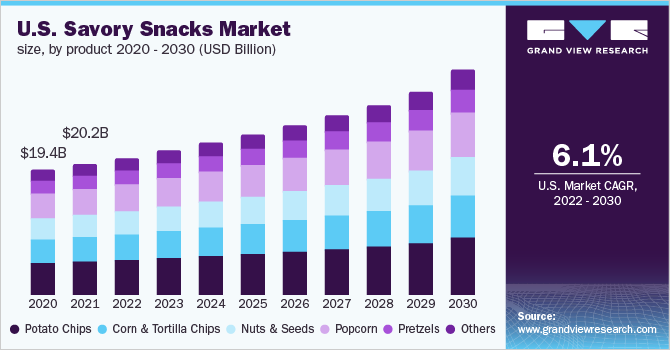
The global savory snacks market is expected to reach USD 386.9 billion by 2030, according to a new report by Grand View Research, Inc. The market is anticipated to register a CAGR of 4.9% from 2022 to 2030. The savory snacks market is growing rapidly on account of millennials consuming snacks over traditional sit-down meals. The shrinking size of households in the countries has boosted the snacking trend, which is expected to drive the demand for these products over the forecast period.

U.S. savory snacks market size, by product 2020 - 2030 (USD Billion)

Savory snacks are majorly categorized as snacks that are not sweet. The market growth of these products is driven by health considerations and consumer taste. The presence of numerous flavors coupled with rising R&D investment by major industry players in order to introduce new products is further expected to propel growth over the coming years.

Savory Snacks Market Segmentation

Grand View Research has segmented the global savory snacks market on the basis of product, distribution channel, and region:

Based on the Product Insights, the market is segmented into Potato Chips, Corn & Tortilla Chips, Nuts & Seeds, Popcorn, Pretzels, and Others

  • The potato chips segment held the largest market share in 2021 and is expected to maintain its dominance during the forecast period.
  • The introduction of new flavors and roasted potato chips with health benefits is expected to have a positive impact on segment growth.
  • However, the nuts & seeds segment is projected to register the fastest growth from 2022 to 2030.
  • Nuts and seeds are claimed to be good sources of protein, healthy fats, fibers, and vitamins. Rising health concerns of consumers regarding snacking habits have led them to opt for roasted nuts & seeds.
  • The nuts & seeds product segment consists of a deluxe assortment of nuts and super seeds such as sunflower, pumpkin, hemp, and chia seeds.

Based on the Distribution Channel Insights, the market is segmented into Hypermarkets & Supermarkets, Convenience Stores, Online, and Others

  • The hypermarkets & supermarkets' distribution channels made the largest contribution in the global market in 2021.
  • Changing consumer preferences and the availability of a wide range of products offered by various branded and private labels in these formats is anticipated to have a positive impact on the demand.
  • The online distribution channel is anticipated to grow at the highest rate during the forecast period. Online retail is changing the nature of snacking and is expected to grow as a proportion of snack category sales.

Savory Snacks Regional Outlook

  • North America
  • Europe
  • Asia Pacific
  • South & Central America
  • Middle East & Africa (MEA)

Key Companies Profile & Market Share Insights

The industry is highly competitive owing to a large number of small and big players. The industry participants in the savory snacks industry constantly engage in new product development and the introduction of new flavors. The profitability of companies majorly depends upon effective marketing, a well-trained sales force, and efficient operations. Manufacturers are diversifying their products on account of rising health concerns among consumers.

Some prominent players in the global Savory Snacks market include:

  • PepsiCo
  • The Kraft Heinz Company
  • The Kellogg Company
  • Calbee
  • Hain Celestial
  • Conagra Brands, Inc.
  • General Mills, Inc.
  • Blue Diamond Growers
  • ITC Limited
  • Grupo Bimbo

Order a free sample PDF of the Savory Snacks Market Intelligence Study, published by Grand View Research.
Baby Products Market Type Estimates, Revenue Drivers and Restraint Analysis

Baby Products Industry Overview

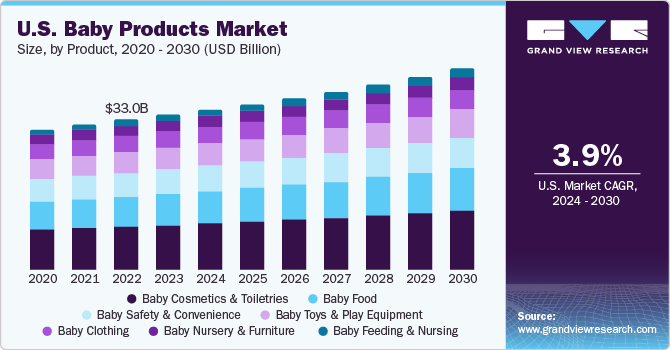
The global baby products market is expected to reach USD 352.65 billion by 2030, according to a new report by Grand View Research, Inc. The global market has been experiencing rapid growth as consumer preferences are ever-changing and diverting towards utility-driven, superior quality, and premium baby products. Additionally, there has an been increase in demand for vegan, paraben, gluten, and synthetic-free products owing to rising levels of awareness associated with the harmful effects of synthetic products.

 U.S. baby products market size, by product, 2020 – 2030 (USD Billion)

The COVID-19 pandemic disrupted the supply chains and influenced consumer shopping patterns. According to the annual report published Kimberly-Clark (KCWW) witnessed an increase in the sales of its baby and child care products in 2020. Whereas, Johnson & Johnson Consumer Inc., the baby care segment reported a decline of 9.4% in 2020, in comparison to 2019. The company cited the decline owing to various factors such as COVID-19, SKU rationalization, and other factors.

Baby Products Market Segmentation

Grand View Research has segmented the global baby products market based on product and region:

Based on the Product Insights, the market is segmented into Baby Cosmetics & Toiletries, Baby Food, and Baby Safety & Convenience

  • The baby cosmetics & toiletries segment is further bifurcated into baby skincare, bath, baby hair care, and other cosmetics & toiletries products.
  • Baby food is sub-segmented into baby milk, frozen baby food, baby juice, baby food snacks, and baby food cereals.
  • Baby safety & convenience is further segmented into baby strollers and baby car seat market.
  • The global baby food market size stood at USD 91.92 billion in 20201. It is anticipated to expand at 5.6% in terms of revenue during the forecast period.
  • Rapidly growing urbanization, busy work schedules of the working class, and changing lifestyles are propelling demand for packaged foods for babies.
  • An increase in parental concerns regarding baby’s nutrition has been a primary aspect to drive the growth of the segment.
  • New food technologies have been enabling food product manufacturers to provide good quality products added with nutritional benefits. The increasing demand, particularly for infant formula, is triggering the growth of the market.
  • Since, iron deficiency is the most common nutritional deficiency found amongst Indian children, manufacturers are introducing new products in the market that are rich in iron and folic acid for the baby’s physical and mental growth.
  • The baby safety and convenience segment held a significant share of the market and is poised to grow at a steady pace over the next coming years.
  • The baby cosmetics & toiletries segment contributed the second-largest share of the market and is projected to register the fastest CAGR from 2022 to 2030. Baby skincare accounted for more than 36.0% market share.

Baby Products Regional Outlook

  • North America
  • Europe
  • Asia Pacific
  • South & Central America
  • Middle East & Africa (MEA)

Key Companies Profile & Market Share Insights

The market includes both international and domestic participants. Key market players focus on strategies such as innovation and new product launches in retail about natural products to enhance their portfolio offering in the market.

Some prominent players in the global Baby Products market include:

  • Johnson & Johnson Services, Inc.
  • Kimberly-Clark Corporation
  • Procter & Gamble
  • Unilever
  • Britax
  • Chicco
  • Dorel Industries
  • Beiersdorf AG
  • Fujian Hengan Group
  • Nestlé S.A.

Order a free sample PDF of the Baby Products Market Intelligence Study, published by Grand View Research.
Bottled Water Market Distribution Channel Outlook and Profit Margin Analysis Report by 2030

Bottled Water Industry Overview

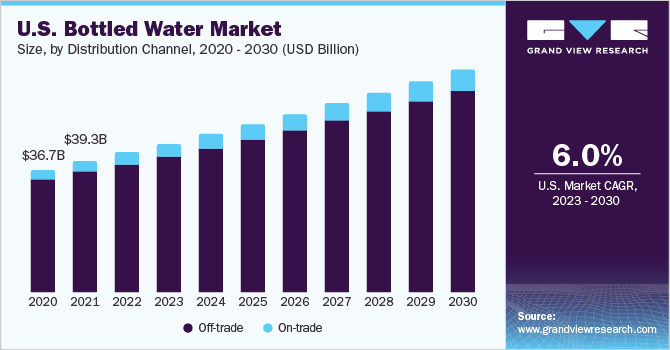
The global bottled water market size is expected to reach USD 509.2 billion by 2030, according to a new report by Grand View Research, Inc. It is expected to expand at a CAGR of 6.7% from 2022 to 2030. Increasing demand for bottled water owing to the rising scarcity of fresh and pure drinking water across the globe is driving the market. Factors such as health benefits with added minerals and nutrients are likely to fuel the demand for bottled water over the forecast period.

U.S. bottled water market size, by product, 2020 - 2030 (USD Billion)

Growing awareness regarding the adverse health effects of consuming sugary drinks, such as weight gain, obesity, diabetes, and heart disease, is supporting the consumption of alternative beverages such as still and sparkling water. The trend of switching from sugary drinks to healthier options is observed in several countries such as Germany, the U.S., the U.K., and France. This has widened the scope for bottled water across the globe.

Bottled Water Market Segmentation

Grand View Research has segmented the global bottled water market on the basis of product, distribution channel, and region:

Based on the Product Insights, the market is segmented into Spring Water, Purified Water, Mineral Water, Sparkling Water, and Others

  • The purified segment held the largest revenue share of more than 40.0% in 2021 and is expected to maintain its lead over the forecast period.
  • The sparkling water segment is projected to register the fastest growth rate of 7.4% from 2022 to 2030. The growing preference of consumers for the sparkling category as a healthy alternative for sugary drinks such as cola to cut down sugar content levels is driving the segment.

Based on the Distribution Channel Insights, the market is segmented into Off-trade and On-trade

  • The off-trade segment held the largest revenue share of more than 85.0% in 2021. The segment includes all retail outlets such as hypermarkets, supermarkets, convenience stores, mini markets, and traditional stores.
  • The increasing convenience of quickly picking the required brand of bottled water with a particular set of minerals will boost the market growth in the forecast period.
  • The on-trade channel is anticipated to register the fastest CAGR of 7.7% from 2022 to 2030. The segment includes outlets such as restaurants, cafes, clubs, hotels, and lounges.
  • Growing health and hygiene concerns, coupled with the rising COVID-19 cases, have prompted consumers to buy packaged water instead of normal options at such places.
  • Moreover, the opening up of clubs, bars, and outdoor activities at resorts and hotels is expected to drive the consumption of packaged drinking water through this channel.

Bottled Water Regional Outlook

  • North America
  • Europe
  • Asia Pacific
  • South & Central America
  • Middle East & Africa (MEA)

Key Companies Profile & Market Share Insights

The global market is highly dynamic as a large number of companies can be seen competing for enhancing their share in the market. A large part of the industry is controlled by local firms. Several companies are centennial and some of these are family-owned. Some of the largest food and beverage companies including Nestlé, PepsiCo, and The Coca-Cola Company have entered the market. Along with that, in order to improve their efficiency and by using the international distribution channel, the companies have been ruling the industry. For instance, in Feb 2021, Nestlé sold its bottled brands in North America including Poland Spring, Deer Park, Arrowhead, Ozarka, Zephyrhills, and Pure to a subsidiary of One Rock Capital Partners and investment firm Metropoulos & Co. in order to revitalize individual brand sales.

Some prominent players in the global Bottled Water market include:

  • Nestlé
  • PepsiCo
  • The Coca-Cola Company
  • DANONE
  • Primo Water Corporation
  • FIJI Water Company LLC
  • Gerolsteiner Brunnen GmbH & Co. KG
  • VOSS WATER
  • Nongfu Spring
  • National Beverage Corp.
  • Keurig Dr Pepper Inc.

Order a free sample PDF of the Bottled Water Market Intelligence Study, published by Grand View Research.
Meat Substitute Market Size worth $234.7 Billion By 2030

Meat Substitute Industry Overview

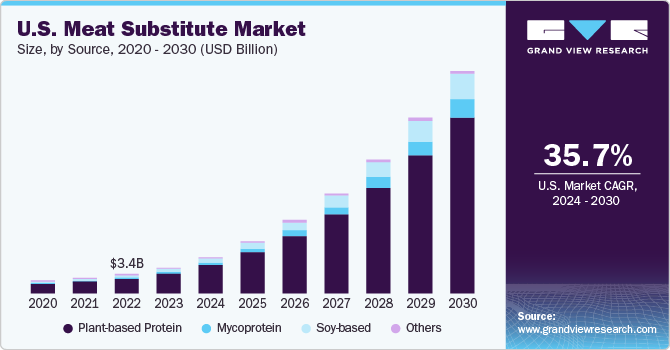
The global meat substitute market size is expected to reach USD 234.7 billion by 2030, according to a new report by Grand View Research, Inc. The market is expected to expand at a CAGR of 42.1% from 2022 to 2030. Growing preference for a vegan diet coupled with rising health awareness is expected to fuel market demand in the forecast period.

U.S. meat substitute market size, by source, 2020 - 2030, (USD Billion)

Furthermore, growing awareness of environmental and ethical issues has also accelerated market growth. Plant-based meat is a healthier alternative to traditional meat products. Over half of protein users prefer to consume natural sources in their protein, which is boosting the shift in demand for easily identifiable and clean substances.

Meat Substitute Market Segmentation

Grand View Research has segmented the global meat substitute market on the basis of source, distribution channel, and region:

Based on the Source Insights, the market is segmented into Plant-based Protein, Mycoprotein, Soy-based, and Others

  • The plant-based protein segment held the largest revenue share of 34.8% in 2021 and is expected to maintain dominance over the forecast period.
  • Protein inputs for new plant-based meat are plentiful and reasonably priced. Hence, the volume of meat substitutes from plant-based protein sources is high and is the main factor for the dominance of the segment.
  • Meat shortages in different regions of the world, environmental concerns, and a desire to eat a healthier diet are some of the reasons driving the growth of this segment.
  • The mycoprotein segment is projected to register the fastest CAGR of 43.2% from 2022 to 2030. Owing to the higher content of nutrients like fiber that helps in controlling blood cholesterol and blood sugar, consumers prefer mycoprotein food.
  • For vegans and vegetarians, meat alternatives were earlier limited to soya chunks and mushrooms, and cottage cheese.

Based on the Distribution Channel Insights, the market is segmented into Foodservice and Retail

  • The retail segment led the market for meat substitutes and accounted for the largest revenue share of 67.3% in 2021. The segment includes all retail outlets such as hypermarkets, supermarkets, convenience stores, mini markets, and departmental stores.
  • The foodservice segment is anticipated to register a CAGR of 43.0% from 2022 to 2030. The category includes outlets such as restaurants, hotels, and lounges. The COVID-19 pandemic has led to lockdowns and shutdowns across the world.
  • One of the key factors driving the global foodservice market is the growing demand for customization and innovation in food menu options. Consumers have a wide range of options for customizing their meals based on their taste, dietary, and financial preferences.
  • Plant proteins are experiencing huge demand, with retailers offering plant-based protein products and restaurants introducing plant-protein menu innovations.

Meat Substitute Regional Outlook

  • North America
  • Europe
  • Asia Pacific
  • South & Central America
  • Middle East & Africa (MEA)

Key Companies Profile & Market Share Insights

The market for meat substitutes comprises companies with a stronghold in meat substitutes and is still developing, where new entrants are launching products and other key players in the market are planning to launch their products due to the increasing health concern owing to rising animal-borne diseases across the globe.

Some prominent players in the global Meat Substitute market include:

  • Amy’s Kitchen
  • Beyond Meat
  • Impossible Foods Inc.
  • Quorn Foods
  • The Kellogg Company
  • Unilever
  • Meatless B.V.
  • VBites Foods Ltd.
  • Sunfed
  • Tyson Foods, Inc.

Order a free sample PDF of the Meat Substitute Market Intelligence Study, published by Grand View Research.
Ready Meals Market Top Players are Conagra Brands, Inc. and Tyson Foods, Inc.

Ready Meals Industry Overview

The global ready meals market size is expected to reach USD 225.28 billion by 2030, according to a new report by Grand View Research, Inc., registering a CAGR of 5.1% during the forecast period. The rising demand for affordable and convenient pre-prepared dishes is anticipated to drive the market. Minimum preparation or cooking time and higher shelf life as compared to fruits, fresh vegetables, and meat are other key factors fueling product demand.

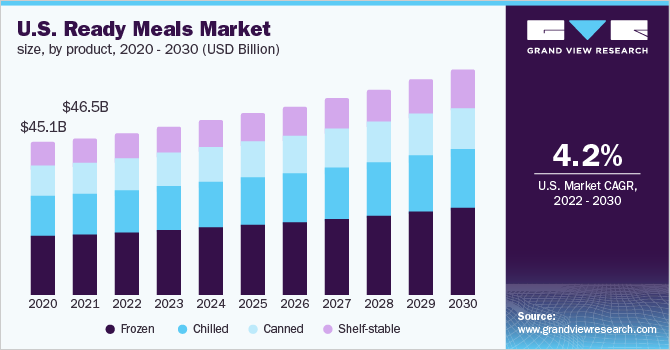
U.S. ready meals market size, by product, 2020 - 2030 (USD Billion)

Moreover, busy schedules and hectic lifestyles of the working-class population and the young generation are anticipated to offer key players new growth avenues over the forecast period. The COVID-19 pandemic has also significantly increased the demand for ready meals. With most parts of the world under lockdown orders to prevent the spread of the novel coronavirus, restaurants and other eateries were shut down, compelling consumers to cook and eat at home. This propelled product demand across the globe.

Ready Meals Market Segmentation

Grand View Research has segmented the global ready meals market based on product, meal type, distribution channel, and region:

Based on the Product Insights, the market is segmented into Frozen, Chilled, Canned, and Shelf-stable

  • The frozen segment held the largest market share in 2021 and is expected to maintain its dominance over the forecast period. The convenience of frozen food is the key factor driving the segment growth.
  • The shelf-stable segment is projected to register the fastest growth from 2022 to 2030. Shelf-stable meals do not require refrigeration and can be consumed at room temperature.

Based on the Meal Type Insights, the market is segmented into Vegetarian, Non-vegetarian, and Vegan

  • The non-vegetarian segment held the dominant share in the ready meals market in 2021 and is expected to retain its lead over the forecast period.
  • The demand for protein-rich food items such as value-added chicken nuggets, sausages, and salami among consumers has benefited the non-vegetarian segment.
  • Consumer preference for frozen non-vegetarian packaged food is rising owing to rising hygiene issues with fresh products available in the market.
  • The vegan segment is projected to register the fastest growth over the forecast period. Millennials nowadays are becoming more conscious about their health and animal welfare and are willing to pay a reasonable price for vegan products and ingredients. In response to these trends, players are launching various vegan ready meals and snacks in the market.

Based on the Distribution Channel Insights, the market is segmented into Supermarkets & Hypermarkets, Convenience Stores, Online, and Others

  • Supermarkets & hypermarkets made the largest contribution to the global market in 2021.
  • The online distribution channel is likely to exhibit the highest CAGR over the forecast period.
  • Pre-packaged meal brands have been experiencing a growth in the overall demand through online platforms.
  • Major supermarkets & hypermarkets such as Walmart, Target, and Aldi also offer online delivery, which is driving the segment growth.

Ready Meals Regional Outlook

  • North America
  • Europe
  • Asia Pacific
  • South & Central America
  • Middle East & Africa (MEA)

Key Companies Profile & Market Share Insights

The market is fragmented owing to the presence of a large number of global and domestic companies. With consumers demanding more meal varieties within segments like frozen, chilled, vegetarian, and vegan, manufacturers are focusing on product innovation to suit the new go-to health choices of consumers around the world. Players have been increasing their product supplies in supermarkets and hypermarkets amid the COVID-19 pandemic. They are also focusing on strategies such as partnerships, online advertising campaigns, innovation, and new product development to expand their product portfolio and customer base.

Some prominent players in the global Ready Meals market include:

  • Nestlé
  • General Mills, Inc.
  • Kellogg Company
  • Conagra Brands, Inc.
  • Tyson Foods, Inc.
  • Oetker
  • Nomad Foods
  • Green Mill Foods
  • Unilever
  • 2 Sisters Food Group

Order a free sample PDF of the Ready Meals Market Intelligence Study, published by Grand View Research.
Tobacco Market Analysis Report by Type, Material, Application, Region and Segment Forecasts

Tobacco Industry Overview

The global tobacco market size is expected to reach USD 1,049.9 billion by 2030, according to a new report by Grand View Research, Inc. The market is projected to expand at a CAGR of 2.4% from 2022 to 2030. The growing demand from developing nations, coupled with the rising proliferation of next-generation products across the globe is driving the market growth. The high marketing expenditure and product discounts by major tobacco companies are further driving the industry growth.

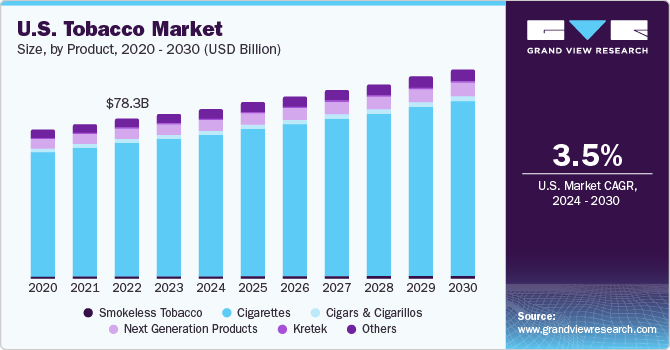
U.S. tobacco market size, by product, 2020 - 2030 (USD Billion)

Consumption of tobacco through cigarettes has been the predominant factor driving the market growth. According to a World Health Organization (WHO) report in 2019, more than 80% of tobacco users live in low- and middle-income countries. Government cessation policies have been unable to help people stop tobacco use. The demand for the product is inelastic, which is expected to drive market growth. The introduction of next-generation products by major manufacturers is another factor expected to fuel the growth.

Tobacco Market Segmentation

Grand View Research has segmented the global Tobacco market on the basis of product, distribution channel, and region:

Based on the Product Insights, the market is segmented into Smokeless, Cigarettes, Cigar & Cigarillos, Next Generation Products, and Waterpipes

  • Cigarettes captured the majority share of the market in 2021, accounting for nearly 86% of the overall revenue. Cigarette consumption has remained stable due to the introduction of flavored, and menthol cigarettes.
  • It can also be attributed to the availability of small cigarettes that facilitate smaller amounts of tobacco consumption for smokers who wish to cut down on their smoking habit.
  • Cigarettes have an inelastic demand, which is a major factor that has driven market growth despite the heavy taxation that has been levied across the globe.
  • The rising popularity of partying and pub culture among millennials and working-class communities has especially fueled the demand for flavored and unflavored cigarettes around the world in recent years.
  • Furthermore, emerging economies such as India and Thailand are seeing a significant increase in cigarette demand as a result of rising youth populations in these countries.
  • The tobacco market is expected to benefit greatly from the launch of next-generation products, which is expected to become the fastest-growing segment.

Based on the Distribution Channel Insights, the market is segmented into Offline and Online

  • The offline channel led the market and accounted for the largest market share of more than 89% in 2021. It is projected to continue leading the market during the forecast period.
  • Consumers prefer these stores as they offer considerable discounts. Location proximity of these stores facilitates immediate demand fulfillment for tobacco consumption, which is also expected to drive the growth of the segment.
  • With the COVID-19 outbreak, consumers resorted to purchasing tobacco products online. Countries having strict lockdown laws prohibited citizens from leaving their homes, except for essential reasons. This facilitated the rise of online tobacco shopping.

Tobacco Regional Outlook

  • North America
  • Europe
  • Asia Pacific
  • South & Central America
  • Middle East & Africa (MEA)

Key Companies Profile & Market Share Insights

The market comprises companies with a stronghold on tobacco products and is launching and developing next-generation products.

Some prominent players in the global Tobacco market include:

  • Scandinavian Tobacco Group A/S
  • Swedish Match AB
  • Altria Group, Inc.
  • KT&G Corp.
  • Imperial Brands
  • Philip Morris Products S.A.
  • British American Tobacco
  • Japan Tobacco Inc.
  • China Tobacco.
  • ITC Limited

Order a free sample PDF of the Tobacco Market Intelligence Study, published by Grand View Research.

Organic Food and Beverages Market Growth Drivers, Vendor Landscape and Raw Material Outlook

Organic Food and Beverages Industry Overview

The global organic food and beverages market size is expected to reach USD 564.22 billion by 2030, according to a new report by Grand View Research, Inc. The market is projected to expand at a CAGR of 13% from 2022 to 2030. The various health benefits associated with the intake of organic food & beverages and rising health consciousness amongst consumers have encouraged the growth of the global organic food & beverages market.

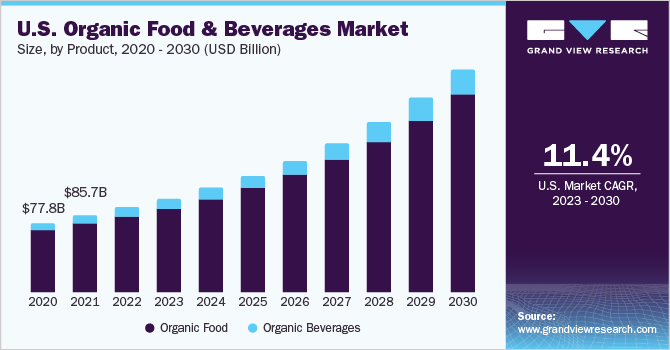
U.S. organic food & beverages market size, by product, 2020 - 2030 (USD Billion)

The term “organic” refers to the way agricultural products are cultivated, and its regulations vary from country to country. For instance, in the U.S. organic crops must be grown without the use of synthetic pesticides, herbicides, fertilizers, or genetically modified genes (GMOs). Growing adoption of organic and natural products is linked to their eco-friendly characteristics. These crops are enriched with nutrients such as vitamins, minerals, antioxidants, and free of any additives or preservatives that might cause allergic reactions in some people.

Organic Food And Beverages Market Segmentation

Grand View Research has segmented the global organic food and beverages market on the basis of product, distribution channel, and region:

Based on the Product Insights, the market is segmented into Organic Food and Organic Beverages

  • Fruits and vegetables emerged as the leading sector of the market and accounted for a 40% share of the organic food revenue in 2021.
  • North America and Europe are the largest consumers of organic foods. Nonetheless, the consumption of organic meat, fish & poultry products is predicted to register the highest CAGR of 14.9% by 2030.
  • Increasing concerns regarding artificial preservatives and additives are anticipated to augment the growth of product demand over the coming years.
  • The organic beverages market is segmented into non-dairy beverages, coffee & tea, beer & wine, and others including juices and soft drinks.
  • Coffee & tea sales are likely to observe the highest CAGR of 16.2% during the forecast period, due to the high consumption of flavored tea and coffee by consumers.
  • The organic beverages market is poised to grow exponentially as consumers opt for natural drinks over carbonated beverages owing to a wide range of health benefits.
  • Non-dairy beverages such as soy, rice, and oat led the beverage segment in 2021. Increasing adoption of vegan culture and its low-fat content is likely to boost the segment's growth.

Based on the Distribution Channel Insights, the market is segmented into Offline and Online

  • The offline distribution channel made a larger contribution to the global market of over 64.9% in 2021. These stores have a broad portfolio of branded as well as domestic products.
  • The convenience provided by this distribution channel and its ability to stock popular brands has been supplementing the growth of this segment.
  • Increasing number of supermarket & hypermarket chains and altering retail landscape, particularly in developing economies are boosting the sales of organic food and beverages via this channel.
  • The online distribution channel is projected to register a CAGR of 13.6% from 2022 to 2030. Rising internet penetration and target marketing done by companies to reach all customer touch points are likely to fuel the growth of this segment.
  • The trend of online sales and subscription boxes for organic produce has grown significantly in the last two years, which is expected to have a positive effect on the market growth.
  • Rapid penetration of online groceries and online food delivery platforms coupled with the surge in adoption of smartphones further triggers the growth of the market.

Organic Food And Beverages Regional Outlook

  • North America
  • Europe
  • Asia Pacific
  • South & Central America
  • Middle East & Africa (MEA)

Key Companies Profile & Market Share Insights

The market includes both international and domestic participants. Key market players focus on strategies such as innovation and new product launches in retail to enhance their portfolio offering in the market.

Some prominent players in the global Organic Food And Beverages market include:

  • Hain Celestial
  • Whole Foods Market L.P.
  • Dole Food Company, Inc
  • Dairy Farmers of America, Inc.
  • General Mills Inc.
  • Danone
  • United Natural Foods, Inc.
  • Gujarat Cooperative Milk Marketing Federation (Amul)
  • THE HERSHEY COMPANY
  • Amy’s Kitchen, Inc.
  • Organic Valley
  • Conagra Brands, Inc.
  • Nestlé
  • Eden Foods
  • SunOpta

Order a free sample PDF of the Organic Food and Beverages Market Intelligence Study, published by Grand View Research.

Beyond Patent Cliffs: What Is Really Fueling Expansion in the Biosimilars Market

Biologic drugs transformed the treatment of cancer, autoimmune disease, and diabetes, but their cost has kept many patients and health syste...