Rhinoplasty Market growth is attributed to Rising Awareness of Aesthetics and Physical Appearance

Rhinoplasty Industry Overview

The global rhinoplasty market size was valued at USD 5.1 billion in 2021 and is projected to grow at a compound annual growth rate (CAGR) of 8.9% during the forecast period. It is a surgical procedure being performed to alter the structure of the nose. It is done to overcome breathing issues raised from injury or birth structural defects. However, nowadays it is highly performed for cosmetic reasons to alter the structure of the nose to enhance facial features or physical appeal.
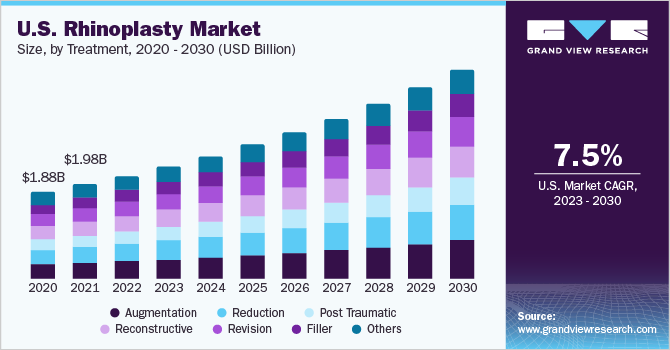
U.S. rhinoplasty market size, by treatment, 2020 - 2030 (USD Million)

Growing awareness of aesthetics and physical appearance is projected to drive the market growth of the market. The launch of technologically advanced treatment techniques such as 3D computer-assisted technologies has led to increased demand for rhinoplasty surgery. Furthermore, in 2018, according to the Plastic Surgery Statistics Report, rhinoplasty or nose reshaping was among the top five cosmetic surgical procedures at a global level. As per the American Society of Plastic Surgeons (ASPS), the rhinoplasty procedure is the most complex facial surgery that has a revision rate of as high as 15.0%.

Gather more insights about the market drivers, restraints, and growth of the Global Rhinoplasty Market

The outbreak of coronavirus has impacted the market negatively as there was a decline in the number of procedures in 2020 due to global restrictions. The COVID-19 pandemic has significantly affected the rhinoplasty market. Initially, there were increased concerns, especially for rhinoplasty surgeons, as the virus can transmit from the nose, and the chances of transmission were high. Cosmetic surgeons are virtually communicating with their patients using telemedicine. Only the emergency procedures were performed too with strict protocols to be followed.

However, on the other side, aesthetic surgery clinics in countries such as Japan, the U.S., South Korea, and Australia witnessed a rise in the number of people opting for plastic and cosmetic surgeries such as rhinoplasty as they had enough recovery time at home and have the option of wearing a mask while going outside.

The launch of any product for rhinoplasty procedures is strictly governed by specific regulations, whose approval is necessary for the launch of new products in the market. The rising adoption of cosmetic surgeries among celebrities and increasing awareness regarding cosmetic surgeries are expected to propel the growth of the market. However, complications associated with the surgeries, like bleeding after rhinoplasty procedures and chances of success rate could hamper the growth of the rhinoplasty market.

According to the American Society of Plastic Surgeons (ASPS) statistics, nose surgeries or rhinoplasty is gaining huge popularity and have become the third most popular aesthetic procedure in the United States. The recently released report from the American Society of Plastic Surgeons on annual trends showed just how significantly the coronavirus pandemic rocked the aesthetics world. However, it is also one of the most complex surgeries to perform. The American Journal of Cosmetic Surgery stated that revision rhinoplasty surgeries in the region are steadily rising.

Furthermore, rhinoplasty is the most prevalent type of cosmetic procedure when it comes to males in the United States. From the improvement of functionality to the correction of flaws, there are many factors for rhinoplastic surgery in males. Even though women account for nearly 90% of all plastic surgeries in the U.S., male rhinoplasty is becoming more prevalent. This is likely to drive the market of rhinoplasty further in the region.

Browse through Grand View Research's Medical Devices Industry Related Reports

Non-surgical Rhinoplasty Market - The global non-surgical rhinoplasty market size was valued at USD 649 million in 2021 and is expected to expand at a compound annual growth rate (CAGR) of 8.1% from 2022 to 2030.

Facial Implant Market - The global facial implant market size was valued at USD 2.48 billion in 2021 and is expected to expand at a CAGR of 8.2% from 2022 to 2030.

Rhinoplasty Industry Segmentation

Grand View Research has segmented the global rhinoplasty market based on treatment type, technique, and region:

Treatment Type Outlook (Revenue, USD Million, 2018 - 2030)

  • Augmentation
  • Reduction
  • Post-traumatic
  • Reconstructive
  • Revision
  • Filler
  • Others (Ethnic Rhinoplasty, Refinement Rhinoplasty)

Technique Outlook (Revenue, USD Million, 2018 - 2030)

  • Open Rhinoplasty
  • Closed Rhinoplasty

Rhinoplasty Regional Outlook (Revenue, USD Million, 2018 - 2030)

  • North America
  • Europe
  • Asia Pacific
  • Latin America
  • MEA (Middle East & Africa)

Market Share Insights:

April 2019: Researchers at the Occidental College developed a non-surgical nose job that uses tiny needles, an electric current, and 3D-printed molds to reshape living tissue. In this, small needles are inserted into the cartilage, an electrical current is passed through, and the cartilage is reformed to the desired shape. The innovative technology could take just 5 minutes and revolutionize cosmetic surgery in near future.

Key Companies profiled:

Some prominent players in the global Rhinoplasty Industry include

  • Stryker
  • Grover Aesthetics
  • Sunset Cosmetic Surgery
  • Implantech
  • GC Aesthetics
  • Surgiform Technologies LLC

Order a free sample PDF of the Rhinoplasty Market Intelligence Study, published by Grand View Research.
U.S. Assisted Living Facility Market growth is boosted by Growing Geriatric Population Seeking Companionship

U.S. Assisted Living Facility Industry Overview

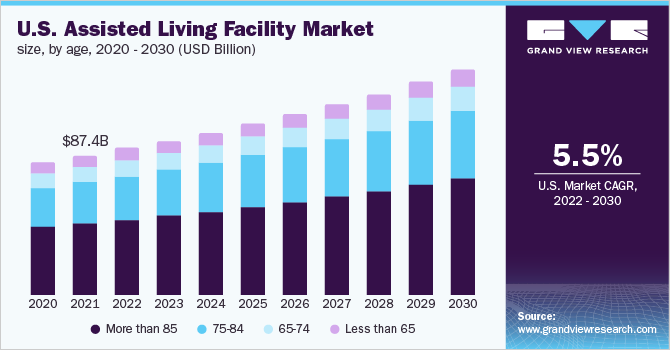
The U.S. assisted living facility market size was valued at USD 87.4 billion in 2021 and is expected to expand at a compound annual growth rate (CAGR) of 5.48% from 2022 to 2030. Major factor driving the market growth is the growing geriatric population seeking companionship, security, and assistance with daily activities, are residing in ALFs. The rise in the geriatric population due to increased life expectancy is expected to grow rapidly in the future. According to National Institute on Aging (NIA), globally, around 8.5% of the population is aged 65 and above. As per data published by Population Reference Bureau, the number of Americans aged 65 years & above is projected to reach 95 million by 2060, from 52 million in 2018.

U.S. assisted living facility market size, by age, 2020 - 2030 (USD Billion)

The rise in the geriatric population due to increased life expectancy is expected to grow rapidly in the future. According to National Institute on Aging (NIA), globally, around 8.5% of the population is aged 65 and above. As per data published by Population Reference Bureau, the number of Americans aged 65 years & above is projected to reach 95 million by 2060, from 52 million in 2018.

Gather more insights about the market drivers, restraints, and growth of the U.S. Assisted Living Facility market

Technological developments for ALFs are expected to propel its U.S. market. The development of sophisticated & easy-to-use devices and services, such as Internet-enabled home monitors, telemedicine, and apps for mobile health, is likely to boost the market over the forecast period.

Over the past few years, the healthcare sector has witnessed various technological advancements, such as wireless data communication, electronic health records, telemedicine/telehealth, activity monitoring systems, fall prevention or detection systems, tracking or wandering management systems, and medication adherence systems. For instance, an electronic medication adherence system enables tracking a patient’s medication schedule and whether they are following it.

Based on the nature of the population served and service provision, residents at assisted living facilities may be at a high risk of contracting COVID-19. According to the CDC, in the early months of the pandemic, around 2.1 million people lived in residential care or ALFs and nursing homes, which represents 0.6% of the U.S. population. A number of these facilities became hotspots for the transmission of the novel coronavirus and 42% of the total COVID-19 deaths in the U.S. were ALF residents.

Browse through Grand View Research's Medical Devices Industry Related Reports

Long-term Care Market - The global long-term care market size was valued at USD 991.6 billion in 2021 and is expected to register a compound annual growth rate (CAGR) of 6.55% during the forecast period.

Assisted Walking Devices Market - The global assisted walking devices market size was valued at USD 3.4 billion in 2021 and is anticipated to expand at a compound annual growth rate (CAGR) of 6.6% during the forecast period.

U.S. Assisted Living Facility Industry Segmentation

Grand View Research has segmented the U.S. assisted living facility market based on age and region:

U.S. Assisted Living Facility Age Outlook (Revenue, USD Billion, 2017 - 2030)

  • More than 85
  • 75-84
  • 65-74
  • Less than 65

U.S. Assisted Living Facility Region Outlook (Revenue, USD Billion, 2017 - 2030)

  • West
  • South
  • Midwest
  • Northeast

Market Share Insights:

January 2021: Kindred Healthcare, LLC and Tampa General Hospital initiated the construction of a joint rehabilitation facility as per their joint venture in May 2020.

Key Companies profiled:

Some prominent players in the U.S. Assisted Living Facility Industry include

  • Kindred Healthcare, LLC
  • Brookdale Senior Living Inc.
  • Sunrise Senior Living, LLC
  • Atria Senior Living, Inc.
  • Five Star Senior Living
  • Capital Senior Living
  • Merrill Gardens
  • Integral Senior Living (ISL)
  • Belmont Village, L.P.
  • Gardant Management Solutions

Order a free sample PDF of the U.S. Assisted Living Facility Market Intelligence Study, published by Grand View Research.
Point-of-Care Glucose Testing Market growth is driven by Rising Awareness about Diabetes Management

Point-of-Care Glucose Testing Industry Overview

The global point-of-care glucose testing market size was valued at USD 3.1 billion in 2021 and is expected to expand at a compound annual growth rate (CAGR) of 4.1% from 2022 to 2030. The growing geriatric population, the ability of point-of-care (POC) diagnostic tests to deliver immediate results, thus providing improved patient care, and rising market penetration of Electronic Medical Records (EMRs) are among the high-impact rendering drivers of this market. The shortage of skilled staff, especially in the field of diagnostics, is also expected to increase the market penetration of glucose POC diagnostic products. The market is expected to gain momentum as the presence of diabetes increases the risk of mortality from COVID-19.

Canada point-of-care glucose testing market size, by product, 2020 - 2030 (USD Million)

Thus, diabetes management is one of the key priorities among healthcare professionals to limit the mortality rate. According to a survey by the Diabetes Research Foundation, diabetes increases the risk of a fatal outcome by 50% among COVID-19 patients. The growing awareness about diabetes management, poor healthcare access, scarcity of healthcare professionals, and the highest global prevalence recorded in Asian countries are likely to increase the adoption of PoC glucose testing solutions. This, in turn, creates an opportunity to reduce the healthcare burden by improving patient outcomes.

Gather more insights about the market drivers, restraints, and growth of the Global Point-of-Care Glucose Testing Market

The introduction of favorable regulatory policies aimed at promoting PoC glucose diagnostics is expected to serve as a high-impact rendering driver for the market. For example, in the U.S., the implementation of Clinical Laboratory Improvement Amendments (CLIA) is expected to boost usage rates during the forecast period. CLIA-waived tests are approved for use by healthcare providers operating in nontraditional laboratory sites, such as emergency rooms, physician offices, pharmacy clinics, health department clinics, and other healthcare facilities. The prevalence of diabetes is increasing worldwide, which is expanding the patient pool for the market.

Furthermore, the presence of unmet medical needs for diagnosis and management of diabetes and the increase in patient awareness are expected to boost the demand for POC diagnostics. According to the International Diabetes Federation, an estimated 537 million people had diabetes in 2021, and the number is projected to increase to 643 million by 2030 and 783 million by 2045. The healthcare industry is focusing on shorter hospital stays, better acute care, and the expansion of outlying surgical centers, which has consequently increased the demand for Short Turn-Around Testing (STAT). POC management solutions allow patients and healthcare providers to easily collect, share, and manage specimens to meet regulatory requirements.

Browse through Grand View Research's Medical Devices Industry Related Reports

Glucose Biosensors Market - The global glucose biosensors market size was valued at USD 10,206.3 million in 2021 and is anticipated to expand at a CAGR of 7.9% during the forecast period.

Blood Glucose Monitoring Devices Market - The global blood glucose monitoring devices market size was valued at 11.71 billion in 2021 and is expected to expand at a compound annual growth rate (CAGR) of 8.0% from 2022 to 2030.

Point-of-Care Glucose Testing Industry Segmentation

Grand View Research has segmented the global point-of-care glucose testing market based on product, end use and region:

PoC Glucose Testing Product Outlook (Revenue, USD Million, 2018 - 2030)

  • Accu Check Aviva Meter
  • Onetouch Verio Flex
  • i-STAT
  • Freestyle Lite
  • Bayer CONTOUR Blood Glucose Monitoring System
  • True Metrix
  • Accu-Chek Inform II
  • StatStrip
  • Others

PoC Glucose Testing End Use Outlook (Revenue, USD Million, 2018 - 2030)

  • Hospital
  • Home setting
  • Diagnostic center

Point-of-Care Glucose Testing Regional Outlook (Revenue, USD Million, 2018 - 2030)

  • North America
  • Europe
  • Asia Pacific
  • Latin America
  • MEA (Middle East & Africa)

Market Share Insights:

June 2020: Tandem Diabetes Care and Abbott finalized an agreement to commercialize and develop an integrated diabetes solution that combines Tandem’s insulin delivery system and Abbott’s CGM technology.

Key Companies profiled:

Some prominent players in the global Point-of-Care Glucose Testing Industry include

  • F. Hoffmann-La Roche Ltd.
  • Abbott
  • Nipro
  • PlatInium Equity Advisors, LLC (Lifescan, Inc.)
  • Nova Biomedical
  • ACON Laboratories
  • Trividia Health, Inc.
  • Prodigy Diabetes Care, LLC
  • Bayer AG/Ascensia Diabetes Care Holdings AG
  • EKF Diagnostics

Order a free sample PDF of the Point-of-Care Glucose Testing Market Intelligence Study, published by Grand View Research.
Facial Fat Transfer Market Demand is fuelled by The Growing Demand for Cosmetic Procedures

Facial Fat Transfer Industry Overview

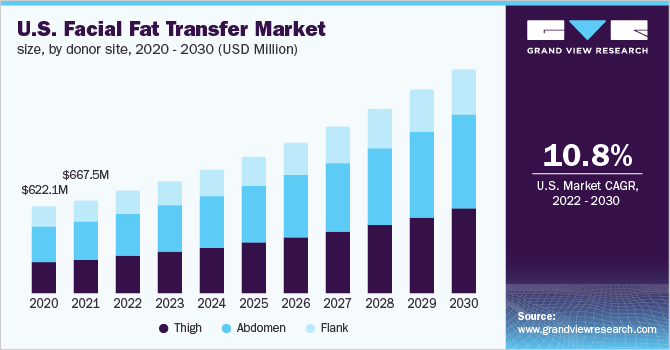
The global facial fat transfer market size was valued at USD 1.9 billion in 2021 and is expected to expand at a CAGR of 10.8% from 2022 to 2030. The rising geriatric population and the growing demand for cosmetic procedures are anticipated to fuel the demand for facial fat transfer. The advent of the COVID-19 pandemic has hugely affected the global market. But many aesthetic professionals believe that the pandemic might propel the overall aesthetic industry. Many dermatology clinics have witnessed a boost in the number of future appointments and consultations for skin treatments, implying that facial fat transfer treatments that can assist with treating signs of aging may witness growth. Facial fat transfers have also been used to correct facial scarring and can be injected into areas such as temples, forehead, upper and lower orbit, cheeks, perioral region, nasolabial fold, jawline, and chin. Plastic surgeons are increasingly suggesting fat grafting for facial volume augmentation surgery, owing to its various advantages over traditional dermal fillers.

U.S. facial fat transfer market size, by donor site, 2020 - 2030 (USD Million)

As compared to conventional dermal fillers, the results of facial fat transfer last longer, have zero/minimal adverse reactions and are cost-effective from a long-term perspective. Fat transfer, also known as autologous fat transfer or fat grafting, is mainly performed to enhance the aesthetic appeal of the face by reducing crow’s feet, smile lines, or frown lines. An increase in the incidences of such conditions due to aging & pollution is propelling the demand for facelifts, thus driving the market for facial fat transfer. In such treatments, fat is harvested generally from the abdomen or thigh, which is then processed and carefully injected into the lines, hollows, and depressions of the face to rejuvenate and recontour the facial features.

Gather more insights about the market drivers, restraints, and growth of the Global Facial Fat Transfer Market

For instance, since the fat used for grafting is obtained from the patient’s own body, it has almost zero probability of causing an adverse reaction, whereas the hyaluronic acid-based dermal filler has a potential risk of causing multiple allergic reactions. Such advantages are expected to drive the market for facial fat transfer during the forecast period.

In 2020, nearly 24,529,875 cosmetic procedures (including both minimally invasive & surgical) were performed as per a report by the International Society of Aesthetic Plastic Surgery. Two of the top five surgical procedures were liposuction and tummy tuck. The increasing demand for these procedures is anticipated to drive the market for facial fat transfers. The report also stated that fat transfer procedures on the face witnessed a 10.4% increase from 2018 to 2019, indicating that the treatment adoption is rising. This can be attributed to the cost-effectiveness of the combination of these procedures along with the fat transfer process.

Despite the COVID-19 pandemic negatively impacting several industries, the aesthetic treatment market has witnessed an increase in procedures by the end of 2020. In 2021, the market has witnessed high demand due to the backlog of 2020 and increased interest from people related to dermatological procedures. The market witnessed a decline of 13.0% in 2020 as compared to 2019. This was majorly due to the fact that such treatments are high contact services that increased the chances of virus transmissions. Therefore, many clinics witnessed a drop in patient footfall, as patients were hesitant to undergo such treatments.

However, the International Society of Plastic Surgery stated that the demand for invasive as well as non-invasive aesthetic treatments has increased significantly in the latter months of 2020 and the beginning of 2021, indicating that treatments like facial fat transfer might witness a significant recovery post-pandemic.

Browse through Grand View Research's Medical Devices Industry Related Reports

Non-invasive Fat Reduction Market - The global non-invasive fat reduction market size was valued at USD 1.1 billion in 2021 and is anticipated to register a compound annual growth rate (CAGR) of 16.1% from 2022 to 2030.

Mesotherapy Market - The global mesotherapy market size was valued at USD 98.9 million in 2020 and is expected to expand at a compound annual growth rate (CAGR) of 14.4% from 2021 to 2028.

Facial Fat Transfer Industry Segmentation

Grand View Research has segmented the global facial fat transfer market based on donor site, end-use, and region:

Facial Fat Transfer Donor Site Outlook (Revenue, USD Million, 2018 - 2030)

  • Thigh
  • Abdomen
  • Flank

Facial Fat Transfer End-use Outlook (Revenue, USD Million, 2018 - 2030)

  • Hospital
  • Clinics & surgery centers

Facial Fat Transfer Regional Outlook (Revenue, USD Million, 2018 - 2030)

  • North America
  • Europe
  • Asia Pacific
  • Latin America
  • MEA (Middle East & Africa)

Market Share Insights:

June 2021: Sihuan Pharmaceutical Holdings Group Ltd. obtained the exclusive distribution right for its LipiVage fat collection system, manufactured by the U.S-based Genesis Biosystems, in Greater China and South Korea, which will expand the pipeline for medical aesthetic products for the company.

September 2016: Alma Lasers announced the launch of LipoLife 3G, a liposuction device used for various applications such as fat grafting, liposuction, and skin tightening. This device is a third-generation product in the company’s already existing brand called LipoLife.

Key Companies profiled:

Some prominent players in the global Facial Fat Transfer Industry include

  • Ranfac Corp
  • Alma Lasers.
  • Allergan Plc.
  • Medikan International Inc
  • Genesis Biosystems
  • Emory Healthcare
  • Stanford Health Care

Order a free sample PDF of the Facial Fat Transfer Market Intelligence Study, published by Grand View Research.

Healthcare Business Intelligence Market is driven by Rising Awareness of Telehealth among Healthcare Providers

Healthcare Business Intelligence Industry Overview

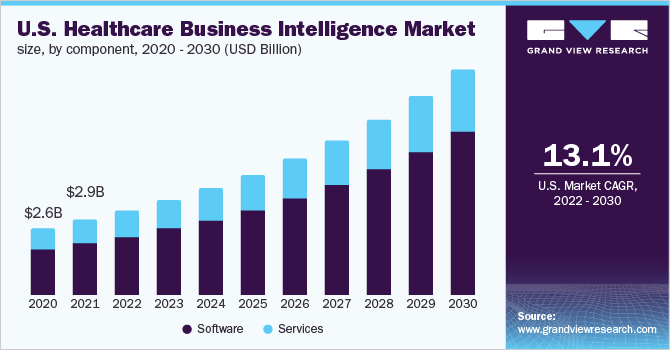
The global healthcare business intelligence market size was valued at USD 6.9 billion in 2021 and is expected to expand at a compound annual growth rate (CAGR) of 13.5% from 2022 to 2030. The healthcare BI industry offers benefits such as improved patient safety, minimized costs, and increased revenue earning which enhances financial and operations outcomes. Also, it ensures better clinical performance and better patient outcomes. The healthcare industry is moving into the data-driven world, thereby, increasing the demand for BI tools. The increased adoption of cloud-based BI tools, such as Customer Relationship Management (CRM) applications by renowned market players, patient engagement CRM owing to their properties such as agility and accessibility is propelling the growth.

U.S. healthcare business intelligence market size, by component, 2020 - 2030 (USD Billion)

The adoption of cloud-based software allows hospitals, health providers, payers, and life sciences manufacturers to convert their data into insightful dashboards and graphs, thereby impelling the market growth. In March 2020, the Australian Department of Health launched the Coronavirus Australia App using Google Cloud to deliver real-time information about the virus spread patterns, lockdowns and restrictions, and Covid-19 specific healthcare information. The interactive graphs and dashboard allow the end-user to directly manage revenues, patient care status, service rate comparisons, patient admission trends, and easy access to patient data without going through multiple data siloes. The BI-enabled analytics graphs allow end-user efficiently data-supported decisions to reduce operating costs, improvise service, and propel market growth. Moreover, the introduction of a mobile-friendly BI solution for staying updated is another vital factor driving revenue growth.

Gather more insights about the market drivers, restraints, and growth of the Global Healthcare Business Intelligence Market

The major benefit of BI also includes improved risk management. Predictive analytics enables healthcare institutions to prevent potential medical challenges patients would face and helps to take timely precautionary measures to mitigate the impact. Also, it is useful in operational management, epidemiology. These BI tools provide critical information in a simplified manner that can be easily interpreted by the users. Also, it supports large-scale data distribution, wherein large volumes of personalized BI content can be efficiently shared with multiple end-users. Thus, owing to the valuable new data insights offered by healthcare BI, the demand for software solutions and services is anticipated to rise at a steady pace over the forecast period. Moreover, the government regulations in countries like the U.S. and Europe allow boosting the uptake of healthcare BI solutions.

Browse through Grand View Research's Healthcare IT Industry Related Reports

Telehealth Market - The global telehealth market size was valued at USD 83.5 billion in 2022 and is projected to expand at a compound annual growth rate (CAGR) of 24.0% from 2023 to 2030.

Surgical Planning Software Market - The global surgical planning software market was valued at USD 102.1 million in 2022 and is estimated to expand at a compound annual growth rate (CAGR) of 6.5% from 2023 to 2030.

Healthcare Business Intelligence Industry Segmentation

Grand View Research, Inc. has segmented the global healthcare business intelligence market based on the type of component, mode of delivery, application, deployment, end use, and region:

Healthcare Business Intelligence Component Outlook (Revenue, USD Million, 2016 - 2030)

  • Software
  • Services

Healthcare Business Intelligence Mode of Delivery Outlook (Revenue, USD Million, 2016 - 2030)

  • On-premise
  • Cloud-based
  • Hybrid

Healthcare Business Intelligence Application Outlook (Revenue, USD Million, 2016 - 2030)

  • Financial Analysis
  • Operational Analysis
  • Clinical Analysis
  • Patient Care

Healthcare Business Intelligence Deployment Outlook (Revenue, USD Million, 2016 - 2030)

  • Self-service BI
  • Corporate BI

Healthcare Business Intelligence End-Use Outlook (Revenue, USD Million, 2016 - 2030)

  • Payers
  • Healthcare Providers
  • Health Information Exchanges (HIEs)
  • Accountable Care Organizations (ACOs)
  • Managed Care Organizations (MCOs)
  • Third-party Administrators (TPAs)

Healthcare Business Intelligence Regional Outlook (Revenue, USD Million, 2016 - 2030)

  • North America
  • Europe
  • Asia Pacific
  • Latin America
  • MEA (Middle East & Africa)

Key Companies profiled:

Some prominent players in the global Healthcare Business Intelligence Industry include

  • Microsoft
  • Oracle Corporation
  • SAP
  • Tableau Software Inc.
  • Perficient Inc.
  • Tibco Software Inc.
  • Infor Inc.
  • Domo Inc.
  • Sisense Inc.
  • Panorama Software Inc

Order a free sample PDF of the Healthcare Business Intelligence Market Intelligence Study, published by Grand View Research.

Walking Aids Market is driven by Increasing Number of Initiatives & Funding by Governments & International Organizations

Walking Aids Industry Overview

The global walking aids market size was valued at USD 2.2 billion in 2021 and is anticipated to grow at a CAGR of 7.1% over the forecast period. The rising geriatric population coupled with the increasing prevalence of arthritis and Parkinson’s is estimated to drive the market growth. In addition, a favorable reimbursement framework and regulatory policies are also anticipated to fuel the market’s growth. However, the mobility devices industry witnessed a significant setback due to the COVID-19 pandemic.

U.S. walking aids market size, by type, 2020 - 2030 (USD Million)

The COVID-19 pandemic initially negatively impacted the demand for the product. The supply chain was highly disrupted due to the pandemic. The pandemic impacted the overall shipping and logistics of mobility and personal care products globally which has also resulted in the high cost of container shipping. The rising cost of supply chain and logistics has had an adverse effect on the company’s finances and liquidity. With the effective COVID-19 protocols and government guidelines, the market is again steadily increasing in every region as the need and demand for the devices increases.

Gather more insights about the market drivers, restraints, and growth of the Global Walking Aids Market

As per the World Bank’s statistics published in 2019, around 15.0% of the world’s population and 20 to 25.0% of the elderly population suffer from some form of disability and it is anticipated to rise in the future. Also, improved accessibility and increased social acceptance are identified as the driving factors for this market.

U.S. walking aids market, type segment is expected to grow at a high compound annual growth rate of 8.4% during the forecast period.

The elderly population is highly prone to falling. These falls can result in hip, pelvis, femur, and spine fractures thereby hampering the physical movement or walking of an individual. Furthermore, falling is considered the second leading cause of accidental and unintentional injury deaths globally. Approximately 424,000 individuals die due to falls every year. Falling, among the elderly population can be prevented by the appropriate use of assistive devices.

Moreover, according to the Centers for Disease Control and Prevention data, nearly 19.4 million adults in the U.S. are unable to walk a quarter-mile. Furthermore, around 40.7 million adults in the U.S. have at least one physical function disability. Thus, the high prevalence of physical disabilities is anticipated to further fuel the market’s growth.

Favorable reimbursement policies offered by organizations such as Medicare are estimated to increase the adoption rate of these devices. Walking aids are covered under the durable medical equipment category by Medicare. The Medicare part B pays for nearly 80.0% of the approved devices while the patient pays the rest 20.0%, thus increasing the affordability and facilitating market demand.

Browse through Grand View Research's Medical Devices Industry Related Reports

Personal Mobility Devices Market - The global personal mobility devices market size was valued at USD 14.9 billion in 2021 and is anticipated to expand at a compound annual growth rate (CAGR) of 6.3% from 2022 to 2030.

Assisted Walking Devices Market - The global assisted walking devices market size was valued at USD 3.4 billion in 2021 and is anticipated to expand at a compound annual growth rate (CAGR) of 6.6% during the forecast period.

Walking Aids Industry Segmentation

Grand View Research has segmented the global walking aids market based on type, and region:

Walking Aids Type Outlook (Revenue, USD Million, 2017 - 2030)

  • Rollators
    • Premium Rollators
    • Low-cost Rollators
  • Others

Walking Aids Regional Outlook (Revenue, USD Million, 2017 - 2030)

  • North America
  • Europe
  • Asia Pacific
  • Latin America
  • MEA (Middle East & Africa)

Market Share Insights:

September 2021: TOPRO acquired the entire share capital of AssiTech. The acquisition will complete the existing product offering of the company.

Key Companies profiled:

Some prominent players in the global Walking Aids Industry include

  • HUMAN CARE
  • Evolution Technologie
  • Invacare Corporation
  • Benmor Medical
  • Carex Health Brands
  • Eurovema AB
  • TOPRO
  • Briggs Healthcare
  • Drive medical design

Order a free sample PDF of the Walking Aids Market Intelligence Study, published by Grand View Research.
Asia Pacific Nutritional Supplements Market is augmented by The Growing Awareness among People Regarding the Benefits

Asia Pacific Nutritional Supplements Industry Overview

The Asia Pacific nutritional supplements market size was valued at USD 140.4 billion in 2021 and is expected to expand at a compound annual growth rate (CAGR) of 6.1% from 2022 to 2030. The Asia Pacific region has been one of the forerunners in the nutritional supplements market. The population across the sub-continent has been increasingly leaning towards leading a healthier life by the adoption of more traditional means and methods, using naturally sourced foods, supplementation, and dietary additives. The geriatric population has reached an all-time high in countries like Japan and China. Improving the quality of life through nutritional supplementation and functional foods has become a priority, driving the market in the APAC region.

China nutritional supplements market size, by product, 2020 - 2030 (USD Billion)

The growing awareness among people regarding the benefits of nutritional supplementation and ease of availability in the region are key factors driving the market. The rise in per capita disposable income in the region’s countries has resulted in increased spending on dietary supplements. As per the National Bureau of Statistics of China, there has been an increase of $1100 in per capita disposable income in a span of 4 years (2008-2012). Consumers in the region are becoming increasingly conscious about their diets, propelling the growth of the nutritional supplements market.

Gather more insights about the market drivers, restraints, and growth of the Asia Pacific Nutritional Supplements market

The Asia Pacific region is known for its prowess in traditional medicine and the population has now started preferring naturally sourced products, functional foods, and enriched foods. According to Euromonitor, Asia Pacific accounted for 57% of the total global revenue for traditional/herbal dietary supplements in 2018. The shift towards a comprehensive approach to health and well-being has had a lasting impact on the nutritional supplements market, especially those derived from natural sources. Nutritional supplements have now become a daily household item across the region.

Growing inclination toward sports and physical activity as a means to achieve fitness goals has also been a key factor in the growth of the supplements market. Fitness enthusiasts and professional athletes regularly consume fitness supplements, like protein powders, and energy-boosting supplements, which, in turn, has contributed to the market growth. According to a report published by the Global Wellness Institute states, the APAC’s physical activity market represents more than 30% of the global market.

The increase in the prevalence of chronic diseases due to the rapid rate of urbanization and changing lifestyles has contributed significantly to the growth of the market. People, to avoid getting diseases associated due to a lack of physical activity, are increasingly opting for nutritional supplementation to overcome any deficiencies and complete their nutritional requirements. The low cost of raw materials and the popularity of naturally sourced products have also been contributing significantly to the growth of the market.

COVID has negatively impacted the growth of the nutritional supplements market in the Asia Pacific region. The majority of the revenue for this region is through exports and due to global lockdowns, the supply chain was disrupted, which affected the growth of the market negatively. The demand for nutritional supplementation grew multi-fold, which presented an opportunity for local vendors to flourish in the regional market. Immunity boosting supplements were the highly demanded category across the region. According to a report by FMCG Gurus, more than 55% of people in the Asia Pacific region have been more conscious about boosting their immunity during COVID.

Browse through Grand View Research's Pharmaceuticals Industry Related Reports

Nutritional Supplements Market - The global nutritional supplements market size is expected to reach USD 358.8 billion in 2021 and is expected to expand at a compound annual growth rate (CAGR) of 6.3% from 2022 to 2030.

Sports Nutrition Market - The global sports nutrition market size was valued at USD 42.9 billion in 2022 and is expected to expand at a compound annual growth rate (CAGR) of 7.4% from 2023 to 2030.

Asia Pacific Nutritional Supplements Industry Segmentation

Grand View Research has segmented the Asia Pacific nutritional supplements market on the basis of product, consumer group, formulation, sales channel, and country:

Asia Pacific Nutritional Supplements Product Outlook (Revenue, USD Million, 2016 - 2030)

  • Sports Nutrition
  • Dietary Supplements
  • Functional Foods and Beverages

Asia Pacific Nutritional Supplements Consumer Group Outlook (Revenue, USD Million, 2016 - 2030)

  • Infants
  • Children
  • Adults
  • Pregnant
  • Geriatric

Asia Pacific Nutritional Supplements Formulation Outlook (Revenue, USD Million, 2016 - 2030)

  • Tablets
  • Capsules
  • Powder
  • Soft gels
  • Liquid
  • Others

Asia Pacific Nutritional Supplements Application Outlook (Revenue, USD Million, 2016 - 2030)

  • Immune Health
  • Eye Health
  • Women Health
  • Beauty Health
  • Brain, Neuro & Mental Health
  • Sleep Disorders
  • Bone & Joint Health
  • Digestive Health
  • Urinary & Kidney Health
  • Heart Health
  • Liver Health
  • Weight Management
  • Energy
  • Others

Asia Pacific Nutritional Supplements Packaging Outlook (Revenue, USD Million, 2016 - 2030)

  • Strip/Blister/Alu-Alu Packaging
  • Sachet Bags
  • Spray
  • Bottles/Cans
  • Vials
  • Jars
  • Pillow Pouches 

Asia Pacific Nutritional Supplements Composition Outlook (Revenue, USD Million, 2016 - 2030)

  • Single Composition
  • Multiple Composition

Asia Pacific Nutritional Supplements Gender Outlook (Revenue, USD Million, 2016 - 2030)

  • Male
  • Female

Asia Pacific Nutritional Supplements Application Outlook (Revenue, USD Million, 2016 - 2030)

  • Brick & Mortar
  • E-commerce

Key Companies profiled:

Some prominent players in the Asia Pacific Nutritional Supplements Industry include

  • Zoetis
  • Boehringer Ingelheim GmbH
  • Elanco
  • Ceva Santé Animale
  • Merck Animal Health
  • Vetiquinol S.A.
  • Virbac, Inc.
  • Norbrook Inc.
  • Dechra Pharmaceuticals
  • Patterson Companies, Inc.
  • Vedco Inc.
  • Covetrus
  • MWI Animal Health
  • Nutramax Laboratories Veterinary Sciences, Inc.
  • Ellevet Sciences

Order a free sample PDF of the Asia Pacific Nutritional Supplements Market Intelligence Study, published by Grand View Research.
Poultry Vaccines Market Growth is accelerated by Rising Incidence of Diseases in Poultry

Poultry Vaccines Industry Overview

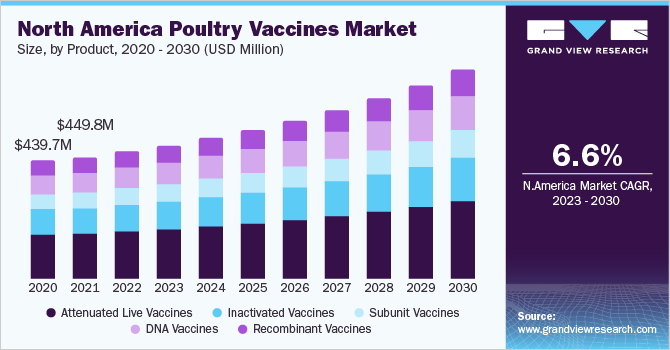
The global poultry vaccines market size was valued at USD 1.86 billion in 2021 and is expected to expand at a compound annual growth rate (CAGR) of 7.1% from 2022 to 2030. Growing product R&D, rising incidence of diseases in poultry, demand to secure food sources, and awareness and initiatives to curb antimicrobial resistance are some of the key drivers of this market. In 2019, HIPRA extended its coccidiosis vaccine lineup with the launch of EVANT - an attenuated vaccine for broilers.

North America Poultry Vaccines Market size, by product, 2020 - 2030 (USD Million)

The COVID-19 pandemic adversely impacted the poultry industry with dampened demand, low sales, unsold inventories, and a drop in prices of poultry meat and eggs. The impact was more pronounced in countries with large poultry populations such as India. Although egg production, dairy production, meat production was included in essential services, the lockdown and movement restrictions disrupted the supply chain. These hurdles combined with the emergence and fear of other avian diseases such as Bird flu in India exacerbated the adverse impact of the pandemic.

Gather more insights about the market drivers, restraints, and growth of the Global Poultry Vaccines Market

However, the COVID-19 pandemic has created opportunities for vaccine manufacturers that can be leveraged to gain market share. This is owing to the growing awareness regarding animal diseases, demand for safe food stock and products, and concerns over zoonoses. Venkys India, for instance, is a key market player involved in the production of SPF eggs, broiler and layer breeding, chicken and eggs processing, poultry feed and equipment, vaccine production, biosecurity products, and many more. The company offers a wide portfolio of poultry vaccines, which together with other poultry products contributed to a 45% revenue share in 2019.

The growing poultry population combined with the rising prevalence of avian diseases is expected to drive the demand for poultry vaccines. Infected meat consumption risks human health, thereby making it imperative that the birds be vaccinated before usage. The main obstacles faced by poultry farms are the rapid spread of diseases and the lack of treatment options. To prevent such situations, vaccination becomes mandatory. In 2019, the U.S. had 19.72 million livestock units of chicken, while Brazil had 14.6 million livestock units of chicken. The large poultry population indicates a significant number of poultry that is susceptible to avian diseases, which can be prevented with timely vaccinations.

According to the OIE-WAHIS database, there were a total of 22 new outbreaks in birds across the globe. This number rose sharply to 836 new outbreaks in 2020 with cases estimated at 2.79 million. The increasing incidence of disease outbreaks in the avian population is thus a key driver for the market. One of the most recent disease notifications includes low pathogenic avian influenza reported in poultry in Italy and highly pathogenic avian influenza reported in Russia in October 2021.

Browse through Grand View Research's Animal Health Industry Related Reports

Rabies Veterinary Vaccines Market - The global rabies veterinary vaccines market size was valued at USD 584.8 million in 2022 and is expected to expand at a compound annual growth rate (CAGR) of 4.1% from 2023 to 2030.

Animal Wound Care Market - The global animal wound care market size was estimated at USD 1.08 billion in 2022 and is expected to grow at a compound annual growth rate (CAGR) of 6.92% over the forecast period.

Poultry Vaccines Industry Segmentation

Grand View Research has segmented the global poultry vaccines market on the basis of application, product, disease type, and region:

Poultry Vaccines Application Outlook (Revenue, USD Million, 2017 - 2030)

  • Broiler
  • Layer
  • Breeder

Poultry Vaccines Product Outlook (Revenue, USD Million, 2017 - 2030)

  • Attenuated Live Vaccines
  • Inactivated Vaccines
  • Subunit Vaccines
  • DNA Vaccines
  • Recombinant Vaccines

Poultry Vaccines Disease Type Outlook (Revenue, USD Million, 2017 - 2030)

  • Infectious Bronchitis
  • Infectious Bursal Diseases
  • Infectious Laryngotracheitis
  • Egg Drop Syndrome
  • Adenovirus
  • Duck Viral Enteritis
  • Inclusion Body Hepatitis
  • Coccidiosis
  • Avian Influenza
  • Marek's Disease
  • Newcastle Disease
  • Salmonella
  • Avian Encephalomyelitis
  • Fowl Cholera

Poultry Vaccines Regional Outlook (Revenue, USD Million, 2017 - 2030)

  • North America
  • Europe
  • Asia Pacific
  • Latin America
  • MEA (Middle East & Africa)

Market Share Insights:

January 2020: Boehringer Ingelheim launched the VAXXITEK HVT+IBD+ND vaccine  to protect poultry against Newcastle Disease, Marek’s Disease, and Infectious Bursal Disease (classic and variant types).

July 2019: Ceva acquired IDT Biologika GmbH’s veterinary biopharmaceutical as well as R&D business.

Key Companies profiled:

Some prominent players in the global Poultry Vaccines Industry include

  • Boehringer Ingelheim International GmbH
  • Ceva
  • Zoetis
  • Elanco
  • Intervet Inc., a subsidiary of Merck & Co., Inc.
  • Hester Biosciences Limited
  • Vaxxinova International BV
  • Venkys India
  • Calier
  • KM Biologics
  • Phibro Animal Health Corporation

Order a free sample PDF of the Poultry Vaccines Market Intelligence Study, published by Grand View Research.

U.S. Companion Animal Health Market is driven by Increasing Awareness among Pet Owners Regarding Animal Diagnostics

U.S. Companion Animal Health Industry Overview

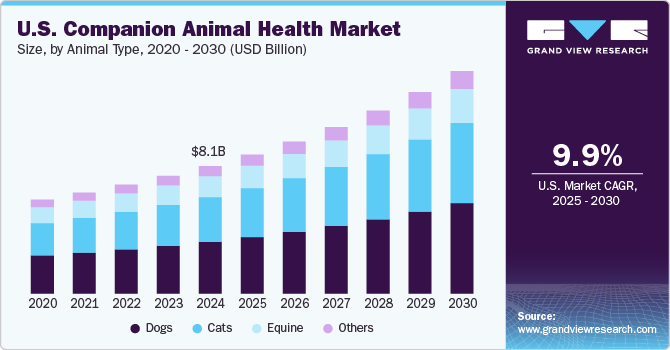
The U.S. companion animal health market size was valued at USD 4.83 billion in 2021 and is expected to expand at a compound annual growth rate (CAGR) of 10.2% from 2022 to 2030. The market is primarily driven by the growing adoption of companion animals in the country, coupled with the increasing awareness among pet owners regarding animal diagnostics.

U.S. companion animal health market size, by product, 2020 - 2030 (USD Billion)

Dogs are the most commonly owned companion animals, followed by cats. According to the U.S. Census Bureau’s American Housing Survey, in 2020, around 67% of households have at least one pet. Growing pet ownership has upped concerns regarding their health, thereby driving the market. The advent of artificial intelligence (AI) has enabled early and accurate diagnosis, thus providing promising growth opportunities in the coming years.

Gather more insights about the market drivers, restraints, and growth of the U.S. Companion Animal Health market

The market is positively impacted by the COVID-19 pandemic as there is an increase in pet adoption. During the first half of 2020, pet adoption in the U.S. alone reported a year-on-year increase of 50%. This has resulted in the increased number of households with pets and significant expenditure on them. Animal health companies as well registered the growth during the pandemic. For instance, Zoetis reported a 7% higher revenue in 2020 compared to the previous year. This performance was driven by the newly launched companion animal parasiticide product as well as Zoetis’ key dermatology portfolio.

Increasing availability and adoption of insurance for companion animals with widening coverage for accidents and illnesses is also anticipated to boost the market growth. As per the North American Pet Health Insurance Association in 2019, the average monthly charge of pet insurance is USD 27.9 for cats and USD 44.7 for dogs, covering both accidents and illnesses. The association also states that dogs accounted for around 83% of insurance premiums while cats held a 17% share. As the cost of surgeries and diagnostics continues to increase, the inclination of pet owners toward insurance is also on a rise.

The rising incidence of cancer, especially in dogs, is anticipated to provide a growth platform for the market. As per the Animal Cancer Foundation, 65 million dogs and 32 million cats are suffering from cancer in the U.S. Dogs are more prone to suffer from malignant neoplasia (tumor) and lymphoma, as per the American Veterinary Medical Association. The market is supported by numerous health initiatives, especially for cancer treatment, by government and private organizations.

Browse through Grand View Research's Animal Health Industry Related Reports

Animal Health Market - The global animal health market size was valued at USD 39.9 billion in 2021 and is expected to witness a compound annual growth rate (CAGR) of 10.0% from 2022 to 2030.

Veterinary Telemetry Systems Market - The global veterinary telemetry systems market size was estimated at USD 271.9 million in 2021 and is anticipated to expand at a compound annual growth rate (CAGR) of 6.59% from 2022 to 2030.

U.S. Companion Animal Health Industry Segmentation

Grand View Research has segmented the U.S. companion animal health market on the basis of animal type, product, distribution channel, and end use:

U.S. Companion Animal Health Animal Type Outlook (Revenue, USD Million, 2017 - 2030)

  • Dog
  • Cat
  • Equine
  • Others

U.S. Companion Animal Health Product Outlook (Revenue, USD Million, 2017 - 2030)

  • Vaccines
  • Pharmaceuticals
    • OTC
    • Prescription
  • Feed Additives
  • Diagnostics
  • Others

U.S. Companion Animal Health Distribution Channel Outlook (Revenue, USD Million, 2017 - 2030)

  • Retail
  • E-commerce
  • Hospital Pharmacy

U.S. Companion Animal Health End-use Outlook (Revenue, USD Million, 2017 - 2030)

  • Point-of-care testing/In-house testing
  • Veterinary Hospitals & Clinics
  • Others

Market Share Insights:

July 2019: Zoetis and Colorado State University entered into an agreement to establish a research lab to develop new immunotherapies for veterinary patients.

April 2019: Merck acquired Antelliq Corporation in order to increase its foothold in animal health monitoring and smart data management for both companion and livestock animals.

Key Companies profiled:

Some prominent players in the U.S. Companion Animal Health Industry include

  • Zoetis
  • Boehringer Ingelheim GmbH
  • Elanco
  • Ceva Santé Animale
  • Merck Animal Health
  • Vetiquinol S.A.
  • Virbac, Inc.
  • Norbrook Inc.
  • Dechra Pharmaceuticals
  • Patterson Companies, Inc.
  • Vedco Inc.
  • Covetrus
  • MWI Animal Health
  • Nutramax Laboratories Veterinary Sciences, Inc.
  • Ellevet Sciences

Order a free sample PDF of the U.S. Companion Animal Health Market Intelligence Study, published by Grand View Research.

Integrated Workplace Management System Market Top Players are FSI (FM Solutions) Ltd and SAP SE

Integrated Workplace Management System Industry Overview

The global integrated workplace management system market size is expected to reach USD 7.85 billion by 2027, according to a new study by Grand View Research, Inc. It is projected to register a CAGR of 12.8% from 2021 to 2027, Growing demand for solutions that help improve business performance, reduce working capital, reinforce company growth, improve customer service, and simplify workload is expected to drive the market. Additionally, enterprises across the globe are focusing on reducing operational costs and increasing the effectiveness of their decision-making processes which is anticipated to drive the demand for integrated workplace management systems (IWMSs) over the forecast period.

Europe integrated workplace management system market share, by end-use, 2020 (%)

Organizations across the globe are also investing in big data analytics to obtain valuable business insights for decision-making purposes. Big data analytics can help in data integration, data segmentation, and business intelligence. The growing adoption of cloud computing and big data analytics is opening numerous growth opportunities for vendors in the IWMS market.

Integrated Workplace Management System Market Segmentation

Grand View Research has segmented the global integrated workplace management system market based on solution, service, deployment, enterprise size, end-use, and region:

Based on the Solution Insights, the market is segmented into Real Estate & Lease Management, Facilities & Space Management, Asset & Maintenance Management, Project Management, and Environment Management

  • The facilities and space management segment dominated in 2020 and accounted for over 29% of the market. This can be attributed to the growing demand for upgrades and maintenance of existing solutions, which helps increase the efficiency of decision-making processes.
  • Facilities and space management solutions allow businesses to track space utilization across all areas, resulting in savings across equipment maintenance and replacement costs by altering operational parameters such as lighting operational hours, set temperatures, and fresh-air intake.

Based on the Services Insights, the market is segmented into Professional Services and Managed Services.

  • The professional services segment dominated the market in 2020 and accounted for a share of over 65%. This can be attributed to the rising complexities in business operations and the growing adoption of IWMS solutions.
  • The growing demand for third-party support and maintenance services, owing to cost-effectiveness and experienced and well-trained technicians are anticipated to drive the growth of the professional services segment.

Based on the Deployment Insights, the market is segmented into Cloud and On-premise.

  • The on-premise segment dominated the market in 2020 and accounted for a share of over 50%.
  • The cloud segment is anticipated to register significant growth over the forecast period.
  • The demand for cloud-based IWMS solutions has increased owing to its benefits such as minimum Total Cost of Ownership (TCO), scalability, and flexibility.

Based on the Enterprise Size Insights, the market is segmented into Large Enterprises and Small & Medium Enterprises.

  • The large enterprises' segment dominated the market in 2020 with a share of over 60%. The segment is likely to expand at a promising pace over the forecast period as well.
  • Opening of offices post the COVID-19 pandemic, organizations are likely to adopt transitional measures such as workplace distancing to ensure no further spread of the viral disease. This is expected to increase the demand for IWMS software to efficiently manage the floorspace and employee health.

Based on the End-use Insights, the market is segmented into Public Sector, IT & Telecom, Manufacturing, BFSI, Real Estate & Construction, Retail, Healthcare, and Others.

  • The manufacturing segment dominated the market in 2020 and accounted for a share of over 20%.
  • The real estate and construction segment is anticipated to register considerable growth over the forecast period.
  • The rising demand for effectively managing all major aspects of a real estate project by minimizing operational costs is anticipated to propel the demand for IWMS solutions within the real estate and construction segment.

Integrated Workplace Management System Regional Outlook

  • North America
  • Europe
  • Asia Pacific
  • Latin America
  • Middle East & Africa (MEA)

Key Companies Profile & Market Share Insights

The market is highly fragmented owing to the presence of a large number of market players across the globe. Major vendors in the market are engaging in new product development, mergers and acquisitions, and partnerships to stay competitive in the market. Vendors are heavily investing in the development of new and improved versions of solutions, which may help them maintain their competitive position in the market.

Some of the prominent players in the Integrated Workplace Management System market include:

  • Accruent
  • ARCHIBUS, Inc.
  • FM:Systems
  • FSI (FM Solutions) Limited
  • International Business Machines Corporation
  • MRI Software LLC
  • Nemetschek Group (Spacewell)
  • Planon
  • SAP SE
  • Trimble Inc.

Order a free sample PDF of the Integrated Workplace Management System Market Intelligence Study, published by Grand View Research.
Which segment accounted for the largest marketing resource management market share?

Marketing Resource Management Industry Overview

The global marketing resource management market size is expected to reach USD 6.89 billion by 2027, according to a new report by Grand View Research, Inc. The market is anticipated to register a CAGR of 11.7% from 2021 to 2027. Marketing Resource Management (MRM) is a cloud-based software that is widely used by organizations for effectively centralizing and managing their marketing operations. It enables organizations to unify brand compliance and marketing workflows and effectively track their Return on Investment (ROI).

Europe marketing resource management market share, by end-use, 2020 (%)

Marketing Resource Management (MRM) is a technology used to efficiently handle workforce and associated technology and operations such as planning, production, and design of marketing processes. The emergence of MRM applications has helped businesses in their planning and budgeting activities. By using functionalities such as budgeting and planning, marketing divisions can effectively plan their budgets, define the expense types, and closeouts, among others.

Marketing Resource Management Market Segmentation

Grand View Research has segmented the global marketing resource management market based on solution, services, deployment, enterprise size, end-use, and region:

Based on the Services Insights, the market is segmented into Consulting & Implementation and Training, Support, and Maintenance.

  • The consulting and implementation segment dominated the market in 2020 and accounted for more than 55.0% share of the global revenue. The segment growth can be attributed to the growing integration of MRM solutions in marketing business operations.
  • The training, support, and maintenance segment is anticipated to register the highest growth over the forecast period.

Based on the Solution Insights, the market is segmented into Brand & Advertising Management, Capacity Planning Management, Creative Production Management, Financial Management, Marketing Asset Management, Marketing Reporting & Analytics, Project Management, and Others

  • The marketing asset management segment dominated the market in 2020 and accounted for more than 15.0% share of the global revenue. They help marketers in digital assets management. 
  • The brand and advertisement management segment is anticipated to register the highest growth over the forecast period.
  • The segment growth can be attributed to the increasing adoption of these solutions by global companies to increase the perceived value of a brand or product line over time.

Based on the Deployment Insights, the market is segmented into Cloud and On-premise.

  • The on-premise segment dominated the market in 2020 and accounted for more than 55.0% share of the global revenue.
  • The cloud segment is expected to register the highest growth over the forecast period. The growth of the segment can be attributed to the increasing need to manage information in a secure, efficient, consolidated, and remotely accessible manner.

Based on the Enterprise Size Insights, the market is segmented into Large Enterprises and Small & Medium Enterprises.

  • The large enterprise segment dominated the MRM market in 2020 and accounted for more than 56.0% share of the global revenue.
  • The adoption of MRM solutions among large enterprises is significantly high as these solutions help large enterprises in effectively managing their extensive product portfolio and allocating marketing budgets.
  • The small and medium enterprises segment is anticipated to register the highest growth over the forecast period. 

Based on the End-use Insights, the market is segmented into BFSI, Consumer Goods & Retail, Healthcare, IT & Telecom, Manufacturing, Media & Entertainment, Travel & Hospitality, and Others.

  • The manufacturing segment dominated the market in 2020 and accounted for more than 15.0% share of the global revenue.
  • The consumer goods and retail segment is anticipated to register the highest growth over the forecast period.
  • The increasing need to target customers and market products based on digital footprint is expected to propel the adoption of MRM solutions in the consumer goods and retail industry.
  • Numerous consumer goods companies and retailers are leveraging the internet by introducing their e-commerce sites, effectively using diverse mediums to connect with their clientele, and using MRM solutions to improve their content distribution across those channels.

Marketing Resource Management Regional Outlook

  • North America
  • Europe
  • Asia Pacific
  • Latin America
  • Middle East & Africa (MEA)

Key Companies Profile & Market Share Insights

The market is highly fragmented in nature. The market vendors have adopted different types of inorganic and organic growth strategies, such as partnerships & collaborations, mergers and acquisitions, and new product launches, to expand their offerings in the market. The prominent players in the market are more focused on offering cloud-based and on-premise solutions to large as well as small and medium enterprises. These solutions offer various benefits, such as omnichannel personalization, multivariate testing, and AI-powered automation and scale.

Some of the prominent players in the Marketing Resource Management market include:

  • Adobe
  • Aprimo US LLC
  • BrandMaker
  • HCL Technologies Limited
  • Infor, Inc.
  • Microsoft
  • Northplains
  • SAP SE
  • SAS Institute, Inc.
  • Workfront, Inc.

Order a free sample PDF of the Marketing Resource Management Market Intelligence Study, published by Grand View Research.
Wearable Payments Devices Market is driven by Increasing Adoption of Cashless Transactions

Wearable Payments Devices Industry Overview

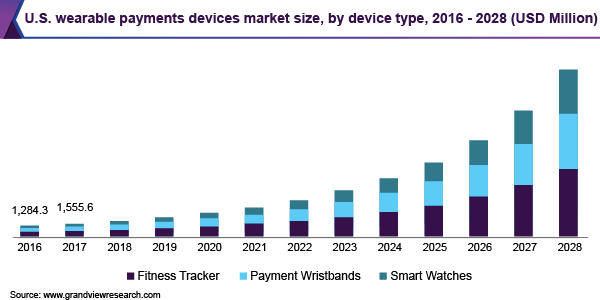
The global wearable payments devices market size is expected to reach USD 80.39 billion by 2028, according to a new report by Grand View Research, Inc. It is expected to expand at a CAGR of 29.8% from 2021 to 2028. Over time, payment systems have adapted to suit the needs of customers, such as increased convenience and reduced time while making payments. The growing popularity of contactless payment technology, coupled with the increasing adoption of wearable devices, such as smartwatches for contactless payments, is expected to fuel the market growth over the forecast period.

U.S. wearable payments devices market size, by device type, 2016 - 2028 (USD Million)

Wearables are gadgets or mobile phones that are worn by users to indirectly or directly interact with the device. Majorly used devices are smartwatches, fitness or health trackers, and wristbands. In terms of functionality, there are numerous wearables that are used in the commercial market, and the low entry barriers have enabled the high proliferation of payments devices.

Wearable Payments Devices Market Segmentation

Grand View Research has segmented the global wearable payments devices market based on device type, technology, application, and region:

Based on the Type Insights, the market is segmented into Fitness Tracker, Payment Wristbands, and Smart Watches.

  • The fitness tracker segment led the market and accounted for more than 43.0% share of the global revenue in 2020.
  • Fitness trackers are expected to gain momentum owing to the increasing use of a variety of fitness devices and an increasing number of fitness enthusiasts across the globe.
  • The smartwatches segment is anticipated to witness the highest growth over the forecast period.
  • The growing focus of vendors on launching low-priced smartwatches is expected to boost the adoption of smartwatches over the forecast period.

Based on the Application Insights, the market is segmented into Festival & Life Events, Fitness, Healthcare, Retail, Transportation, and Others.

  • The retail segment led the market and accounted for more than 29.0% share of the global revenue in 2020.
  • The segment growth can be attributed to the increasing demand for cashless payments in markets, local shops, and e-commerce.
  • The festival and life events segment is anticipated to witness significant growth over the forecast period.
  • Customers are preferring wearable payment devices, such as payment rings and wristbands, as these devices reduce cash in circulation at big events and improve payment speed.

Based on the Technology Insights, the market is segmented into Barcodes, Contactless Point of Sale (POS) Terminals, Near Field Communication (NFC), Quick Response (QR) Codes, and Radio Frequency Identification (RFID).

  • The barcodes segment dominated the market and accounted for more than 30.0% share of the global revenue in 2020.
  • The contactless Point of Sale (POS) terminals segment is anticipated to witness the highest growth over the forecast period.
  • The introduction of NFC and IoT-based contactless payment capabilities into wearable devices is expected to fuel the growth of the contactless POS terminals segment.

Wearable Payments Devices Regional Outlook

  • North America
  • Europe
  • Asia Pacific
  • Latin America
  • Middle East & Africa (MEA)

Key Companies Profile & Market Share Insights

The market is moderately fragmented and competitive in nature. Mergers & acquisitions, joint ventures, strategic collaborations, and product launches are some of the business strategies adopted by prominent vendors to strengthen their geographical presence and market positioning. These prominent vendors contend in terms of product differentiation, availability of apps, portfolio, digital content, and pricing. Constant innovations in product portfolios are further anticipated to intensify market competition over the forecast period.

Some of the prominent players in the Wearable Payments Devices market include:

  • Apple, Inc.
  • Barclays PLC
  • Gemalto NV
  • Google LLC
  • Mastercard
  • Nymi
  • PayPal Holdings Inc.
  • Samsung Electronics
  • Visa Inc.
  • Wirecard

Order a free sample PDF of the Wearable Payments Devices Market Intelligence Study, published by Grand View Research.
E-liquid Market Growth is attributed to Rising Social Media Influence about Vaping

E-liquid Industry Overview

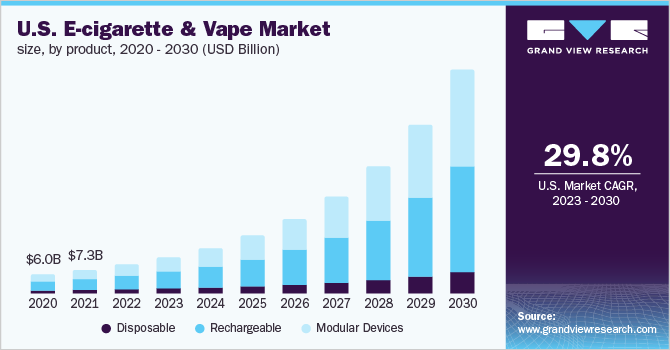
The global e-liquid market size is expected to reach USD 3.3 billion by 2027, according to a new study by Grand View Research, Inc. The market is expected to expand at a CAGR of 13.4% from 2021 to 2027. The advent of e-cigarette products such as squonk mods and pod systems has increased its popularity and adoption in recent years. The rising demand for these products globally is expected to drive the market over the forecast period. In addition, the general presumption that these products can reduce the risk of lung disorders is fueling the market. Moreover, the absence of the tobacco burning process that is often found in conventional smoking products is expected to drive the market in the near future. 

U.S. e-cigarette and vape market size, by product, 2020 - 2030 (USD Billion)

The growing adoption of e-cigarettes among youngsters is escalating the market value of e-liquid. Owing to the absence of tobacco and the availability of various flavors, such as chocolate, menthol, blueberry, and a range of fruit flavors, the appeal, and acceptability of these products is expected to increase among non-smokers as well. The growing demand for e-cigarettes and vapes in the market can also be attributed to their minimal environmental footprint compared to traditional cigarette buds. As e-liquids are used in e-cigarettes and vaporizers, the producers are capitalizing on the trend of eco-friendly vaping, which is capturing consumer attention.

E-liquid Market Segmentation

Grand View Research has segmented the global e-liquid market based on flavor, type, distribution channel, and region:

Based on the Flavor Insights, the market is segmented into Menthol, Tobacco, Dessert, Fruits & Nuts Chocolate, and Others.

  • The tobacco segment dominated the market and accounted for the largest revenue share of over 30.0% in 2020. This can be attributed to the rising demand for tobacco-flavored e-liquid among smokers as it provides the experience of smoking real tobacco.
  • Furthermore, the increasing consumption of tobacco products among students and females is anticipated to drive the growth of the tobacco segment over the forecast period.
  • The rising demand has encouraged vendors to increasingly focus on developing and offering new flavors of e-liquids in the market.

Based on the Type Insights, the market is segmented into Pre-Filled and Bottled.

  • The bottled segment dominated the market and accounted for the largest revenue share of over 50.0% in 2020.
  • The pre-filled segment is anticipated to register considerable growth over the forecast period. This can be attributed to the fact that cartridges prefilled with e-liquid are easy to dispose of.
  • Furthermore, the cost-effectiveness of the pre-filled e-liquids and the rising demand for new flavors among youngsters is anticipated to drive the growth of the segment over the forecast period.

Based on the Distribution Channel Insights, the market is segmented into Online, and Retail Store.

  • The retail store segment dominated the market and accounted for the largest revenue share of over 65.0% in 2020. This can be attributed to the fact that some retail stores allow customers to test various e-liquid flavors and e-cigarette products before making the purchase.
  • The online segment is expected to register significant growth over the forecast period. Rising developments in the online distribution platforms to restrict the purchase of nicotine products by underaged users are expected to drive the growth of the online segment over the forecast period.

E-liquid Regional Outlook

  • North America
  • Europe
  • Asia Pacific
  • Latin America
  • Middle East & Africa (MEA)

Key Companies Profile & Market Share Insights

Key market players are engaging in new product development, partnerships, and acquisitions to strengthen their positions in the market and expand their operations across the globe. Manufacturers are dependent on a number of small and medium-sized third-party suppliers or manufacturers. However, failure to renew agreements or the failure of the distribution channels of third-party suppliers significantly affect the operations of manufacturers is anticipated to hamper the market growth. Key players are heavily investing in the development of e-liquids based on government guidelines issued by local authorities.

Some of the prominent players in the e-liquid market include:

  • Black Note, Inc.
  • Breazy
  • BSMW Ltd.
  • Crystal Canyon Vapes LLC
  • eLiquid Factory
  • Mig Vapor LLC
  • Molecule Labs, Inc.
  • Nicopure Labs LLC
  • Philip Morris International Inc.
  • Turning Point Brands, Inc.
  • VMR Products LLC

Order a free sample PDF of the E-liquid Market Intelligence Study, published by Grand View Research.

Ultrasonic Sensors Market is driven by Its Increased Demand in Healthcare

Ultrasonic Sensors Industry Overview

The global ultrasonic sensors market size is expected to reach USD 6.00 billion by 2027, according to a new report by Grand View Research, Inc. It is anticipated to expand at a CAGR of 6.6% from 2021 to 2027. The increasing adoption of ultrasonic sensors in automobiles for applications such as parking assistance systems and Automated Driver Assistance Systems (ADAS) is expected to emerge as a major factor influencing the market growth. The increasing demand for ultrasonic sensors in factory automation is expected to provide lucrative opportunities to market players. 

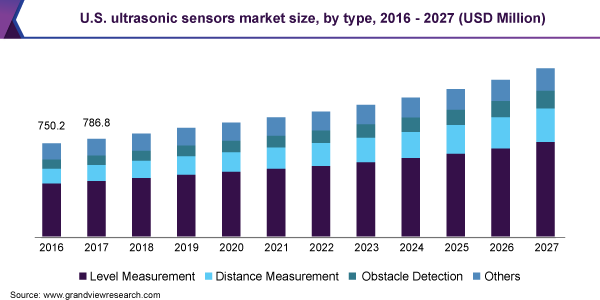
U.S. ultrasonic sensors market size, by type, 2016 - 2027 (USD Million)

Ultrasonic sensors are extensively used in the Unusual Motion Detection (UMD) technology that continuously monitors a scene and detects and marks unusual events. Furthermore, vast advancements in ultrasonic sensors such as the usage of matched filters have made them more accurate and more suitable for use in flow measurement by utility companies. Rising demand across these applications is expected to drive market growth over the forecast period.

Ultrasonic Sensors Market Segmentation

Grand View Research has segmented the global ultrasonic sensor market based on technology, type, end-use, and region:

Based on the Type Insights, the market is segmented into Level Measurement, Distance Measurement, Obstacle Detection, and Others.

  • The obstacle detection segment accounted for over 10% of the market share in 2020 owing to the increasing usage of these systems in collision avoidance systems of automobiles.
  • Stringent government policies and regulations related to the installation of vehicle safety features such as collision avoidance systems and airbags have further fueled the growth prospects of the segment.
  • The level measurement segment is anticipated to register a promising CAGR owing to the increasing demand for level sensors for continuous level monitoring in oil and gas, food and beverage, and water and wastewater infrastructure.
  • The rising usage of level sensors for monitoring storage units and downstream processing plants has positively impacted demand across the oil and gas sector.

Based on the Technology Insights, the market is segmented into Retro-reflective Sensor, Through-beam Sensor, and Others.

  • The retro-reflective segment accounted for the 40% market share in 2020. This can be attributed to the advantages provided by these sensors, including reduced maintenance costs, installation costs, and reliability in detecting transparent objects. 
  • The through-beam segment is anticipated to register a high CAGR over the forecast period. This can be attributed to the increasing usage of these sensors in fill-level measurement applications in transparent containers. Furthermore, these sensors are extensively used in water & wastewater treatment plants for measuring the turbidity of water.

Based on the End-use Insights, the market is segmented into Consumer Electronics, Automotive, Aerospace & Defense, Healthcare, Industrial, and Others.

  • The automotive segment accounted for a 15% share of the market in 2020. In the automotive industry, ultrasonic sensors are widely used in applications such as parking assistance and collision avoidance.
  • Several companies, including Texas Instruments Incorporated, Murata Manufacturing Co., Ltd., and NXP Semiconductors, are focusing on the development of ultrasonic sensors for Advanced Driver Assistance System (ADAS), further fueling the market growth.
  • The healthcare segment is projected to register the highest CAGR over the forecast period, thanks to the rising demand for ultrasonography and ultrasonic scanning.

Ultrasonic Sensors Region Outlook

  • North America
  • Europe
  • Asia Pacific
  • Latin America
  • Middle East & Africa (MEA)

Key Companies Profile & Market Share Insights

Several other players are emphasizing partnerships, mergers, and acquisitions for staying competitive in the market.

Some of the prominent players in the ultrasonic sensors market include:

  • Balluff Inc.
  • Banner Engineering Corp.
  • Baumer
  • Hans Turck GmbH & Co. KG
  • Ifm electronic GmbH
  • Murata Manufacturing Co., Ltd.
  • Pepperl+Fuchs GmbH
  • SICK AG
  • Siemens

Order a free sample PDF of the Ultrasonic Sensors Market Intelligence Study, published by Grand View Research.

Urban Growth and Electricity Demand Expand the Footprint of the Protective Relay Market

Protective relays rarely make headlines, but power systems depend on them. They detect faults, isolate the affected section in milliseconds,...