Top Players Operating in The Nootropics Market Include NooCube, Mind Lab Pro, TruBrain and Neu Drinks

Nootropics Industry Overview

The global nootropics market size to be valued at USD 29.24 billion by 2028 and is expected to grow at a compound annual growth rate (CAGR) of 15.0% during the forecast period. Rising demand for brain boosters and smart drugs is anticipated to fuel market growth. A large number of students and professionals consume these smart drugs to improve focus and memory. Continuous product development using both synthetic and natural raw materials is projected to further fuel the product demand.

The COVID-19 pandemic made a significant contribution in boosting the demand for nootropics as the consumers' inclination has shifted towards brain-health boosting supplements, drinks, and bars to improve their cognitive health. Moreover, several startups and retailers were benefited from online sales of nootropics owing to the COVID-19 pandemic. Furthermore, the demand for organic nootropics such as coffee and supplements with natural ingredients like Brahmi, arctic root, turmeric, ginseng, and pine bark witnessed a surge as consumers are seeking natural nootropics products.

Gather more insights about the market drivers, restraints, and growth of the Global Nootropics market

A significant amount of the adult U.S. population consumes multi-vitamin tablets for improving functional capabilities of the brain such as improving cognition, memory, alertness, concentration, creativity, and attention. Moreover, according to the article published on dualdiagnosis.org, in March 2021, smart drugs and nootropics are on the rise in the U.S. as various consumers consume them to improve mental power, which is expected to continue during the forecast period.

Nootropics help the brain to focus, which is highly beneficial for sports enthusiasts. Therefore, companies have been strategically targeting these consumers. For instance, Koios, a nootropic beverage firm located in Colorado, U.S. markets its products in the sports industry by appointing professional players for commercials and sponsoring famous e-sports teams. Citicoline, Choline bitartrate, Alpha-GPC, Caffeine, and N-Acetyl-L-Tyrosine are the naturally derived nootropics that help in improving focus.
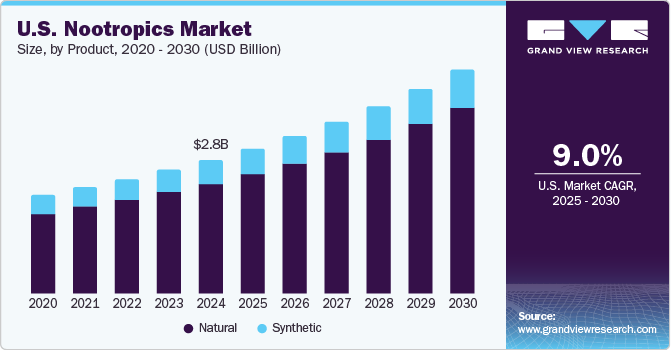
U.S. Nootropics Market size, by form

Product manufacturers have been introducing new products to cater to the overwhelming demand from consumers. For instance, in April 2019, Gaia Herbs launched a new product - ‘Bacopa’, which is a vegan supplement made using natural ingredients. It contains lemon balm, saffron, and spearmint.

In May 2021, Neuratech (Zoii PTY LTD), a startup based in Brisbane, planned to launch 3x new nootropics. These products are designed to solve and support specific problems related to brain wellness and are available in powered and beverage form in flavors including vanilla and hot chocolate.

Browse through Grand View Research's Consumer F&B Industry Research Reports.

Gluten-free Bakery Market - The global gluten-free bakery market size was valued at USD 1.64 billion in 2021 and is expected to register a compound annual growth rate (CAGR) of 10.8% from 2022 to 2030.

Wheatgrass Products Market - The global wheatgrass products market size was estimated at USD 174.73 million in 2021 and is expected to expand at a compound annual growth rate (CAGR) of 6.3% from 2022 to 2030.

Nootropics Market Segmentation

Grand View Research has segmented the global nootropics market on the basis of form, distribution channel, and region:

 Nootropics Form Outlook (Revenue, USD Million, 2016 - 2028)

  • Capsules/Tablets
  • Powder
  • Drinks
  • Others

Nootropics Distribution Channel Outlook (Revenue, USD Million, 2016 - 2028)

  • Online
  • Offline

Nootropics Regional Outlook (Revenue, USD Million, 2016 - 2028)

  • North America
  • Europe
  • Asia Pacific
  • Central & South America
  • Middle East & Africa

Market Share Insights:

April 2021: Unilever announced that it had signed an agreement to buy Onnit, a holistic company based in Austin, Texas (US) that focuses on supplements for maintaining physical fitness. This agreement resulted in a purposive vision to make improvements in the wellbeing of consumers through scientific solutions 

February 2022: Vaga.org and Vagarights.com have merged to improve the online experience for nootropics research and reviews. The merging of both the organizations has been successful in providing accurate scientific information and suitable research. Hence, both the companies will carry forward the brand, VAGA and this resulted in providing individuals with insightful content on health and wellness

Key Companies profiled:

Some prominent players in the global Nootropics market include

  • Onnit Labs
  • Reckitt Benckiser Group plc.
  • Mental Mojo, LLC
  • NooCube
  • Mind Lab Pro
  • TruBrain
  • Neu Drinks
  • Peak Nootropics
  • Zhou Nutrition
  • Kimera Koffeee

Order a free sample PDF of the Nootropics Market Intelligence Study, published by Grand View Research.
Increase in Home Renovation and Home Decoration Activities to Make a Way for Scented Candles Market Growth by 2028

Scented Candles Industry Overview

The global scented candles market size was valued at USD 533.5 million in 2020 and is expected to expand at a compound annual growth rate (CAGR) of 3.3% from 2021 to 2028. The growth of the market is being driven by an increase in the number of hotels, restaurants, wellness facilities, and religious institutions.

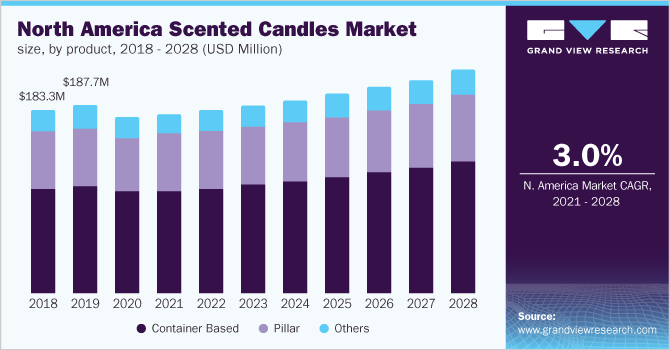
North America scented candles market size, by product, 2018 - 2028 (USD Million)

With an increase in disposable income, there has been an increase in home renovation and home decoration activities. An increasing number of people want to make their home a comfortable place to live since the pandemic has resulted in extended periods spent at home. Sculpture scented candles or organically shaped candles are some of the popular 2020 trends adopted by consumers.

Gather more insights about the market drivers, restraints, and growth of the Global Scented Candles market

Scented candles can be used in both commercial and residential sectors. An increase in home renovation and home décor activities has driven the demand for scented candles in the residential sector. As these candles have therapeutic properties, commercial businesses like spas frequently use scented candles. Market players are focusing on offering innovative scents that resonate with their customers to expand market shares. Several companies have also increased their R&D investments to come up with better products.

A trend that was popular in 2020 was twisted candles. These candles are vibrant, functional, decorative, and customizable, and can be molded in any shape. These candles were created by Dutch designer Lex Pott, who is known among candle aficionados as the designer of Hay’s hit Pillar candles. The designer’s twisted candle gained popularity toward the end of 2019 and exploded on social media in 2020. According to Areaware, consumer's interest in sculptural candles was increasing before the pandemic, but it surged once everyone was supposed to spend more time at home due to lockdown.

Browse through Grand View Research's Homecare & Décor Industry Research Reports.

Disinfectant Spray Market - The global disinfectant spray market size was valued at USD 9.1 billion in 2021 and is expected to expand at a compound annual growth rate (CAGR) of 8.2% from 2022 to 2030.

Home Decor Market - The global home decor market size was valued at USD 663.1 billion in 2018. Rising demand for furniture and fixtures as well as upholstery products will boost the product demand in the market.

Scented Candles Market Segmentation

Grand View Research has segmented the global scented candles market on the basis of product, distribution channel, and region:

 Scented Candles Product Outlook (Revenue, USD Million, 2016 - 2028)

  • Container-based
  • Pillar
  • Others

Scented Candles Distribution Channel Outlook (Revenue, USD Million, 2016 - 2028)

  • Hypermarket & Supermarket
  • Convenience Stores
  • Online

Scented Candles Regional Outlook (Revenue, USD Million, 2016 - 2028)

  • North America
  • Europe
  • Asia Pacific
  • Central & South America
  • Middle East & Africa

Market Share Insights:

February 2019: NEST New York opened its flagship store in New York, which is the brand’s first retail venture. The store offers 215 products from across the brand’s three product categories- home fragrance, fine fragrance, and body care. It also offers limited edition and specialty products.

Key Companies profiled:

Some prominent players in the global Scented Candles market include

  • Village Candle
  • Portmeirion Group PLC
  • Newell Brands
  • MVP Group International, Inc.
  • Estée Lauder Companies Inc.
  • Diptyque Paris
  • Lalique Group SA
  • L Brands
  • NEST New York
  • Thymes, LLC

Order a free sample PDF of the Scented Candles Market Intelligence Study, published by Grand View Research.
Demand for Lip Care Products Is Rising Due to The Growing Concerns Regarding Personal Grooming and Appearance

Lip Care Products Industry Overview

The global lip care products market size was valued at USD 1.98 billion in 2020 and is expected to grow at a compound annual growth rate (CAGR) of 5.9% from 2021 to 2028. Growing concerns related to prolonged sun exposure, dryness, premature aging, and lip darkening have resulted in an increased demand for high-quality products among consumers. Moreover, there has been an increasing focus on organic and natural lip balms as consumers are seeking safer alternatives that are free from synthetic and toxic chemicals. The ongoing trend of personal grooming and wellness is driving an increasing number of male consumers to adopt these products. The COVID-19 pandemic has massively impacted the sales of lip care & beauty products through major offline retail stores.

Gather more insights about the market drivers, restraints, and growth of the Global Lip Care Products market

Several mass markets stores, brick-and-mortar stores, and other retailers reported a decline in sales in the same year. For instance, The Boots Company PLC reported a decline in the sales of beauty products by two-third between March and April 2020. However, DIY and self-care beauty products are an emerging trend in the market, which is expected to recover during the forecast period. The demand for these products is rapidly increasing in the U.S. as the consumers are opting for organic products owing to the shifting inclination towards vegan products. Several manufacturers in the region are focusing on creating sustainably-sourced lip care products due to the increasing concerns related to plastic reduction and waste disposal. For instance, in June 2021, Ethique, Inc. launched a new range of lip balms in the U.S. The product contains naturally derived plant-based ingredients, which are plastic-free and has 100% home compostable tubes.

According to the article released by the U.S. PIRG in February 2018, nearly 81% of women and 39% of men use lip care products, such as balms. Moreover, the frequency of application of these products is higher among American women. On average, an American woman will apply these products up to 2.35 times per day, which may exceed up to 14 times a day. These indicators create a positive outlook for the market in the U.S. in the upcoming years.

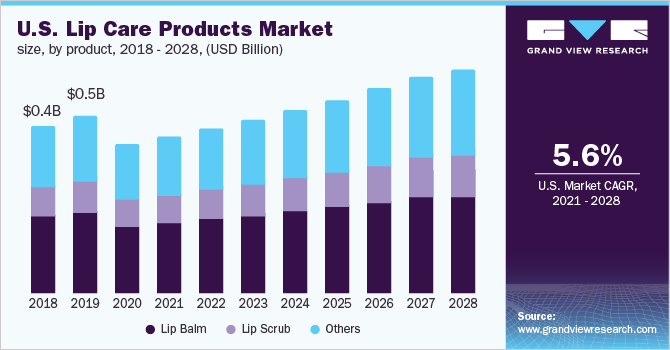
U.S. lip care products market size, by product, 2018 - 2028 (USD Billion)

Several international and regional product manufacturers are offering unique flavors in lip balms, scrubs, and masks among others owing to the surge in popularity and increased attention on lip care and self-care, particularly among women. The growing availability of tinted, and organic lip balms in a cost-effective range is driving their adoption at a faster pace.

Market players are focusing on research & development of such products to introduce skin-friendly and premium lip care products. The launch of natural & organic lip care treatments without chemicals like sodium laureth sulfate or aluminum is witnessing significant growth. For instance, in 2020 Anastasia Beverly Hills introduced vegan and cruelty-free lip balm in variants like coconut, strawberry, and mango. Such product offerings are expected to positively influence market growth.

Browse through Grand View Research's Beauty & Personal Care Industry Research Reports.

Personal Care Wipes Market - The global personal care wipes market size was valued at USD 11.25 billion in 2021 and is estimated to expand at a compound annual growth rate (CAGR) of 6.2% from 2022 to 2030.

Lipstick Market - The global lipstick market size was valued at USD 11.5 billion in 2018. Rising consciousness regarding personal grooming and appearance among young female consumers across the world is expected to be one of the key drivers.

Lip Care Products Market Segmentation

Grand View Research has segmented the global lip care products market on the basis of product, distribution channel, and region:

Lip Care Products Outlook (Revenue, USD Million, 2016 - 2028)

  • Lip Balms
  • Lip Scrub
  • Others

Lip Care Products Distribution Channel Outlook (Revenue, USD Million, 2016 - 2028)

  • Hypermarket & Supermarket
  • Pharmacy & Drug Stores
  • Specialty Store
  • Online
  • Others

Lip Care Products Regional Outlook (Revenue, USD Million, 2016 - 2028)

  • North America
  • Europe
  • Asia Pacific
  • Central & South America
  • Middle East & Africa

Market Share Insights:

May 2021: Summer Fridays launched a new range of lip butter balms, which is available on retail websites like Sephora and Revolve.

Key Companies profiled:

Some prominent players in the global Lip Care Products market include

  • L'Oreal S.A.
  • Unilever
  • Beiersdorf AG
  • The Colgate-Palmolive Company
  • The Estee Lauder Companies, Inc.
  • Johnson and Johnson
  • Avon Products, Inc.
  • Shiseido Co., Ltd.
  • The Procter & Gamble Company
  • Revlon, Inc.

Order a free sample PDF of the Lip Care Products Market Intelligence Study, published by Grand View Research.
Surfing Equipment Market Growth is Driven by Rising Interest in Surfing Among Adventure Enthusiasts, 2028

Surfing Equipment Industry Overview

The global surfing equipment market size was valued at USD 3.88 billion in 2020 and is expected to expand at a compound annual growth rate (CAGR) of 4.4% from 2021 to 2028. The product demand is being driven by growing consumer interest in surfing and aggressive growth tactics undertaken by surfing equipment producers. Leading producers, such as Quiksilver, Channel Islands Surfboards, and Firewire Surfboards, focus on product innovation, which is propelling the industry's growth. For example, in July 2019, Billabong, an Australian firm, announced the debut of Furnace Graphene, a graphene-enhanced surfing clothing. The graphene-wrapped yarns in this product are cleverly constructed to trap and hold heat more effectively, providing warmth to the wearer.

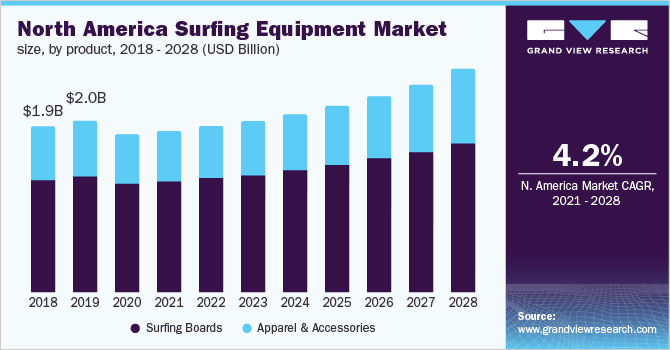
North America surfing equipment market size, by product, 2018 - 2028 (USD Billion)

Businesses are implementing strategic marketing programs to grow their consumer base and increase sales. Partnerships with surfing clubs, professional surfers, and surfing superstars, for example, can help businesses get more clients. In addition, the exclusive online community provides a single platform for surf industry businesses. Prominent brands like Quiksilver/Roxy and Billabong represent specialty retail locations, which are increasingly gaining prominence.

Gather more insights about the market drivers, restraints, and growth of the Global Surfing Equipment market

Specialty stores are willing to pay a greater price for higher-quality goods, and they try to set themselves apart by marketing themselves as a family store that caters to young teenagers and their parents. Consumers with a lot of disposable cash prefer premium products; however, product features, functionality, and comfortability are important considerations, which may hamper the market growth.

Furthermore, it has been shown that the majority of consumers in low-income countries restrict their surfing products. Asia Pacific is expected to be the fastest-growing regional market owing to increased foreign tourist arrivals and tourist spending on water sports. Many well-known beaches in the region have become popular surfing locations, including Kuta Beach in Indonesia, Weligama Beach in Sri Lanka, and Pansea Beach, and Bai Dai Beach in Thailand.

Browse through Grand View Research's Consumer Goods Industry Research Reports.

Hotels, Resorts, And Cruise Lines Market - The global hotels, resorts, and cruise lines market size was valued at USD 524.1 billion in 2021 and is expected to expand at a compound annual growth rate (CAGR) of 17.4% from 2022 to 2030. 

Surfing Apparel And Accessory Market - The global surfing apparel and accessory market size was valued at USD 1.23 billion in 2020 and is expected to expand at a compound annual growth rate (CAGR) of 5.0% from 2021 to 2028.

Surfing Equipment Market Segmentation

Grand View Research has segmented the global surfing equipment market on the basis of product, distribution channel, and region:

Surfing Equipment Product Outlook (Revenue, USD Million, 2016 - 2028)

  • Surfing Boards
  • Apparels & Accessories

Surfing Equipment Distribution Channel Outlook (Revenue, USD Million, 2016 - 2028)

  • Online
  • Offline

Surfing Equipment Regional Outlook (Revenue, USD Million, 2016 - 2028)

  • North America
  • Europe
  • Asia Pacific
  • Central & South America
  • Middle East & Africa

Key Companies profiled:

Some prominent players in the global Surfing Equipment market include

  • Billabong
  • Quiksilver, Inc.
  • JS Industries
  • Channel Islands Surfboards
  • Nike, Inc.
  • Firewire Surfboards, LLC
  • Rusty Surfboards
  • Rip Curl. Ltd.
  • Cannibal Surfboards
  • O’Neill

Order a free sample PDF of the Surfing Equipment Market Intelligence Study, published by Grand View Research.
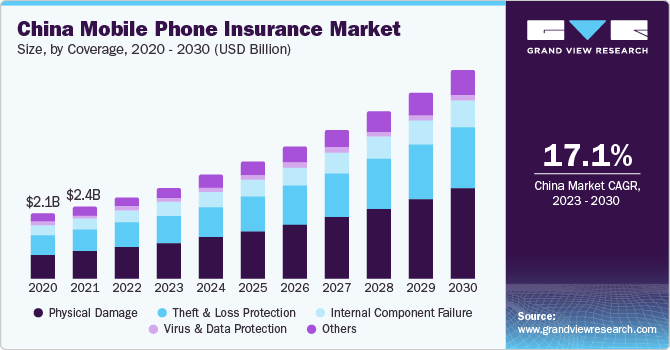
The Growing Usage of Smartphones, As Well as Mobile Applications Is Expected to Favor Mobile Phone Insurance Market Growth by 2028

Mobile Phone Insurance Industry Overview

The global mobile phone insurance market size was valued at USD 23.3 billion in 2020. It is expected to expand a compound annual growth rate (CAGR) of 12.6% from 2021 to 2028. Increasing incidents of accidental damage, phone thefts, virus infection, and device malfunction are expected to drive market growth over the forecast period. These incidents have impelled customers to look for ways to safeguard their mobile phones and thereby, adopt mobile phone coverage policies. Mobile phone insurance helps consumers avoid high replacement costs in case their mobile phone is lost or faces a breakdown. A mobile phone insurance policy usually covers physical damage, internal coverage failure, theft and loss protection, and virus and data protection, among others.

Mobile phones serve as a platform for entertainment, education, and also an effective platform for conducting digital transactions. Increasing the use of smartphones for storing personal information and digital transactions has led to the need for safeguarding mobile devices. This trend is expected to escalate market growth over the forecast period. According to GSMA, approximately 75% of the total mobile phone owners are expected to own a smartphone by 2025. Mobile phone insurance service providers are collaborating with smartphone manufacturers to experiment with the success rate of insurance policies/schemes offered during the purchase of a mobile phone.

Gather more insights about the market drivers, restraints, and growth of the Global Mobile Phone Insurance market

Mobile phones are highly susceptible to physical and technical damages, such as damaged casing, and excessive dust and dirt, which may have a detrimental effect on the Printed Circuit Board (PCB) and coverages. Such damages may also incur enormous losses for users and hence, are expected to increase the demand for mobile phone insurance over the forecast period. The increasing costs of smartphones are also compelling consumers to opt for mobile phone coverage policies. Furthermore, the increasing collaborations among mobile phone manufacturers and insurance providers are also anticipated to drive market growth over the forecast period. Moreover, the provision of direct-to-consumer insurance assistance is expected to create substantial growth opportunities for market players over the forecast period. The direct-to-consumer insurance assistance model provides improved customer experience as opposed to insurance selling through traditional distribution channels.

The increasing adoption of Business Intelligence (BI) tools by market players is anticipated to propel the market growth over the forecast period. BI tools help market players to identify negative trends in the costs and performance of their products. BI is used either strategically or tactically. Strategic business intelligence is used for monitoring Key Performance Indicators (KPIs) about policy growth, incurred claims ratio, the average time to settle a claim, and so on. KPIs also help evaluate the development of the insurance companies and also enable potential investors to determine the effectiveness of a company’s operational strategies. Furthermore, the implementation of BI tools helps companies track data about customer buying behavior and gain insights on consumer trends, thereby helping them make informed decisions in terms of the services that can be introduced in the mobile phone insurance market.

China mobile phone insurance market size, by coverage, 2016 - 2028 (USD Billion) 

The complexities associated with the terms and conditions make it difficult for consumers to opt for appropriate claim procedures and this is subsequently expected to hinder the market growth. Some market players offer coverage plans with a fixed premium and the coverage amount, thus leading to reluctance from customers for buying such policies. Such policies also mandate users to pay huge premium amounts for damage repair, irrespective of the nature of the damages covered. However, in recent years, insurance providers have worked toward the identification of such issues and have introduced policies with varying monthly premium amounts. They are also offering coverage based on customer requirements. The simplification of terms and conditions and claiming procedures is expected to increase the adoption of mobile insurance plans among customers across the globe.

The coronavirus pandemic has highly affected the mobile phone/smartphone market, thereby having a significant impact on the market across the globe. While most of the companies operating in the market reported revenue decline from the mobile phone insurance domain, the sales of the smartphones also saw a significant dip in the market. However, with the growing initiatives taken by governments across the globe to revive the economy, the market is anticipated to recover over the coming years. Additionally, the average life span of a smartphone is expected to rise, which in turn will positively impact the market over the forecast period.

Browse through Grand View Research's Communications Infrastructure Industry Research Reports.

Underwater Communication System Market - The global underwater communication system market size was worth USD 3.08 billion in 2021 and is expected to expand at a compound annual growth rate (CAGR) of 10.1% from 2022 to 2030. 

Telecom Cloud Market - The global telecom cloud market size was valued at USD 20.4 billion in 2021 and is expected to expand at a compound annual growth rate (CAGR) of 19.9% from 2022 to 2030. 

Mobile Phone Insurance Market Segmentation

Grand View Research has segmented the global mobile phone insurance market based on coverage, phone type, and region:

 Mobile Phone Insurance Coverage Outlook (Revenue, USD Million, 2016 - 2028)

  • Physical Damage
  • Internal Component Failure
  • Theft & Loss Protection
  • Virus & Data Protection
  • Others

Mobile Phone Insurance Phone Type Outlook (Revenue, USD Million, 2016 - 2028)

  • Budget Phones
  • Mid & High-end Phones
  • Premium Smartphones

Mobile Phone Insurance Regional Outlook (Revenue, USD Million, 2016 - 2028)

  • North America
  • Europe
  • Asia Pacific
  • Latin America
  • Middle East & Africa

Market Share Insights:

October 2018: Flipkart ventured into a partnership with Bajaj Allianz to offer customized insurance solutions and boost Bajaj Allianz mobile phone protection program. Moreover, these collaborations enable the partnered companies to increase their customer base across the globe.

Key Companies profiled:

Some prominent players in the global Mobile Phone Insurance market include

  • Apple Inc.
  • American International Group, Inc.
  • Assurant, Inc.
  • Asurion
  • AT&T Inc.
  • AmTrust Financial
  • Brightstar Corp.
  • GoCare Warranty Group
  • SquareTrade, Inc.
  • Taurus Insurance Services Limited

Order a free sample PDF of the Mobile Phone Insurance Market Intelligence Study, published by Grand View Research.
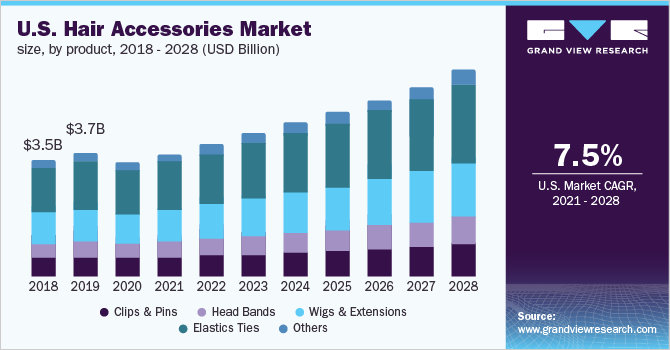
Hair Accessories Market Recent Developments and Sales/Retail Channel Analysis by 2028

Hair Accessories Industry Overview

The global hair accessories market size to be valued at USD 31.6 billion by 2028 and is expected to grow at a compound annual growth rate (CAGR) of 7.7% during the forecast period. The market growth is attributed to a rising preference for fashionable products that serve the purpose of utility as well as give a trendy look to the hairdo. The COVID-19 pandemic has had an adverse effect on the market. The early onslaught of the pandemic disrupted the market in worst-hit countries such as India, Brazil, and Italy. China has historically been one of the major suppliers of key raw materials and ingredients for manufacturing various types of hair accessories and many global manufacturers have been relying on China for the same.

Gather more insights about the market drivers, restraints, and growth of the Global Hair Accessories market

Rapid development in production technologies, evolving fashion trends, and hairstyles, and the availability of various attractive accessories have driven consumers to purchase hair accessories. The introduction of products such as clips, barrettes, ties, and headbands in trendy designs, materials, and shapes that are functional, and fashionable has also been spurring the growth of the market.

Healthy, glossy, and well-groomed hairdos have become crucial in the routine among consumers in the U.S. to enhance their appearance. Thus, individuals take care of their hair, experiment with different haircuts, and do not shy away from trying trendy and innovative accessories as per their desire, which is fueling the demand among consumers. The rising preference for grooming products is expected to boost the market.

U.S. Hair Accessories Market size, by product

The internet has played a key role in making consumers more familiar with hair accessories through social media influencers, bloggers, and vloggers. A significant number of millennials are following internet celebrities and influencers to understand and enhance their skills in personal grooming, makeup, and fashion. Over the last few years, consumers have also been showing a preference for products that are easy to use.

Consumer demand has been increasing over the last few years, and this trend is likely to continue in the upcoming years. An increasing number of consumers are gaining access to the internet, and, consequently, to multiple platforms that offer beauty products including hair accessories. People are also becoming increasingly aware of new beauty and grooming trends.

Browse through Grand View Research's Beauty & Personal Care Industry Research Reports

Hair Wigs And Extensions Market - The global hair wigs and extensions market size was valued at USD 6.13 billion in 2021 and is anticipated to grow at a compound annual growth rate (CAGR) of 8.0% over the forecast period.

Hair And Scalp Care Market - The global hair and scalp care market size was valued at USD 80.81 billion in 2020 and is expected to expand at a compound annual growth rate (CAGR) of 6.6% from 2021 to 2028.

Hair Accessories Market Segmentation

Grand View Research has segmented the global hair accessories market on the basis of product, distribution channel, and region:

Hair Accessories Product Outlook (Revenue, USD Billion, 2016 - 2028)

  • Clips & Pins
  • Headbands
  • Wigs & Extensions
  • Elastics & Ties
  • Others

Hair Accessories Distribution Channel Outlook (Revenue, USD Billion, 2016 - 2028)

  • Hypermarkets & Supermarkets
  • General Stores
  • Online

Hair Accessories Regional Outlook (Revenue, USD Billion, 2016 - 2028)

  • North America
  • Europe
  • Asia Pacific
  • Central & South America
  • Middle East & Africa

Market Share Insights:

May 2022: H&M Group tested tech-enabled shopping experience for customers in its U.S. locations

January 2022: Claire's Introduced same-day click & collect in the United Kingdom and the United States

Key Companies profiled:

Some prominent players in the global Hair Accessories market include

  • Goody Products Inc.
  • Claire’s
  • Conair Corporation
  • H&M
  • Forever 21
  • Fromm International
  • Annie International Inc.
  • ERICKSON
  • Silke London
  • Invisibobble
  • Hair Drama Company
  • Bunzee Bands
  • Riot Accessories LTD
  • SwirlyCurly Hair
  • SOQ Jewelry
  • Creative Findings
  • Good Hair Days
  • Jennifer Behr

Order a free sample PDF of the Hair Accessories Market Intelligence Study, published by Grand View Research.
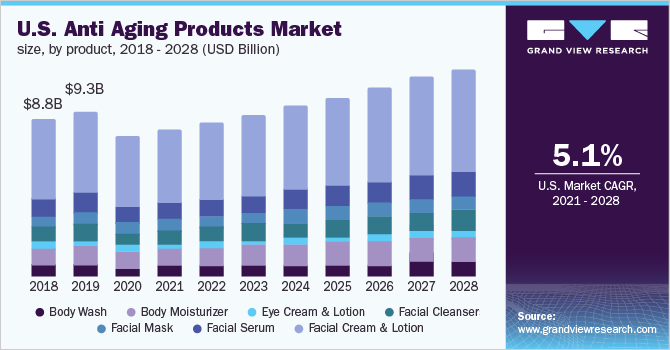
Anti-Aging Products Market Distribution Channel Outlook and Profit Margin Analysis by 2028

Anti-Aging Products Industry Overview

The global anti-aging products market size was valued at USD 40.49 billion in 2020 and is expected to expand at a compound annual growth rate (CAGR) of 5.4% from 2021 to 2028. Rising awareness among consumers related to age-related skin problems such as fine lines, wrinkles, and dullness of skin, coupled with an increasing propensity to spend on products that help them to proclaim their skin youthfulness, is expected to drive the market demand throughout the forecast period.

The COVID-19 outbreak reduced the market demand for cosmetics, including anti-aging products, globally. Primarily, countries such as the U.S., India, Brazil, Russia, and the U.K., which are some of the most adversely affected, have witnessed a high decrease in sales. Many manufacturers in the market have been historically relying on China for finished products as well as raw materials used in the manufacturing of various types of skincare cosmetics, which have disrupted the production and distribution of these products.

Gather more insights about the market drivers, restraints, and growth of the Global Anti-Aging Products market

Although aging is a physiological change, extrinsic factors such as air pollution, alcohol consumption, and exposure to UV rays are known to have a detrimental effect on skin cell contribution to premature aging. Anti-aging creams and lotions play a vital role in an individual's life by assisting in the preservation of a youthful glow and moisturization. According to a survey by Real Self in 2020, 62% of Americans used anti-aging products as a part of their daily skincare routine.

China is one of the major countries contributing to the worldwide cosmetics and skincare market's growth in terms of consumption as well as production, including anti-aging, skin lightening, and sun care. According to the seventh population census in China in 2020, about 40.08% of the population is between 30 and 54 years. The presence of a large young population is expected to drive the demand for anti-aging products in the country.

U.S. anti aging products market size, by product, 2018 - 2028 (USD Billion)

The growing inclination towards plant-based alternatives has resulted in a recent shift in consumer preference for organic and natural products. In this regard, many brands are providing anti-aging products based on chemical-free ingredients. For instance, Alpyn Beauty, a manufacturer of skincare products, offers a chemical-free Plant Genuismelt moisturizer with bakuchiol that brightens skin and guards it against wrinkle and radical damage.

Moreover, numerous cross-over products have emerged under the natural beauty trend. These offer the dual functionality of makeup as well as wrinkle care to help people protect their natural skin. For instance, Lancôme, a part of the L’Oreal brand, offers a range of makeup and cosmetics that contain anti-aging genifique serum.

Browse through Grand View Research's Beauty & Personal Care Industry Research Reports

Skin Care Products Market - The global skin care products market size was valued at USD 130.50 billion in 2021 and is expected to expand at a compound annual growth rate (CAGR) of 4.6% from 2022 to 2030.

Skin Lightening Products Market - The global skin lightening products market size was valued at USD 9.96 billion in 2021 and is expected to expand at a compound annual growth rate (CAGR) of 5.5% from 2022 to 2030.

Anti-Aging Products Market Segmentation

Grand View Research has segmented the global anti aging products market on the basis of product, distribution channel, and region:

Anti-aging Products Outlook (Revenue, USD Million, 2016 - 2028)

  • Body Wash
  • Body Moisturizer
  • Eye Cream & Lotion
  • Facial Cleanser
  • Facial Mask
  • Facial Serum
  • Facial Cream & Lotion

Anti-aging Products Distribution Channel Outlook (Revenue, USD Million, 2016 - 2028)

  • Hypermarket & Supermarket
  • Pharmacy & Drug Stores
  • Specialty Store
  • Online
  • Others

Anti-aging Products Regional Outlook (Revenue, USD Million, 2016 - 2028)

  • North America
  • Europe
  • Asia Pacific
  • Central & South America
  • Middle East & Africa

Market Share Insights:

October 2018: The Face Shop, a South Korea-based skincare manufacturer, retailer, and franchiser, launched a new product line Yehwadam, focusing on brightening and antiaging concerns.

Key Companies profiled:

Some prominent players in the global Anti-Aging Products market include

  • Estée Lauder Inc.
  • Procter & Gamble
  • Beiersdorf Limited
  • com & Age Sciences Inc.
  • Shiseido
  • Unilever
  • L’Oreal Paris
  • Revlon
  • Oriflame Cosmetics
  • Avon Products, Inc.

Order a free sample PDF of the Anti-Aging Products Market Intelligence Study, published by Grand View Research.
Rising Cases of Oral and Dental Problems Is Likely to Boost the Water Flosser Market Growth by 2028

Water Flosser Industry Overview

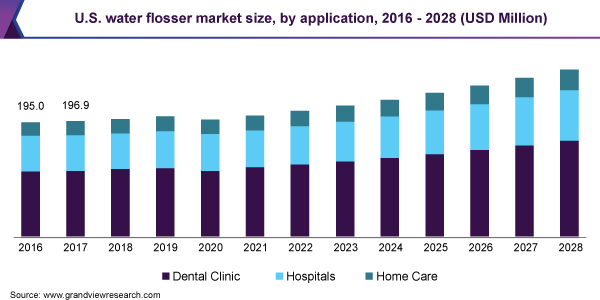
The global water flosser market size was valued at USD 814.3 million in 2020 and is expected to expand at a compound annual growth rate (CAGR) of 5.3% from 2021 to 2028. Increasing consumption of tobacco products and rising cases of oral and dental problems are likely to boost the market growth over the forecast period. Oral diseases including tooth decay, gum disease, and oral cancers affect almost half of the global population, with untreated dental decay emerging as the most common health condition worldwide. Lip and oral cavity cancers are among the top 15 most common cancers in the world. In addition to lower quality of life, oral diseases have a major economic impact on both individuals and the wider healthcare system.

U.S. water flosser market size, by application, 2016 - 2028 (USD Million)

The closure of dental practices and businesses owing to the COVID-19 pandemic and the subsequent lockdown orders has greatly challenged the penetration of water flossers across the commercial segments. The resulting office closures led to unprecedented revenue losses across the sector, thereby challenging the adoption of water flossers. According to a recent survey by the American Association of Endodontists, more than half of all Americans have put off dental check-ups due to the pandemic. With dental hygiene habits and routines severely skewed over the past year, the survey also showed that while 24% of those surveyed were flossing less frequently, about 23% said they were not flossing at all. Such trends pose significant challenges to the market.

Gather more insights about the market drivers, restraints, and growth of the Global Water Flosser market

Awareness with respect to the importance of dental flossing in order to prevent gum diseases and oral infections has significantly increased with time. This, in turn, is driving the demand for more convenient flossing substitutes for manual flossing, thereby triggering the adoption of water flossers among consumers. A diverse group of end users, including individuals with braces, uneven teeth, dental implants, or any gum diseases, has been shifting from string flossing to water flossers due to the latter’s ease of use and improved efficiency at preventing gum diseases. Water flossers use pressurized irrigation to remove food debris and plaque in areas of the mouth that are harder to get to with a toothbrush, or even high-end, powered toothbrushes.

The sales of water flossers have been ramping up at a healthy rate with the growing popularity of portable and rechargeable flossers among consumers seeking convenience and efficiency. There are three types of water flossers trending in the market: cordless, countertop, and attachable. Countertop water flossers rest on bathroom counters and are plugged into an electrical outlet. These variants often offer the highest number of features. Consumers looking for kid-friendly water flossers usually opt for the Waterpik WP-260, which features a colorful and simple design ideal for children aged six and above. The device is designed with easy control options: an on-and-off switch and three different pressure settings. Additionally, the reservoir can hold enough water for a 60-second session. The WP-260 also comes with an orthodontic tip, making it ideal for kids with braces.

Browse through Grand View Research's Consumer Goods Industry Research Reports

Oral Care Market - The global oral care market size was valued at USD 33.7 billion in 2021 and is expected to expand at a compound annual growth rate (CAGR) of 6.4% from 2022 to 2030.

Dental Equipment Market - The global dental equipment market size to be valued at USD 16.5 billion by 2028 and is expected to grow at a compound annual growth rate (CAGR) of 12.1% during the forecast period.

Water Flosser Market Segmentation

Grand View Research has segmented the global water flosser market on the basis of product, application, and region:

Water Flosser Product Outlook (Revenue, USD Million, 2016 - 2028)

  • Cordless
  • Countertop

Water Flosser Application Outlook (Revenue, USD Million, 2016 - 2028)

  • Dental Clinics
  • Hospitals
  • Home Care

Water Flosser Regional Outlook (Revenue, USD Million, 2016 - 2028)

  • North America
  • Europe
  • Asia Pacific
  • Central & South America
  • Middle East & Africa

Key Companies profiled:

Some prominent players in the global Water Flosser market include

  • The Procter & Gamble Company
  • Koninklijke Philips N.V.
  • Fly Cat Electrical Co., Ltd.
  • Hydro Floss (Oral Care Technologies, Inc.)
  • Panasonic Corporation
  • Water Pik Inc.
  • ToiletTree Products Inc.
  • Aquapick Co. Ltd.
  • JETPIK Corporation

Order a free sample PDF of the Water Flosser Market Intelligence Study, published by Grand View Research.
Nonstick Cookware Market Top Players are Groupe SEB, All-Clad Group and Tefal

Nonstick Cookware Industry Overview

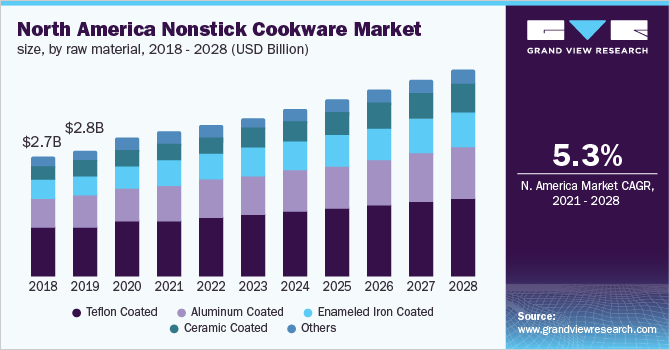
The global nonstick cookware market demand was 206.1 million units in 2020 and is expected to expand at a compound annual growth rate (CAGR) of 4.0% from 2021 to 2028. Increased spending on home repair projects or remodeling is driving up the demand for nonstick cookware, thanks to customers' growing preference for modular kitchens. According to Houzz's 10th annual Houzz & House survey, home renovations increased by 15% in the previous year, with kitchens, outdoor areas, home offices, and technology receiving the most attention. Another aspect driving demand for nonstick cookware is the surge in popularity of home cooking, particularly during the ongoing COVID-19 pandemic. Consumers are not only experimenting with new dishes at home but also honing their culinary talents.

North America nonstick cookware market size, by raw material, 2018 - 2028 (USD Billion)

Self-cooked meals are one of the main drivers of the nonstick cookware industry and 37% of individuals think consuming immunity-boosting foods has become more of a priority since the pandemic began, according to Mintel. The rapid expansion in commercial construction, particularly in developing economies such as India and China, is paving the way for eateries, restaurants, and food joints, indicating rising growth prospects for nonstick cookware products. The increasing number of meals consumed away from home due to the surge in the working population worldwide will further fuel the market growth, particularly in the commercial segment.

Gather more insights about the market drivers, restraints, and growth of the Global Nonstick Cookware market

The growing culture of house parties in western countries is resulting in increased use of nonstick cookware at home, such as pans, pots, whisks, and other cookware, in order to provide quality food to the guests. Rising consumer preference for eating outside, whether as a form of social gathering or for trying foods of different cultures, is paving the way for more eateries and food joints serving diverse cuisines. These commercial spaces are generating a high demand for nonstick cookware in order to serve more customers in a shorter time period without compromising on quality or presentation.

High competition and rapidly changing consumer demand are likely to facilitate the development of innovative products, leading to high R&D costs for manufacturers. Nonstick cookware products find use in both commercial and household applications. In commercial applications, these products are used in restaurants, hotels, resorts, food stations, and other public eateries.

Browse through Grand View Research's Homecare & Décor Industry Research Reports

Cookware Market - The global cookware market size was valued at USD 23.75 billion in 2021 and is expected to expand at a compound annual growth rate (CAGR) of 6.5% from 2022 to 2030.

Smart Kitchen Appliances Market - The global smart kitchen appliances market size was valued at USD 13.18 billion in 2021 and is expected to expand at a compound annual growth rate (CAGR) of 18.4% from 2022 to 2030.

Nonstick Cookware Market Segmentation

Grand View Research has segmented the global nonstick cookware market on the basis of raw material, distribution channel, and region:

Nonstick Cookware Raw Material Outlook (Volume, Million Units; Revenue, USD Million, 2016 - 2028)

  • Teflon Coated
  • Aluminum Coated
  • Enameled Iron Coated
  • Ceramic Coated
  • Others

Nonstick Cookware Distribution Channel Outlook (Volume, Million Units; Revenue, USD Million, 2016 - 2028)

  • Supermarkets & Hypermarkets
  • Convenience Stores
  • Specialty Stores
  • Others

Nonstick Cookware Regional Outlook (Volume, Million Units; Revenue, USD Million, 2016 - 2028)

  • North America
  • Europe
  • Asia Pacific
  • Central & South America
  • Middle East & Africa

Market Share Insights:

February 2020: Fissler added three new products to the existing cenit pan series, which now includes the cenit pan, cenit induction pan, and cenit induction serving pan.

May 2019: Showa Denko K.K. (SDK) purchased all of the shares of the ILAG Group, a specialty non-stick coating chemicals manufacturer based in Zurich, Switzerland. ILAG's non-stick coatings are used in both consumer and industrial goods.

Key Companies profiled:

Some prominent players in the global Nonstick Cookware market include

  • Groupe SEB (Tefal, All-Clad Group, WMF)
  • Tefal
  • All-Clad Group
  • WMF
  • Newell Brand Inc. (Calphalon)
  • Cuisinart
  • Meyer Corporation
  • TTK Prestige Limited
  • Scanpan USA, Inc.
  • Hawkins Cookers
  • The Cookware Company

Order a free sample PDF of the Nonstick Cookware Market Intelligence Study, published by Grand View Research.
Rise in Fuel Expenses for Conventional Gas Cooktops to Positively Aid the Induction Cooktops Market, 2028

Induction Cooktops Industry Overview

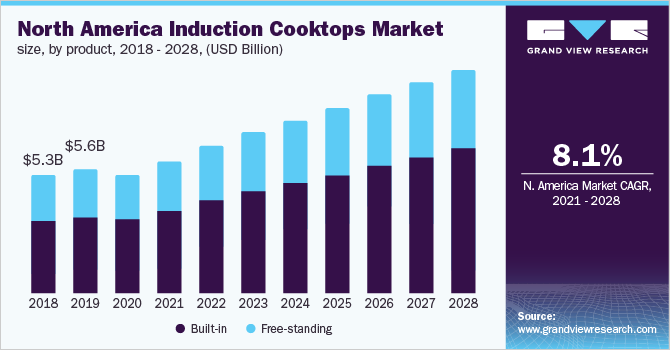
The global induction cooktops market size was valued at USD 18,667.8 million in 2020 and is expected to grow at a compound annual growth rate (CAGR) of 8.5% from 2021 to 2028. The market is being driven by an increase in the number of residential and non-residential development projects, as well as a rise in the number of restaurants and eateries. The improved profitability and performance of the restaurant business are generating sufficient prospects for the market as people continue to patronize fast-food restaurants. The rise in fuel expenses for conventional gas cooktops, as well as the growing trend of modular kitchens due to the comfort and safety benefits, are driving the household induction cooktops market.

North America induction cooktops market size, by product, 2018 - 2028 (USD Billion)

With various new residential construction projects in place, the demand for induction cooktops is expected to rise. The gradual shift from gas cooktops has benefitted the market in the past, and an increasing number of consumers are inclined toward installing induction cooktops in their houses or large-scale residential projects. This is due to an increase in awareness regarding its benefits over gas cooktops. Induction cooktops are also widely used in non-residential projects, such as restaurants or hotels. The shift seems to be gradual for commercial applications but is expected to increase over the forecast period.

Gather more insights about the market drivers, restraints, and growth of the Global Induction Cooktops market

Several advancements, such as cooking appliance manufacturers replacing old mechanical controls and displays with touch technology to reduce dependability and after-sale expenses, will boost the market growth. Touch screens with large graphics are also becoming increasingly popular. Constantly changing business & family routines, increased demand for eco-friendly appliances, and improving affordable electricity accessibility are expected to push consumers to purchase technology-driven kitchen gadgets.

Rapid growth of online marketing across the globe is contributing significantly to the growth of the industry. Growing adoption of high-tech products is anticipated to support the growth of kitchen appliances, including cooking hobs. However, the requirement of initial investments in specialized cookware may hamper the growth of the industry in the near future. In addition, these products are considered to be more expensive as compared to conventional gas cooktops.

Browse through Grand View Research's Homecare & Décor Industry Research Reports

Smart Kitchen Appliances Market - The global smart kitchen appliances market size was valued at USD 13.18 billion in 2021 and is expected to expand at a compound annual growth rate (CAGR) of 18.4% from 2022 to 2030. 

Modular Kitchen Market - The global modular kitchen market size was valued at USD 19.26 billion in 2018. The rapid growth of the residential construction industry is expected to be a key driver for the market.

Induction Cooktops Market Segmentation

Grand View Research has segmented the global induction cooktops market on the basis of product, application, distribution channel, and region:

Induction Cooktops Product Outlook (Revenue, USD Million, 2016 - 2028)

  • Built-in
  • Free-standing

Induction Cooktops Application Outlook (Revenue, USD Million, 2016 - 2028)

  • Household
  • Commercial

Induction Cooktops Distribution Channel Outlook (Revenue, USD Million, 2016 - 2028)

  • Hypermarkets & Supermarkets
  • Specialty Stores
  • Online

Induction Cooktops Regional Outlook (Revenue, USD Million, 2016 - 2028)

  • North America
  • Europe
  • Asia Pacific
  • Central & South America
  • Middle East & Africa

Key Companies profiled:

Some prominent players in the global Induction Cooktops market include

  • Whirlpool Corp.
  • LG Electronics, Inc.
  • Electrolux AB
  • TTK Group
  • Smeg S.p.A
  • Koninklijke Philips N.V.
  • Robert Bosch GmbH
  • Avis Rent a Car System, LLC
  • Panasonic Corp.
  • Sub-Zero Group, Inc.
  • Miele & Cie. KG

Order a free sample PDF of the Induction Cooktops Market Intelligence Study, published by Grand View Research.
Shapewear Market Consumer Behaviour Analysis and Factors Affecting Buying Decision

Shapewear Industry Overview

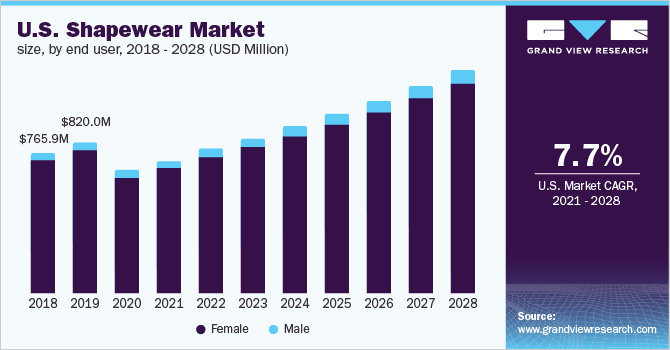
The global shapewear market size was valued at USD 1.9 billion in 2020 and is expected to expand at a compound annual growth rate (CAGR) of 8.0% from 2021 to 2028. Shapewear is becoming increasingly popular. In comparison to other lingerie types, the number of new shapewear debuts on the market in 2018 surged by 143 percent over 2017.

U.S. shapewear market size, by end user, 2018 - 2028 (USD Million)

Due to a diverse product offering, newcomers have disrupted the market. This contains more fashionable products like bandeaus, tanks, and leggings in a variety of fashion-forward fabrics including imitation leather. While technological advancements and fit have fueled the business, the concept of shapewear is changing as well. Shapewear businesses have been pushed to question traditional preconceptions and present their products in a more approachable, modern way as a result of cultural developments toward body positivity and inclusion, attracting a new set of customers.

Gather more insights about the market drivers, restraints, and growth of the Global Shapewear market

In this sector, diversity and inclusivity across size and gender will continue to be important, especially as Gen-Z cohorts seek a rethinking of the industry's historically sexualized iconography. Kardashian West, for example, has announced her entry into shapewear. This mature industry became enticing to younger consumers when buzzy brands like Heist pioneered inclusivity and disrupted the market.

As activewear improves, there's a case to be made for trying out shapewear with sweat-wicking properties and the ability to support your body during activity. Stella McCartney tapped into this sector with the Stellawear sustainable capsule line, which launched at the end of 2020. Body-sculpting swimwear that can also be worn as lingerie, yoga wear, or daywear, rather than only shapewear the collection has work, home, exercise, and social activities have all blurred together for today's consumer, therefore multifunctional items produce a seamless silhouette regardless of body shape.

Browse through Grand View Research's B Clothing, Footwear & Accessories Industry Research Reports

Maternity Innerwear Market - The global maternity innerwear market size was valued at USD 6.88 billion in 2021 and is expected to expand at a compound annual growth rate (CAGR) of 7.2% from 2022 to 2030. 

Women's Tights And Leggings Market - The global women’s tights and leggings market size was valued at USD 20.89 billion in 2021 and is expected to expand at a compound annual growth rate (CAGR) of 6.1% from 2022 to 2028.

Shapewear Market Segmentation

Grand View Research has segmented the global shapewear market on the basis of end-user, distribution channel, and region:

 Shapewear End-user Outlook (Revenue, USD Million, 2016 - 2028)

  • Male
  • Female

Shapewear Distribution Channel Outlook (Revenue, USD Million, 2016 - 2028)

  • Hypermarkets & Supermarkets
  • Specialty Stores
  • Online
  • Others

Shapewear Regional Outlook (Revenue, USD Million, 2016 - 2028)

  • North America
  • Europe
  • Asia Pacific
  • Central & South America
  • Middle East & Africa

Market Share Insights:

January 2021: Knix-women intimate apparel brand launched its first shapewear collection for women- Love Your Shape-Wear, a line of 18 pieces in three cuts (a High Rise Shaper Brief, a High Rise Shaper Short, and a Shaper Bodysuit) in black and five different shades of nude.

Key Companies profiled:

Some prominent players in the global Shapewear market include

  • Nike, Inc.
  • Adidas AG
  • Spanx Inc.
  • Triumph International Corporation
  • Leonisa
  • Wacoal America, Inc.
  • Ann Chery
  • 2XU Pty. Ltd.
  • Under Armour Inc.
  • Skins International Trading AG

Order a free sample PDF of the Shapewear Market Intelligence Study, published by Grand View Research.
DNA-based Skin Care Products Market Distribution Channel Outlook and Profit Margin Analysis by 2028

DNA-based Skin Care Products Industry Overview

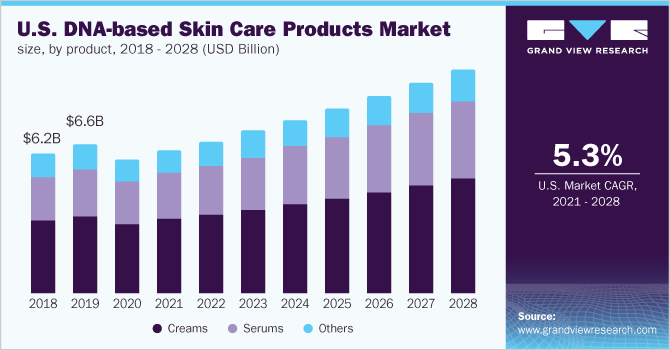
The global DNA-based skin care products market size to be valued at USD 9.87 billion by 2028 and is expected to grow at a compound annual growth rate (CAGR) of 6.6% during the forecast period. The beauty and personal care industry has witnessed steady growth with rising consumer spending. This trend is particularly true for the millennial population segment, which is fueled by the desire to slow down signs of aging. Aggressive advertising and promotional campaigns by niche and large players have also played a significant role in influencing consumer behavior. With the increasing inclination and ability to spend on beauty and cosmetic solutions, the market will continue to grow. Everyone's skin is different, so instead of a generic approach from over-the-counter items, they need a regimen that is tailored to their own needs. Consumers are now being targeted more directly by skincare specialists, who are prescribing a customized range of products.

Gather more insights about the market drivers, restraints, and growth of the Global DNA-based Skin Care Products market

The Skin 360 Face Scanner app from Neutrogena identifies over two thousand face features in order to recommend goods to users. Quizzes are used by brands like Vitruvi and The Buff to analyze a customer's present conditions and skincare goals based on a guided self-assessment. To determine a client's need for their products, Atolla performs a pH skin test to analyze moisture levels, oil percentages, UV exposure, and humidity levels. Skintelli's tailored skincare technique includes an epigenetic test that examines the DNA methylation gene.

U.S.DNA-based Skin Care Products Market size, by product

E-commerce retail channels play a crucial role in the distribution of DNA-based skincare products as they produce a significant portion of market revenue. Consumers may browse millions of products in one location without having to physically visit retail stores thanks to online sales platforms. Because of the increased popularity of social media sites, such as Facebook, Instagram, TikTok, and YouTube, there has been an increase in skincare advertising on these platforms, which are visually appealing. Influencer marketing has experienced significant growth in recent years, and the skincare industry is particularly well-positioned to benefit from this trend.

Browse through Grand View Research's Beauty & Personal Care Industry Research Reports

Dermocosmetics Skin Care Products Market - The global dermocosmetics skin care products market size was valued at USD 52.12 billion in 2021 and is expected to grow at a compound annual growth rate (CAGR) of 7.5% from 2022 to 2030. 

Beauty And Personal Care Products Market - The global beauty and personal care products market size was valued at USD 482.8 billion in 2021 and is expected to expand at a compound annual growth rate (CAGR) of 7.7% from 2022 to 2030.

DNA-based Skin Care Products Market Segmentation

Grand View Research has segmented the global DNA-based skin care products market on the basis of product, distribution channel, and region:

DNA-based Skin Care Products Outlook (Revenue, USD Million, 2016 - 2028)

  • Creams
  • Serums
  • Others

DNA-based Skin Care Products Distribution Channel Outlook (Revenue, USD Million, 2016 - 2028)

  • Online
  • Offline

DNA-based Skin Care Products Regional Outlook (Revenue, USD Million, 2016 - 2028)

  • North America
  • Europe
  • Asia Pacific
  • Central & South America
  • Middle East & Africa

Market Share Insights:

November 2021: Milk Makeup and Obagi Cosmeceuticals LLC were acquired by Waldencast Acquisition Corp. Obagi Cosmeceuticals LLC is a dermo-cosmetic company that dermatologists promote.

Key Companies profiled:

Some prominent players in the global DNA-based Skin Care Products market include

  • IMAGENE LABS PTE. LTD.
  • Caligenix Inc.
  • EpigenCare Inc.
  • ALLÉL
  • SkinDNA
  • SKINSHIFT
  • ANAKE
  • Genetic Beauty
  • DNA Skin Institute
  • LifeNome

Order a free sample PDF of the DNA-based Skin Care Products Market Intelligence Study, published by Grand View Research.
Pore Strips Market Dynamics, Growth Prospects, Regional Estimates and Trends, 2028

Pore Strips Industry Overview

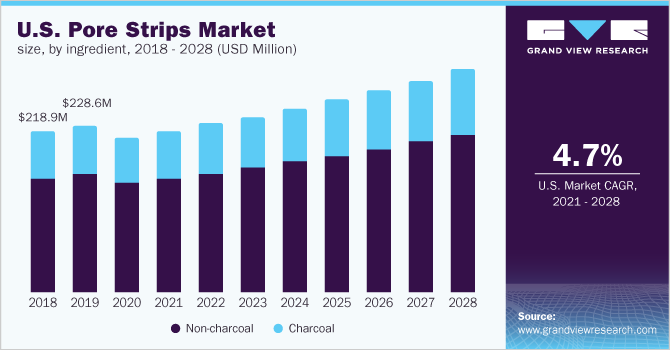
The global pore strips market size was valued at USD 1.35 billion in 2020 and is expected to expand at a compound annual growth rate (CAGR) of 5.9% from 2021 to 2028. Pore strips are perceived to be easy and fast-acting. Substitutes such as scrubs require a certain amount of time and a lengthy process before they can show the desired results. This factor is expected to drive the product demand in the near future, especially among young consumers who prefer quick solutions. The expansion of retail channels from some of the prominent brands such as Estée Lauder, Sephora, and Shiseido Co. will also positively influence the market growth over the next few years. In May 2020, Coty, a global multinational beauty company, collaborated with skin and beauty retailer Douglas to launch Kylie Skin, Kylie Jenner’s skincare line, in more than 25 countries in Europe.

U.S. pore strips market size, by ingredient, 2018 - 2028 (USD Million)

The emergence of non-banking players in the payment industry has facilitated this growth. Retailers have been venturing into online retail as numerous consumers prefer virtual marketplaces to purchase a variety of products. These trends are expected to positively influence the market growth over the forecast period. Emerging markets and the increasing demand for overseas goods are further driving online spending. Consumers in emerging countries such as China and India prefer local e-commerce companies, such as Tmall in China and Flipkart in India. Consumer spending in the U.S. and some countries in Europe has witnessed a slight drop owing to the global recession.

Gather more insights about the market drivers, restraints, and growth of the Global Pore Strips market

More than a quick fix, consumers want long-term solutions and are willing to spend more on such effective solutions. Rapid growth in skincare technology has resulted in the development of permanent and long-term skincare solutions that are effective against external factors, such as pollutants and the environment. This has been particularly attractive to young and millennial consumers, who have been showing an increased interest in permanent skincare treatments over quick fixes.

As consumers have been spending less on beauty and grooming products over the past year and a half, many skincare companies have responded to the crisis by shifting gears and offering hand sanitizers and cleaning agents instead.

Browse through Grand View Research's Beauty & Personal Care Industry Research Reports

Organic Skin Care Market - The global organic skin care market size was valued at USD 9.83 billion in 2021 and is expected to expand at a compound annual growth rate (CAGR) of 8.9% from 2022 to 2030.

Probiotic Cosmetic Products Market- The global probiotic cosmetic products market size was valued at USD 252.5 million in 2019 and is expected to grow at a compound annual growth rate (CAGR) of 6.5% from 2020 to 2027.

Pore Strips Market Segmentation

Grand View Research has segmented the global pore strips market on the basis of ingredient, end-use, and region:

 Pore Strips Ingredient Outlook (Revenue, USD Million, 2016 - 2028)

  • Charcoal
  • Non-charcoal

Pore Strips End-use Outlook (Revenue, USD Million, 2016 - 2028)

  • Salon
  • Home

Pore Strips Regional Outlook (Revenue, USD Million, 2016 - 2028)

  • North America
  • Europe
  • Asia Pacific
  • Central & South America
  • Middle East & Africa

Key Companies profiled:

Some prominent players in the global Pore Strips market include

  • Kao Corporation
  • Walgreen Co.
  • Ulta Beauty
  • Earth Therapeutics
  • Sephora
  • L’Oréal
  • Tonymoly Co., Ltd.
  • Boscia
  • Hip Hop

Order a free sample PDF of the Pore Strips Market Intelligence Study, published by Grand View Research.
Disposable Cups Market Challenges, Opportunities, Driver and Restraint Analysis by 2028

Disposable Cups Industry Overview

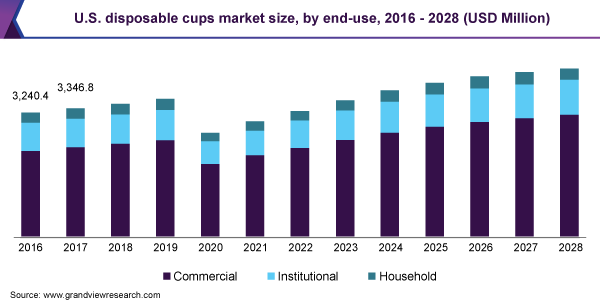
The global disposable cups market size was valued at USD 11.88 billion in 2020 and is expected to expand at a compound annual growth rate (CAGR) of 7.2% from 2021 to 2028. Increasing adoption of disposable cups to serve hot and cold beverages in quick service restaurants is likely to drive their demand in the coming years. In addition, the rising usage of such cups for drinking water in several commercial and residential parties is expected to drive their demand. The use of disposable cups has become quite popular over the past decade. The sense of convenience among consumers is anticipated to drive the product demand. Increasing demand for quick-service restaurants (QSRs) from the urban and semi-urban markets and water shortage to clean utensils are anticipated to drive the market. Rising disposable income, coupled with the changing food trends that favor convenience, is anticipated to further drive the product demand.

U.S. disposable cups market size, by end-use, 2016 - 2028 (USD Million)

Disposable cups are a great alternative to glasses, mugs, and steins, especially if consumers are worried about breaking them or carrying them around. Increasing usage of disposable cups at social gatherings and celebrations is likely to propel their demand in the coming years. Single-serving cups have a multitude of uses in the household. They are perfect for serving beverage samples, dishing out child-friendly portions to kids, and even for serving adult refreshments, such as espresso and cappuccino. Thus, several households across the globe are keeping a supply of small disposable cups in the cabinet to prevent the spread of germs when it’s time to rinse with mouthwash or chase back pill and gel-cap medications. Small cups are also handy when mixing paints, stains, or adhesives for home-improvement or craft projects. These factors are foreseen to fuel the market growth in the coming years.

Gather more insights about the market drivers, restraints, and growth of the Global Disposable Cups market

With the ongoing outbreak of COVID-19, several food service companies across the globe have taken extra measures to ensure the safety and hygiene of their employees and consumers. For instance, fast food giants like Starbucks, Dunkin', and McDonald’s brands have swiftly announced the suspension of bring-your-own (BYO) container programs in the wake of the pandemic. Amid the pandemic, disposable products are considered to be highly hygienic when it comes to the packaging of food and drinks. Thus, several other small and big food operators lean on disposables more than ever as many of which are now limited to take-out or delivery only. As covid-19 persists, these practices are foreseen to remain prevalent in the coming years. This is likely to drive the demand for disposable cups in the coming years.

Despite the positive outlook, disposable cups made of plastic or foam materials are quite harmful to our planet. Even though they are quite convenient, the use of such disposable cups also implies serious problems. As plastic takes an extraordinary length of time to break down, pollutes the environment, and harms wildlife. Across the globe, more and more countries are pushing back on single-use plastics with fees and even sometimes outright bans on these plastics. For instance, at the end of August 2019, France introduced a new policy that would ban disposable, single-use utensils, cups, and plates. This follows the country's ban on plastic bags the previous year. Reusable alternatives to such wasteful single-use plastics are on the rise across the globe.

Browse through Grand View Research's Homecare & Décor Industry Research Reports

Smart Kitchen Appliances Market - The global smart kitchen appliances market size was valued at USD 13.18 billion in 2021 and is expected to expand at a compound annual growth rate (CAGR) of 18.4% from 2022 to 2030. 

Outdoor Kitchen Market - The global outdoor kitchen market size was valued at USD 19.64 billion in 2021 and is expected to expand at a compound annual growth rate (CAGR) of 8.3% from 2022 to 2030.

Disposable Cups Market Segmentation

Grand View Research has segmented the global disposable cups market on the basis of product, end-use, and region:

 Disposable Cups Product Outlook (Revenue, USD Million, 2016 - 2028)

  • Paper
  • Plastic
  • Foam

Disposable Cups End-use Outlook (Revenue, USD Million, 2016 - 2028)

  • Commercial
  • Institutional
  • Household

Disposable Cups Regional Outlook (Revenue, USD Million, 2016 - 2028)

  • North America
  • Europe
  • Asia Pacific
  • Central & South America
  • Middle East & Africa

Market Share Insights:

July 2019: Huhtamäki Oyj launched a new compostable Bioware® Impresso double-walled hot cup that adds to its existing Bioware® compostable range. The new cup utilizes the unique Impresso bubble emboss, which provides enhanced insulation and a tactile touch for the holder. The company’s hot cup is made of sustainable 100% PEFC certified paperboard and has a plant lining that is certified compostable.

Key Companies profiled:

Some prominent players in the global Disposable Cups market include

  • Huhtamäki Oyj
  • Dart Container Corporation
  • Berry Global Group Inc.
  • Pactiv LLC
  • DUNI AB
  • WestRock Company
  • Genpak, LLC
  • Go-Pak UK Ltd.
  • ConverPack Inc.
  • Benders Paper Cups

Order a free sample PDF of the Disposable Cups Market Intelligence Study, published by Grand View Research.

Rising Disposable Income Levels to Register Incremental Sales Opportunity for Luxury Jewelry Market by 2028

Luxury Jewelry Industry Overview

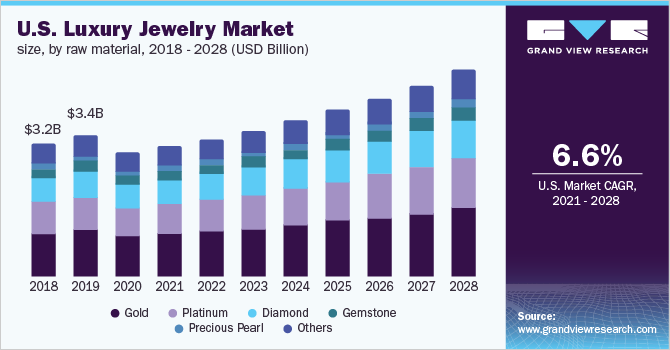
The global luxury jewelry market size was valued at USD 37.4 billion in 2020 and is expected to expand at a compound annual growth rate (CAGR) of 8.2% from 2021 to 2028. The rise in demand for sustainable jewelry and the rise in demand for gender-fluid jewelry are factors boosting the growth of the market for luxury jewelry. Luxury Jewelry has also grown into vehicles for self-expression, with many buyers looking for unique and important pieces. Non-traditional forms, shapes, and materials have found their way into jewelry collections. Asymmetrical cuts, imperfections in gemstones, utilitarian items, and opaque gems added a dimension of personality that appealed to customers' sense of individuality. Pearl jewelry gained popularity as a result of glowing endorsements from US Vice President Kamala Harris, film and music superstars, and members of the British Royal Family at high-profile public events.

U.S. luxury jewelry market size, by raw material, 2018 - 2028 (USD Billion)

During the pandemic, the female self-purchase market exploded across all product categories. Female self-purchase of precious jewelry was strong last year, according to PGI's Q4 2020 evaluation, and will continue to grow in 2021. According to the study, 77% of female respondents in India and China and 59.0% of female consumers in America, purchased non-bridal jewelry for themselves in 2020. In addition, over 80.0% of women in India and China and 67.0% of American women are expected to purchase non-bridal jewelry this year.

Gather more insights about the market drivers, restraints, and growth of the Global Luxury Jewelry market

Boundaries are being breached in jewelry trends, from watches to wedding rings and beyond, as gender fluidity becomes increasingly widespread. While male jewelry has always existed, more unisex pieces are emerging. For example, Gucci's jewelry collection was aimed at all genders and Bugari's B.Zero 1 Rock designs are contemporary, stylish, and unisex.

Generation Z is especially resistant to categorization and labeling. This allows marketers to target items to a wide range of people, connections, and events. London-based Shaun Leane is a pioneer in the field of gender-neutral jewelry. The designer, who began his company in 1999 after working as a jeweler for Alexander McQueen, has seen an increase in gay couples seeking unique engagement rings.

Browse through Grand View Research's Clothing, Footwear & Accessories Industry Research Reports

Jewelry Market - The global jewelry market size was valued at USD 249.02 billion in 2021 and is expected to expand at a compound annual growth rate (CAGR) of 8.5% from 2022 to 2030.

Beaded Jewelry Market - The global beaded jewelry market size was valued at USD 5.4 billion in 2021 and is expected to expand at a compound annual growth rate (CAGR) of 8.9% from 2022 to 2030. 

Luxury Jewelry Market Segmentation

Grand View Research has segmented the global luxury jewelry market on the basis of raw material, product, application, distribution channel, and region:

 Luxury Jewelry Raw Material Outlook (Revenue, USD Million, 2016 - 2028)

  • Gold
  • Platinum
  • Diamond
  • Precious Pearls
  • Gemstones
  • Others

Luxury Jewelry Product Outlook (Revenue, USD Million, 2016 - 2028)

  • Necklaces
  • Ring
  • Earrings
  • Bracelets
  • Others

Luxury Jewelry Application Outlook (Revenue, USD Million, 2016 - 2028)

  • Men
  • Women
  • Children

Luxury Jewelry Distribution Outlook (Revenue, USD Million, 2016 - 2028)

  • Online
  • Offline

Luxury Jewelry Regional Outlook (Revenue, USD Million, 2016 - 2028)

  • North America
  • Europe
  • Asia Pacific
  • Central & South America
  • Middle East & Africa

Key Companies profiled:

Some prominent players in the global Luxury Jewelry market include

  • Guccio Gucci S.p.A.
  • The Swatch Group Ltd.
  • Richemont
  • Tiffany & Co.
  • GRAFF
  • Louis Vuitton SE
  • Signet Jewelers Limited
  • Chopard International SA
  • MIKIMOTO
  • Pandora Jewelry, LLC

Order a free sample PDF of the Luxury Jewelry Market Intelligence Study, published by Grand View Research.

$33.4 Billion Today, $328 Billion by 2033: Inside the Edge Computing Market's Great Sprint

Enterprises are moving compute closer to where data is created. Factories, hospitals, retail stores, telecom towers, and vehicles all produc...