U.S. Corporate Wellness Market Growth Restraint Analysis Report by 2030

U.S. Corporate Wellness Industry Overview

The U.S. corporate wellness market size was valued at USD 18.0 billion in 2021 and is expected to expand at a compound annual growth rate (CAGR) of 3.77% from 2022 to 2030. The reduction in the overall healthcare costs of the employee and the increasing onset of chronic diseases are expected to boost the market growth. Employee wellbeing has proved to be an essential feature of the modern-day business world. Employees are likely to perform more diligently for employers that make them feel loved. Around 60% of employees approve that corporate wellness programs have made them opt for a healthy lifestyle outside of the office as well.
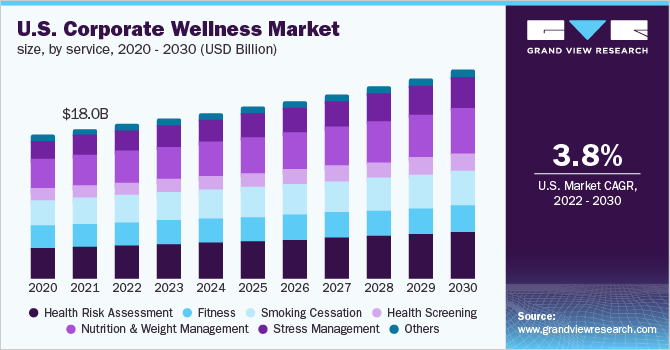
 U.S. corporate wellness market size, by service, 2020 - 2030 (USD Billion)

Stress in the workplace is common among U.S.-based adults and is progressively increasing over the past few decades. The American Institute of Stress, in September 2019, reported that around 85% of employees in the U.S. suffer from work-related stress, which costs the employers around USD 300 billion annually. Moreover, according to SHRM, the cost of treating depression alone is approximately USD 110 billion annually, half of which is spent on treating employees.

Gather more insights about the market drivers, restraints, and growth of the U.S. Corporate Wellness Market

There is an increasing awareness regarding employee health programs and their benefits in countering the various physical and mental disorders. This has resulted in increased adoption of programs by employers. According to a study published by the American Journal of Health Promotion, in 2017, almost half of the entire U.S. worksites offered some kind of health promotion program.

The high return on investment (ROI) in corporate wellness services is also a factor that attracts employers to offer these services. Employers pay a substantial amount of healthcare premiums to insurance providers, especially, in large-scale organizations. The increasing number of unhealthy employees leads to an upsurge in the premium cost putting employers under an increased financial burden. This motivates the employers to readily invest in programs for the employees to reduce the healthcare costs for the organization and increase productivity at work.

The government is taking initiatives to promote corporate wellbeing services. The Health Insurance Portability and Accountability Act (HIPAA) protects employee health information held by employers. Moreover, in May 2016, the U.S. Equal Employment Opportunity Commission (EEOC) passed a rule to implement Title II of the Genetic Information Nondiscrimination Act (GINA) associated with employer wellness programs. The final rule implies that employers may provide limited financial and other incentives in exchange for employee participation in wellness programs.

Most workplace wellness programs compensate for gym memberships. Businesses may need to provide alternatives to their employees because many individuals may not feel safe coming to gyms until there are fewer incidences of COVID-19. Providing access to online workout sessions is an easy substitute for gym memberships. The financial burden of the crisis has impacted people’s willingness to spend on well-being. Corporate wellbeing programs can help by giving reimbursements for employees who purchase yoga mats, resistance bands, and other basic gym equipment for at-home activities.

Browse through Grand View Research's Medical Devices Industry Related Reports

Wellness Tourism Market - The global wellness tourism market size was valued at USD 451.0 billion in 2021 and is expected to expand at a compound annual growth rate (CAGR) of 9.93% from 2022 to 2030.

Medical Tourism Market - The global medical tourism market size was valued at USD 4.0 billion in 2021 and is expected to expand at a compound annual growth rate (CAGR) of 32.51% from 2022 to 2030.

U.S. Corporate Wellness Market Segmentation

Grand View Research has segmented the U.S. corporate wellness market based on service, end-use, category, delivery model, and region:

U.S. Corporate Wellness Service Outlook (Revenue, USD Million, 2016 - 2030)

  • Health Risk Assessment
  • Fitness
  • Smoking Cessation
  • Health Screening
  • Nutrition & Weight Management
  • Stress Management
  • Others

U.S. Corporate Wellness End-use Outlook (Revenue, USD Million, 2016 - 2030)

  • Small Scale Organizations
  • Medium Scale Organizations
  • Large Scale Organizations

U.S. Corporate Wellness Category Outlook (Revenue, USD Million, 2016 - 2030)

  • Fitness & Nutrition Consultants
  • Psychological Therapists
  • Organizations/Employers

U.S. Corporate Wellness Delivery Model Outlook (Revenue, USD Million, 2016 - 2030)

  • Onsite
  • Offsite

Market Share Insights:

May 2019: Wellness Corporate Solutions launched an upgraded employee wellness portal to include the client and participant feedback to make screening, administering flu shots, and health coaching easier.

Key Companies profiled:

Some prominent players in the U.S. Corporate Wellness market include

  • ComPsych
  • Wellness Corporate Solutions
  • Virgin Pulse
  • EXOS
  • Marino Wellness
  • Privia Health
  • Vitality
  • Wellsource, Inc.
  • Sonic Boom Wellness

Order a free sample PDF of the U.S. Corporate Wellness Market Intelligence Study, published by Grand View Research.
U.S. Mechanical Ventilators Market Growth is Contributed by Increased Need for Ventilation Among Patients

U.S. Mechanical Ventilators Industry Overview

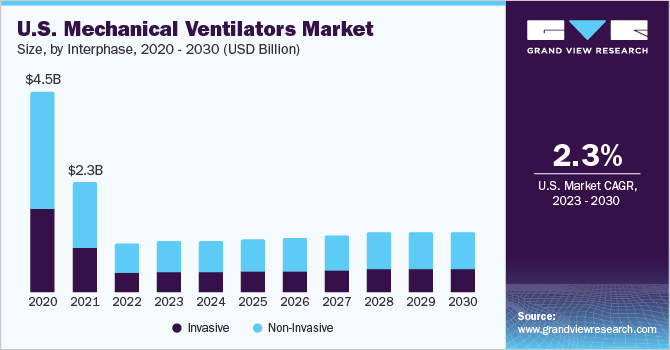
The U.S. mechanical ventilator market size was valued at USD 2.28 billion in 2021 and is expected to expand at a compound annual growth rate (CAGR) of 2.5% from 2022 to 2030. An unusually high incidence of COVID-19 cases has led to a large gap between demand and supply of mechanical ventilators to an extent that automotive and other industrial equipment manufacturers had to step in to increase the supply of this life-saving device. Mechanical ventilators-the life support equipment-are crucial in the management of chronic conditions, such as COPD, respiratory failure, and post-operative care that requires mechanical support for respiration. The COVID-19 pandemic has contributed to the growth of the market.

U.S. mechanical ventilator market size, by ventilator product, 2020 - 2030 (USD Billion)

In 2021 the demand for ventilators is normalized and manufacturers registered a gradual decrease in their sales due to the loaded acquisition of ventilators in the COVID-19 crisis. Moreover, the termination of HHS’ contract with Philips, Hamilton, and Vyaire for ventilator production adds up to the declining growth of the ventilator market. The introduction of alternative treatment solutions such as makeshift ventilators, manual resuscitators, PAP devices, anesthesia gas machines, etc. along with the declining COVID-19 critically ill population and vaccine launch would lower the market growth.

Gather more insights about the market drivers, restraints, and growth of the U.S. Mechanical Ventilators Market

The market is moving toward saturation as various manufacturers have speeded up their production capacities to meet the existing demand. However, as the prevalence of chronic diseases is on the rise, the demand for critical care units, like ventilators, is expected to be high in the coming years. Moreover, with technological advancements, the demand for low-cost and advanced feature ventilators is anticipated to increase in the years to come.

Export bans on critical care equipment implemented by various governments during the pandemic have resulted in encouraging local manufacturers to focus on increasing their production capacities. For instance, in India, AgVa Healthcare, a local manufacturer is helping the government by increasing the supply and production of ventilators. These types of initiatives undertaken by developing countries resulted in the decreasing demand from the U.S. manufacturers thereby responsible for declining market growth in 2022.

Browse through Grand View Research's Medical Devices Industry Related Reports

Therapeutic Respiratory Devices Market - The global therapeutic respiratory devices market size was valued at USD 18.0 billion in 2022 and is expected to witness a compound annual growth rate (CAGR) of 6.10% from 2023 to 2030.

Smart Inhalers Market - The global smart inhalers market size was valued at USD 10.9 billion in 2021 and is expected to expand at a compound annual growth rate (CAGR) of 19.3% from 2022 to 2030.

U.S. Mechanical Ventilators Market Segmentation

Grand View Research has segmented the U.S. mechanical ventilator market based on product and end use:

U.S. Mechanical Ventilator Product Outlook (Revenue, USD Million, 2017 - 2030)

  • Ventilators
  • Accessories

U.S. Mechanical Ventilator End-use Outlook (Revenue, USD Million, 2017 - 2030)

  • Hospital
  • Home care
  • Others

Market Share Insights:

October 2021: U.S. based company named Movair announced the launch of the Luisa ventilator to be used in homes, hospitals, or potable settings. It has added benefit of high flow oxygen therapy.

Key Companies profiled:

Some prominent players in the U.S. Mechanical Ventilators market include

  • Getinge AB
  • Vyaire Medical Inc.
  • Medtronic
  • Drägerwerk AG & Co. KGaA
  • GE Healthcare
  • Koninklijke Philips N.V.
  • Smiths Group plc
  • Hamilton Medical
  • ResMed Inc.
  • Ventec Life Systems

Order a free sample PDF of the U.S. Mechanical Ventilators Market Intelligence Study, published by Grand View Research.
U.S. House Calls Market Major Deals and Strategic Alliances Analysis by 2030

U.S. House Calls Industry Overview

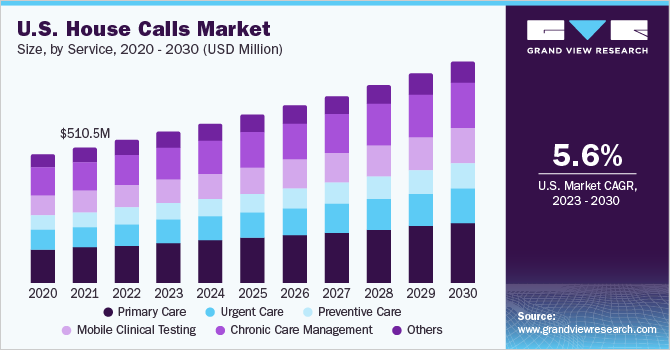
The U.S. house calls market size was valued at USD 510.5 Million in 2021 and is expected to exhibit a compound annual growth rate (CAGR) of 5.60% from 2022 - 2030. Increasing demand for cost-efficient, accessible, and convenient services for healthcare and wellness is expected to drive the industry growth during the forecast period. House call practices in the U.S. are expected to reduce the hospital expenditure for Medicare beneficiaries with chronic conditions. Thus, the house call market is expected to witness exponential growth in the coming years due to affordable, effective, and convenient on-demand healthcare services provided by these practices.

U.S. house calls market size, by service, 2020 - 2030 (USD Million)

The Federal government has taken initiatives to support house call providers by relaxing the restrictions on telehealth in Medicare for providing better reimbursement to physicians. In July 2021, the Center for Medicare & Medicaid Services (CMS) proposed a physician payment rule involving an annual physician payment schedule for improving healthcare services by encouraging physicians to opt for house calls, e-consultation, and other similar services through better reimbursement.

Gather more insights about the market drivers, restraints, and growth of the U.S. House Calls Market

Certain states in the U.S. with less than full-practice authority require nurse practitioners to work as part of a physician practice or enter into a contract with a physician to provide medical care, whether that care is in a hospital, doctor’s office, or a patient’s home. Minimizing restrictions on the range of services that practitioners can offer will in turn increase the availability of care providers.

App-based on-demand physician house call service is one of the technological advancements in healthcare that is trending. App-based on-demand house call services are attracting the U.S. population, being a convenient, timesaving, & cost-saving option, especially in case of acute health problems where home services are the best option. These services are reducing hospitalization time for patients, and saving costs for them, especially for long-term chronic care. The Med Star Hospital center, a leading healthcare center in the U.S., witnessed a 9% decrease in the hospitalization rate, indicating an impact of app-based house call services.

As per a report by the Commonwealth Development Fund, there is a need to reduce healthcare expenditure in the U.S., as excess healthcare expenditure is impacting the ability to meet critical public health needs and affecting the country's economic competitiveness. The emerging telemedicine & house call services in recent times are a great option for reducing healthcare expenditure, as telehealth saves healthcare costs in multiple ways. Home visits provided by mobile physician practices have eliminated wait-time for nonurgent or new cases in hospitals and have reduced healthcare expenditure.

Browse through Grand View Research's Medical Devices Industry Related Reports

U.S. Home Healthcare Market - The U.S. home healthcare market size was valued at USD 142.9 billion in 2022 and is expected to expand at a compound annual growth rate (CAGR) of 7.48% from 2023 to 2030.

U.S. Home Infusion Therapy Market - The U.S. home infusion therapy market size was estimated at USD 16.59 billion in 2021 and is expected to expand at a compound annual growth rate (CAGR) of 7.5% from 2022 to 2030.

U.S. House Calls Market Segmentation

Grand View Research has segmented the U.S. house calls market based on service: 

U.S. House Calls Service Outlook (Revenue, USD Million, 2017 - 2030)

  • Primary Care
  • Urgent Care
  • Preventive Care
  • Mobile Clinical Testing
  • Chronic Care Management
  • Others

Market Share Insights:

March 2021: Heal announced a partnership with Medley Pharmacy to help patients access critical prescriptions and medication without leaving home.

Key Companies profiled:

Some prominent players in the U.S. House Calls market include

  • SOS Doctors House Calls, Inc
  • Heal
  • Doctor on Demand, Inc
  • Resurgia Health Solutions LLC
  • MDLIVE, Inc
  • House Call Doctors Loss Angeles
  • Mount Sinai Visiting Doctors
  • Visiting Physician Association
  • Urgent Med Housecalls
  • House Call Doctors Medical Group

Order a free sample PDF of the U.S. House Calls Market Intelligence Study, published by Grand View Research.

U.S. Active Adult (55+) Community Market is driven by Growing Interest of Investors in Senior Living Facilities

U.S. Active Adult (55+) Community Industry Overview

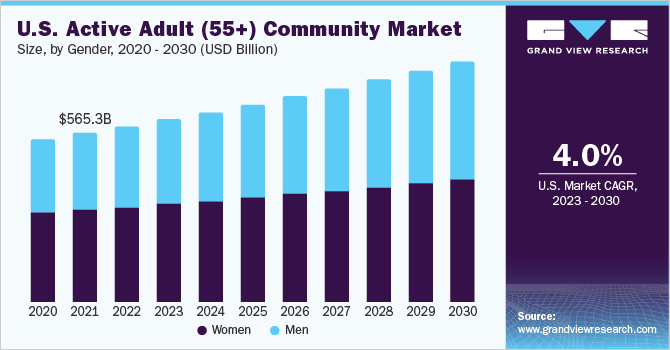
The U.S. active adult (55+) community market size was valued at USD 565.3 billion in 2021 and is anticipated to expand at a compound annual growth rate (CAGR) of 4.01% from 2022 to 2030. Increasing demand from baby boomers, reduction in the stigma of retiring, and growing interest of investors in senior living facilities are driving the market. Active adult housing is a purpose-built multifamily rental housing for younger seniors and has a heavy emphasis on community space and activities. The living preferences of baby boomers are changing, as this population wants to stay independent and lead an active lifestyle. Thus, post-retirement they prefer to relocate to communities that have residents with shared values and not senior living or assisted living facilities.

U.S. active adult (55+) community market size, by gender, 2020 - 2030 (USD Billion)

Moreover, for this population, retirement is not about settling down and living the rest of their life following the same routine. They are more willing to explore new things, maintain a social life, and enjoy their life savings. Active adult communities have, thus, become the most suitable option for baby boomers.

Gather more insights about the market drivers, restraints, and growth of the U.S. Active Adult (55+) Community Market

Active adult communities have gained tremendous market appeal from investors, which is believed to be one of the most opportunistic investments in recent years. According to a recent senior housing & care investor survey, around 22% of respondents believed active adult communities as a profitable investment and the hottest selling property in the senior housing market. Moreover, these properties are specially marketed to younger seniors (55+) and are categorized as a form of lifestyle senior housing. In addition, as these communities are not associated with any type of healthcare component they are growing in popularity with investors among other senior housing product types.

According to mid-year estimates published by the U.S. Census Bureau, the majority of the baby boomers have been turning 65 years of age and by 2030 the remainder will also reach age 65 and will account for approximately 21.0% of the total United States population. Among the senior living market, the active adult community has gained a huge market demand and investor appeal in the last few years. This is attributed to the growing demand for independent and maintenance-free living among the age group of 55 to 64 years.

In the U.S., the active adult community is often referred to by different names. They are termed as lifestyle seniors housing based on the type of population it caters to. Sometimes used in reference to multifamily but most 55+ communities are sold as single-family housing communities.

Browse through Grand View Research's Medical Devices Industry Related Reports

U.S. Concierge Medicine Market - The U.S. concierge medicine market size was valued at USD 5.5 billion in 2021 and is expected to grow at a compound annual growth rate (CAGR) of 10.27% from 2022 to 2030.

U.S. Hospital Facilities Market - The U.S. hospital facilities market size was valued at USD 1,318.9 billion in 2021 and is expected to grow at a compound annual growth rate (CAGR) of 7.62% from 2022 to 2030.

U.S. Active Adult (55+) Community Market Segmentation

Grand View Research has segmented the U.S. active adult (55+) community market based on gender

U.S. Active Adult (55+) Community Gender Outlook (Revenue, USD Billion, 2017 - 2030)

  • Women
  • Men

Market Share Insights:

December 2021: The Villages announced the expansion of its community by over 241 acres which were to include a new hospital.

Key Companies profiled:

Some prominent players in the U.S. Active Adult (55+) Community market include

  • The Villages
  • Pultegroup, Inc.
  • Latitude Margaritaville
  • Hot Springs Village
  • Rossmoor Walnut Creek
  • Robson Ranch
  • Sun Lakes
  • Green Valley

Order a free sample PDF of the U.S. Active Adult (55+) Community Market Intelligence Study, published by Grand View Research.
ECG Patch and Holter Monitor Market Top Players are Hill-Rom and iRhythm Technologies

ECG Patch and Holter Monitor Industry Overview

The global ECG patch and holter monitor market was valued at USD 1.0 billion in 2021 and is expected to expand at a compound annual growth rate (CAGR) of 19.16% from 2022 to 2030. The growing prevalence of atrial fibrillation, aging, and rising incidence of cardiovascular disorders are likely to drive the market during the forecast period. Furthermore, the shift in the trend toward ambulatory monitoring devices, technological advancements in the field, increase in investments for early detection of arrhythmia, advancements in the field of telemetry, and favorable regulatory policies are likely to drive the market growth.

U.S. ecg patch and holter monitor market size, by product, 2020 - 2030 (USD Million)

Atrial Fibrillation (AFib) is a common form of arrhythmia diagnosed in clinics and hospitals. With an aging population, the number is expected to rise to 12.1 million by 2030. Moreover, this condition is also responsible for a considerable number of deaths. For instance, according to the CDC, in 2019, AFib was the underlying cause of around 26,535 deaths in the U.S. People of European origin are more likely to develop arrhythmia when compared with African Americans. Because the prevalence of cardiac arrhythmia increases with age, and women have a higher life expectancy than men, more women experience AFib than men.

Gather more insights about the market drivers, restraints, and growth of the Global ECG Patch And Holter Monitor Market

With the rising incidence of AFib, ventricular fibrillation, Supraventricular Tachycardia (SVT), syncope, palpitations, and post-ablation follow-up worldwide, the demand for ambulatory monitoring devices has increased in the hospitals. In addition, continuous ECG monitoring is a preferred option for obtaining accurate results, when compared to inpatient standard ECG monitoring. The standard ECG test does not provide a clear diagnosis, after which people are referred for further investigations. To avoid such situations, ECG patches and Holter monitors are used. The Holter monitor is the most preferred device worldwide for detecting AFib.

Increasing competition from technologically advanced and portable devices that are more economical than traditional ECG is expected to create pricing pressure on established manufacturers. Recent government regulations are expected to affect product pricing due to a reduction in reimbursement rates. The Medicare Physician Fee Schedule Final Rule for 2022 was released in November 2021 and yet again excluded to issue of national pricing for extended external ECG monitoring after December 2020. This is likely to lead to reduced Medicare rates for devices, negatively impacting their adoption. 

Browse through Grand View Research's Medical Devices Industry Related Reports

Cardiac Rhythm Management Devices Market - The global cardiac rhythm management devices market size was valued at USD 18.1 billion in 2021 and is estimated to expand at a compound annual growth rate (CAGR) of 6.5% from 2022 to 2030.

Carotid Artery Stents Market - The global carotid artery stents market size was valued at USD 559.7 million in 2021 and is anticipated to grow at a compound annual growth rate (CAGR) of 3.0% during the forecast period from 2022 to 2030.

ECG Patch and Holter Monitor Market Segmentation

Grand View Research has segmented the global ECG patch and holter monitor market based on product, application, end use, and region:

ECG Patch and Holter Monitor Product Outlook (Revenue, USD Million, 2017 - 2030)

  • ECG Patch
  • Holter Monitors

ECG Patch and Holter Monitor Application Outlook (Revenue, USD Million, 2017 - 2030)

  • Diagnostics
  • Monitoring

ECG Patch and Holter Monitor End-Use Outlook (Revenue, USD Million, 2017 - 2030)

  • Hospitals & Clinics
  • Ambulatory Facilities
  • Others

ECG Patch and Holter Monitor Regional Outlook (Revenue, USD Million, 2017 - 2030)

  • North America
  • Europe
  • Asia Pacific
  • Latin America
  • MEA

Market Share Insights:

May 2021: iRhythm Technologies, Inc. announced the receipt of two additional 510(k) certifications—one for a redesigned and improved flagship monitor and another for enhanced Artificial Intelligence (AI) capabilities.

Key Companies profiled:

Some prominent players in the global ECG Patch And Holter Monitor market include

  • Nissha Medical Technologies (NMT)
  • Medtronic plc
  • Hill-Rom
  • iRhythm Technologies, Inc.
  • Nihon Kohden Corporation
  • Koninklijke Philips N.V.
  • GE Healthcare
  • Fukuda Denshi Co., Ltd.
  • Spacelabs Healthcare
  • AliveCor, Inc.
  • Cardiac Insight Inc.

Order a free sample PDF of the ECG Patch and Holter Monitor Market Intelligence Study, published by Grand View Research.

Veterinary Equipment and Disposables Market is driven by Advancement in Monitoring and Therapy Options

Veterinary Equipment and Disposables Industry Overview

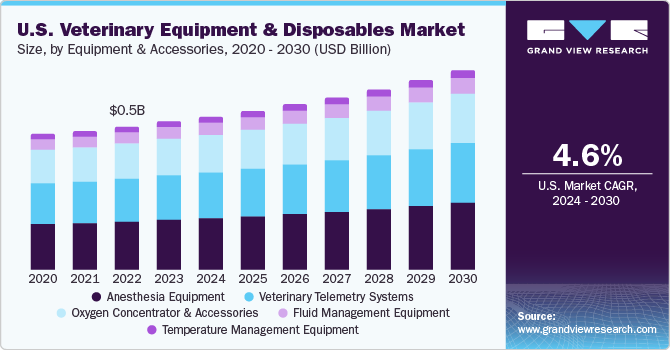
The global veterinary equipment and disposables market size was estimated at USD 2.1 billion in 2021 and is expected to expand at a compound annual growth rate (CAGR) of 8.8% from 2022 to 2030. Demand for better veterinary critical care is boosting market growth. Advancement in monitoring and therapy options such as IV fluid therapy, ventilation support, temperature management, and pain control are further propelling the demand. For instance, in July 2020, Trice Medical joined with Dr. Debra Canapp and Dr. Sherman Canapp at Canapp Sports Medicine LLC, to introduce the veterinary portable tablet. This is world's first combination of both a high-quality ultrasound and disposable needle arthroscope system.

U.S. veterinary equipment and disposables market size, by product, 2020 - 2030 (USD Million)

Rising pet adoption and the growing prevalence of animal diseases are among the major factors driving the market for veterinary equipment and disposables. Moreover, the rising demand for pet insurance to help limit out-of-pocket expenditure on critical medical conditions, such as accidental injuries, is anticipated to boost market growth. Livestock insurance is available in countries such as India, Malaysia, and Vietnam, which helps cover the cost of several veterinary procedures. An increasing number of insured animals is expected to drive the demand for veterinary procedures and thereby growth of the market.

Gather more insights about the market drivers, restraints, and growth of the Global Veterinary Equipment And Disposables Market

The Covid-19 pandemic had a significant impact on the market for veterinary equipment and disposables and created opportunities for new fields such as telemedicine for those willing to leverage on them. For instance, in April 2020, Covetrus announced that it is integrating telemedicine capabilities across its global technology portfolio. This innovative functionality offered a continuous and easy way for veterinarians to remotely reach their consumers and patients, using the company’s existing technology solutions.

Growing investments by key players to develop advanced products for better diagnosis are likely to propel the growth. For instance, in November 2020, Kent Scientific Corporation launched “Somnolent Low-Flow Electronic Vaporizer,” the newest anesthesia system for small animals. This vaporizer delivers sevoflurane or isoflurane accurately from the bottle to the animal. This initiative is expected to enhance the company’s product portfolio. Similarly, in July 2020, Midmark Corp. introduced Midmark Multiparameter Monitor. This Multiparameter Monitor is useful in all areas of a veterinary hospital, including treatment, exam, surgery, and recovery.

Browse through Grand View Research's Animal Health Industry Related Reports

Veterinary Medicine Market - The global veterinary medicine market size was estimated at USD 44.59 billion in 2022 and is expected to expand at a lucrative compound annual growth rate (CAGR) of 8.2% over the forecast period.

Rabies Veterinary Vaccines Market - The global rabies veterinary vaccines market size was valued at USD 584.8 million in 2022 and is expected to expand at a compound annual growth rate (CAGR) of 4.1% from 2023 to 2030.

Veterinary Equipment and Disposables Market Segmentation

Grand View Research has segmented the global veterinary equipment and disposables market on the basis of product, animal type, end use, and region:

Veterinary Equipment and Disposables Product Outlook (Revenue, USD Million, 2017 - 2030)

  • Critical Care Consumables
  • Anesthesia Equipment
  • Fluid Management Equipment
  • Temperature Management Equipment
  • Rescue & Resuscitation Equipment
  • Research Equipment
  • Patient Monitoring Equipment

Veterinary Equipment and Disposables Animal Type Outlook (Revenue, USD Million, 2017 - 2030)

  • Companion Animal
  • Livestock Animal

Veterinary Equipment and Disposables End-use Outlook (Revenue, USD Million, 2017 - 2030)

  • Veterinary Hospitals/Clinics
  • Research Institutes

Veterinary Equipment and Disposables Regional Outlook (Revenue, USD Million, 2017 - 2030)

  • North America
  • Europe
  • Asia Pacific
  • Latin America
  • MEA

Key Companies profiled:

Some prominent players in the global Veterinary Equipment and Disposables market include

  • Shenzhen Mindray Bio-Medical Electronics Co., Ltd.
  • Smiths Medical, Inc.
  • Nonin Medical, Inc.
  • Digicare Biomedical
  • Covetrus, Inc.
  • B. Braun Melsungen AG
  • DRE Veterinary
  • Vetland Medical Sales and Services
  • Midmark Corporation
  • Jorgensen Labs
  • Grady Medical
  • Vetronic Services
  • RWD Life Science Co.,LTD

Order a free sample PDF of the Veterinary Equipment And Disposables Market Intelligence Study, published by Grand View Research.

Meningococcal Vaccines Market growth is fueled by Rising Incidence of Meningitis

Meningococcal Vaccines Industry Overview

The global meningococcal vaccines market size was valued at USD 2.88 billion in 2021 and is projected to expand at a compound annual growth rate (CAGR) of 6.2% from 2022 to 2030. The increasing prevalence of meningitis is one of the major factors expected to drive the market. According to the Centers for Disease Control and Prevention (CDC), around 1.2 million cases of bacterial meningitis are projected to occur globally every year. Moreover, increasing immunization programs, growing awareness about the disease, and increasing R&D activities pertaining to meningococcal vaccines are expected to fuel the market growth during the forecast period.

U.S. meningococcal vaccines market size, by type, 2020-2030 (USD Billion)

The overall market experienced a decline in 2020 owing to the COVID-19 pandemic. The net sales of Menactra, Menveo, Nimenrix, Trumenba, and Bexsero were negatively impacted in 2020. However, the market is expected to grow at a positive Y-o-Y growth rate in 2021 due to increasing initiatives by government and regulatory authorities to combat the rising prevalence of meningitis. For instance, in May 2019, the Ministry of Health of Ireland approved MenACWY vaccine to be provided to thousands of teenagers in Ireland, due to the rising prevalence of meningitis in 2018.

Gather more insights about the market drivers, restraints, and growth of the Global Meningococcal Vaccines Market

Various campaigns and awareness programs are being organized by government & non-government organizations, such as the National Meningitis Association (NMA), Meningitis Research Foundation of Canada, Meningitis B Action Project, and others. These organizations help in promoting continuous research and new approaches involved in disease prevention. Hence, these factors are anticipated to fuel the meningococcal vaccine market growth in the coming years. 

The presence of non-profit organizations providing support for research projects, training to healthcare professionals, and offering information & help to patients is anticipated to accelerate market growth. For instance, in August 2021, DoSomething.Org and National Foundation for Infectious Diseases (NFID) introduced the "Complete What's Missing Program". The program's goal is to educate young people about the importance of Meningococcal Disease Prevention. 

The presence of phase III vaccines in the pipeline which are expected to be commercialized over the forecast period is anticipated to fuel the market growth. For instance, in June 2020, Pfizer, Inc. initiated phase III clinical trials of PF-06886992, a pentavalent meningococcal vaccine candidate (MenABCWY) to assess & compare the safety, immunogenicity, and tolerability with licensed meningococcal vaccines in adolescents and young adults. Moreover, Menactra, a conjugate vaccine manufactured by Serum Institute of India Pvt. Ltd. is currently in phase III clinical trial. 

Browse through Grand View Research's Pharmaceuticals Industry Related Reports

Influenza Vaccine Market - The global influenza vaccine market size was valued at USD 7.28 billion in 2022 and is expected to grow at a compound annual growth rate (CAGR) of 6.83% from 2023 to 2030.

Biodefense Market - The global biodefense market size was valued at USD 15.2 billion in 2022 and is expected to expand at a compound annual growth rate (CAGR) of 5.0% from 2023 to 2030.

Meningococcal Vaccines Market Segmentation

Grand View Research has segmented the meningococcal vaccines market based on type, brand, serotype, age group, sales channel, and region: 

Meningococcal Vaccines Type Outlook (Revenue, USD Million; 2018 - 2030)

  • Bivalent
  • Quadrivalent
  • Others

Meningococcal Vaccines Brand Outlook (Revenue, USD Million; 2018 - 2030) (Volume, Number of Doses (in Thousands))

  • Menactra
  • Menveo
  • Nimenrix
  • Trumenba
  • Bexsero
  • Others

Meningococcal Vaccines Age Group Outlook (Revenue, USD Million; 2018 - 2030)

  • Infants (0 to 2 years)
  • Children And Adults (2 years & above)

Meningococcal Vaccines Serotype Outlook (Revenue, USD Million; 2018 - 2030) (Volume, Number of Doses (in Thousands))

  • Serotype A
  • Serotype B
  • Serotype C
  • Serotype W-135
  • Serotype Y

Meningococcal Vaccines Sales Channel Outlook (Revenue, USD Million; 2018 - 2030)

  • Private
  • Public

Meningococcal Vaccines Regional Outlook (Revenue, USD Million, 2018 - 2030)

  • North America
  • Europe
  • Asia Pacific
  • Latin America
  • MEA

Key Companies profiled:

Some prominent players in the global Meningococcal Vaccines market include

  • Pfizer Inc.
  • Sanofi
  • Serum Institute of India Ltd.
  • GlaxoSmithKline plc.
  • Merck & co., Inc.
  • Walvax Biotechnology Co., Ltd.

Order a free sample PDF of the Meningococcal Vaccines Market Intelligence Study, published by Grand View Research.
Artificial Intelligence in Drug Discovery Market Top Players are GNS Healthcare and Cyclica

Artificial Intelligence in Drug Discovery Industry Overview

The global artificial intelligence in drug discovery market size was valued at USD 897.6 million in 2021 and is expected to expand at a compound annual growth rate (CAGR) of 29.4% from 2022 to 2030. The growing demand for the discovery and development of novel drug therapies and increasing manufacturing capacities of the life science industry are driving the demand for artificial intelligence (AI) empowered solutions in the drug discovery processes. Manufacturers in the life science industry constantly focus on replenishing their product pipelines as the majority of the big sellers go off patent. Furthermore, a growing number of public-private partnerships boosting the adoption of AI-powered solutions in drug discovery and development processes is driving the market. Countries such as France, the U.S., Spain, and Japan dominate the clinical trial space, while the U.K. is focused on enhancing research & development activities.

U.S. artificial intelligence in drug discovery market size, by therapeutic area, 2020 - 2030 (USD Million)

Drug discovery and development is a cost-intensive and time-consuming process. As per the data published in industry journals, the average costs of discovering and developing novel drug therapies are USD 2.6 billion, and the time period of more than 10 years. Most of the candidate therapies are eliminated within the initial phases of the clinical trial, specifically preclinical and phase-1 trials owing to the narrow development testing funnel, which directly contributes to the high costs and vast timelines involved in the process.

Gather more insights about the market drivers, restraints, and growth of the Global Artificial Intelligence In Drug Discovery Market

The adoption of AI solutions in the clinical trial process eliminates possible obstacles, reduces clinical trial cycle time, and increases the productivity and accuracy of the clinical trial process. Therefore, the adoption of these advanced AI solutions in drug discovery processes is gaining popularity amongst life science industry stakeholders. According to Clinical Trials Arena data estimates in 2021, the strategic collaborations and partnerships between major AI-based drug discovery companies and pharmaceutical companies increased from 4 partnerships in 2015 to 27 partnerships in 2020.

Digitalization in biomedical and clinical research spaces is paving a path for the implementation of AI solutions. The wide array of datasets generated from drug discovery processes such as molecule screening phase and preclinical studies is boosting the adoption of AI-powered solutions. The monumental datasets make it difficult for researchers to analyze the studies accurately and through the implementation of AI solutions, the screening processes can be accelerated and the turnaround time can be reduced. Furthermore, the ongoing Covid-19 pandemic has dramatically changed the perception toward clinical trials and has increased the penetration and utilization of AI solutions. For instance, renowned pharmaceutical companies such as Pfizer, Novartis, Bayer, Sanofi, and Johnson & Johnson are collaborating with AI-based drug discovery solutions providers.

The availability of myriad options such as data mining and personalization capabilities in adopting AI solutions in drug discovery processes is driving the market. Furthermore, enhanced accuracy is achieved through the integration of deep learning and machine learning algorithms in AI platforms in identifying molecule binding properties of the drug. Moreover, the incorporation of advanced technologies such as electronic data capture (EDC) supports manufacturers in improving patient data management and reduces monitoring costs. Process errors can be minimized by integrating electronic Clinical Outcome Assessment (e-COA) in the AI solutions. Lately, advanced analytics are being integrated into these advanced AI solutions, which aid stakeholders in data mining, patient recruitment, and medical and clinical records management.

Amongst the different phases of a clinical trial study, preclinical testing accounts for the highest revenue loss with low returns. Through the adoption of AI solutions, the preclinical testing phase can be optimized to minimize costs. AI-based models are implemented to accurately analyze human physiological responses and eliminate experimental costs. Stringent regulations pertaining to clinical trial studies laid down by regulatory authorities across the globe are anticipated to drive the demand for AI solutions in drug discovery processes. On the other hand, government authorities of various developed and emerging economies are undertaking favorable initiatives to increase the penetration of AI solutions and increase the number of clinical trials. 

Browse through Grand View Research's Healthcare IT Industry Related Reports

ePharmacy Market - The global ePharmacy market size was valued at USD 52.0 billion in 2021 and is expected to expand at a compound annual growth rate (CAGR) of 19.5% from 2022 to 2030.

Artificial Intelligence in Precision Medicine Market - The global artificial intelligence in precision medicine market size was valued at USD 946.0 million in 2021 and is expected to grow at a compound annual growth rate (CAGR) of 35.7% over the forecast period from 2022 to 2030.

Artificial Intelligence in Drug Discovery Market Segmentation

Grand View Research has segmented the global artificial intelligence in drug discovery market based on application, therapeutic area, and region:

Artificial Intelligence in Drug Discovery Application Outlook (Revenue, USD Million, 2016 - 2030)

  • Drug Optimization and Repurposing
  • Preclinical Testing
  • Others

Artificial Intelligence in Drug Discovery Therapeutic Area Outlook (Revenue, USD Million, 2016 - 2030)

  • Oncology
  • Neurodegenerative Diseases
  • Cardiovascular Diseases
  • Metabolic Diseases
  • Infectious Diseases
  • Others

Artificial Intelligence in Drug Discovery Component Outlook (Revenue, USD Million, 2016 - 2030)

  • Software
  • Hardware
  • Services

Artificial Intelligence in Drug Discovery Regional Outlook (Revenue, USD Million, 2016 - 2030)

  • North America
  • Europe
  • Asia Pacific
  • Latin America
  • MEA

Key Companies profiled:

Some prominent players in the global Artificial Intelligence In Drug Discovery market include

  • IBM Watson
  • Exscientia
  • GNS Healthcare
  • Alphabet (DeepMind)
  • Benevolent AI
  • BioSymetrics
  • Euretos
  • Berg Health
  • Atomwise
  • Insitro
  • Cyclica

Order a free sample PDF of the Artificial Intelligence In Drug Discovery Market Intelligence Study, published by Grand View Research.
U.S. Virtual Visits Market Growth is boosted by Increasing Penetration of Smartphones and Assisted Technologies

U.S. Virtual Visits Industry Overview

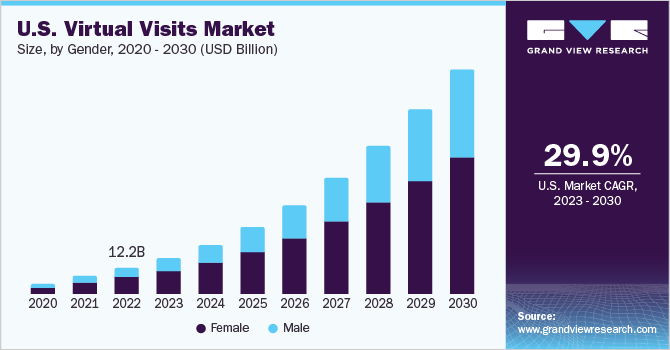
The U.S. virtual visits market is valued at USD 8.3 billion in 2021 in terms of revenue and 270 million in 2021 in terms of volume. The market is expected to expand at a compound annual growth rate (CAGR) of 30.9% in terms of value and 36.9% in terms of volume, during the forecast period. The increase in penetration of smartphones has positively affected the growth of the virtual visits market in the U.S. The pandemic brought about a change in the way patients took consultations, the new norm was teleconsultations to communicate with the healthcare practitioners, which was responsible for a substantial growth spurt in the virtual visits market. The ever-increasing and changing technology and fast adoption rates by the population is also a key factor driving the growth of the virtual visits market.

 U.S. virtual visits market size, by service type, 2020 - 2030 (USD Sillion)

The landscape of telehealth has been continuously changing with apps and devices bringing patients and caregivers closer virtually, in the wake of the current situation and the pandemic, the preference for both patients and doctors was teleconsultations. This not only created a huge market opportunity for the technology to develop around different apps and devices to monitor various health conditions but also for people to connect to doctors even in remote locations where there were no functional hospitals or care centers. The virtual visit market has become a way to provide remote and rural as well as urban areas with safe and convenient access to healthcare for conditions like migraine, birth control, diabetes, hypertension, and other health conditions.

Gather more insights about the market drivers, restraints, and growth of the U.S. Virtual Visits Market

The demand for personalized care has risen in the recent years, in remote areas where hospitals and healthcare centers are already sparse, the needs for specialty care and personalized care are unmet, with the advent of teleconsultations, this problem has been solved, and the adoption by certified healthcare professionals has also risen, mostly due to the pandemic, but has now become the go-to way for remote care consultations. Patients in remote areas can connect to specialists and experts from the comfort of their home to anywhere in the country, this has resulted in faster and widespread adoption of telehealth and teleconsultations, resulting in the growth of the market. An increase in smartphone penetration and adoption of 4G & 5G technologies and devices have enabled both patients and caregivers to connect easily.

The increasing number of government initiatives has also positively affected the growth of the virtual visits market in the U.S. The Federal Communications Commission (FCC) established a USD 200 million COVID-19 Telehealth program, which connected and enabled caregivers to provide appropriate consultations to patients in rural settings and remote areas, the latest funding for this purpose was announced on January 26, 2022. FCC also launched a connected care pilot program, on June 17, 2021, wherein FCC approved guidance for this program to begin a 3-year project. Many more initiatives have been undertaken to improve the telehealth landscape in the country in turn boosting the growth of the virtual visits market.

The rising adoption of virtual visits and teleconsultations by healthcare practitioners is also propelling the growth of the market. In a survey conducted in 2019, by the Consumer Technology Association before the pandemic hit the world, 52% of the consumers were open to using a connected health device if recommended by a physician. Telehealth adoption rates have increased drastically over the last decade and are expected to increase given its benefits, further helping the virtual visits market to grow.

As the adoption of telehealth is increasing so are the risks associated with the data that is being generated, the plethora of apps and connected devices all create a mammoth amount of patient data which is at a constant risk of being hacked or patient information being leaked. There are several initiatives being implemented by the government to increase the security of patient data and create a safe space for virtual consultations and visits.

COVID-19 has had a positive impact on the overall virtual visits market. As per a report by McKinsey, the use of telehealth has increased more than 38 times when compared to pre-COVID times. There was a massive jump reported from February 2020 to April 2020, utilization of telehealth was up by 78 times in 2 months. The number of initiatives by the government has fueled the virtual visits market and it is expected to stay even post COVID-19.

Browse through Grand View Research's Healthcare IT Industry Related Reports

U.S. Behavioral Health Care Software and Services Market - The U.S. behavioral health care software and services market size was valued at USD 1.1 billion in 2021 and is expected to expand at a compound annual growth rate (CAGR) of 12.12% from 2022 to 2030.

U.S. Virtual Care Market - The U.S. virtual care market size was valued at USD 4.2 billion in 2021 and is expected to expand at a compound annual growth rate (CAGR) of 30.75% from 2022 to 2030.

U.S. Virtual Visits Market Segmentation

Grand View Research has segmented the U.S. virtual visits market based on service type, commercial plan type, age group, and gender:

Service Type Outlook (Revenue & Volume, USD Million & Million Units, 2016 - 2030)

  • Cold & Flu management
  • Allergies
  • Urgent Care
  • Preventive Care
  • Chronic Care Management
  • Behavioral Health

Age Group Outlook (Revenue & Volume, USD Million & Million Units, 2016 - 2030)

  • Age 18-34
  • Age 35-49
  • Age 50-64
  • Age 65 and above

Commercial Plan Type (Revenue & Volume, USD Million & Million Units, 2016 - 2030)

  • Small Group
  • Self-funded/ASO Group Plans
  • Medicaid
  • Medicare

Gender (Revenue & Volume, USD Million & Million Units, 2016 - 2030)

  • Male
  • Female

Key Companies profiled:

Some prominent players in the U.S. Virtual Visits market include

  • American Well Corporation
  • MDLive, Inc
  • Doctor On Demand, Inc
  • eVisit Telemedicine Solution
  • Teladoc Health, Inc
  • MeMD
  • HealthTap, Inc
  • Vidyo, Inc
  • PlushCare, Inc
  • Zipnosis

Order a free sample PDF of the U.S. Virtual Visits Market Intelligence Study, published by Grand View Research.
Europe Mobility Aids Market growth is attributed to The Rising Availability of Technologically Advanced Products

Europe Mobility Aids Industry Overview

The Europe mobility aids market size was valued at USD 2.8 billion in 2021 and is projected to expand at a compound annual growth rate (CAGR) of 3.2% from 2022 to 2030. This growth can be attributed to the increasing geriatric population requiring Long-term Care (LTC), the growing availability of technologically advanced products, and the rising demand for home healthcare services & staff. The market is majorly driven by the growing prevalence of target diseases impairing mobility. The introduction of new mobility aids by market players is anticipated to increase the number of products available in the market and facilitate market growth. For instance, in February 2021, Invacare Corp. announced the introduction of their next-generation power assist device, the e-motion (M25).

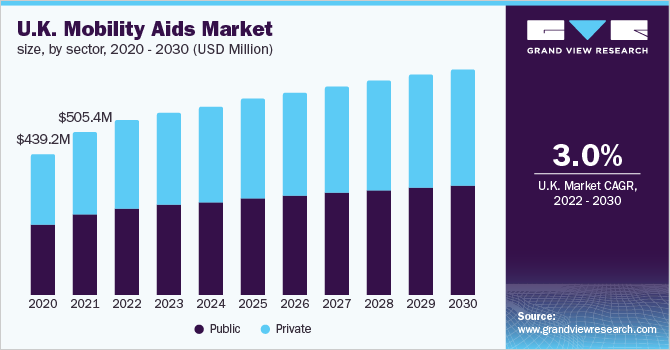
 U.K. mobility aids market size, by sector, 2020 - 2030 (USD Million)

These power assist vehicles will feature wheels with a powerful in-hub motor and lithium-ion batteries, thus expanding the company’s product portfolio and driving the market growth. The COVID-19 pandemic had significantly affected the transport and mobility sector. It had disrupted the -supply channel of the wheelchair to a great extent. Wheelchair operations were halted across several countries owing to strict lockdowns being implemented. Hospitals witnessed consistent demand owing to a spike in the number of geriatric patients with COVID-19 infection. With the ease of lockdown, companies are expected to resume operations. The U.K. private sector segment is expected to grow at a steady CAGR during the forecast period.

Gather more insights about the market drivers, restraints, and growth of the Europe Mobility Aids Market

The iWalkActive program initiated by Ambient Assisted Living (AAL) aims to integrate the ICT technology with the conventional walkers to provide a smart walker platform for the aging European population to assist in walking. Such initiatives are anticipated to drive market growth. Furthermore, the rising geriatric population coupled with the rising prevalence of diseases, such as Parkinson’s, arthritis, and paralysis, is anticipated to increase the demand for mobility aids. For instance, in the U.K., one of the important economies in Europe, the geriatric population accounted for nearly 18.65% of the country’s population in 2020. Moreover, approximately 20,000 new cases of rheumatoid arthritis are diagnosed in the country annually, eventually increasing the demand for rehabilitation equipment.

The various funding mechanisms implemented by several European countries for aiding patients in need of LTC are also likely to support market growth. For instance, several European countries provide universal long-term care coverage. The availability of a range of long-term care funding systems, such as social insurance, private insurance, universal health coverage, and others, across European countries will greatly improve the affordability of mobility devices. In addition, England’s tax-based system prioritizes the provision of rehabilitation and rehabilitative services to patients. These factors are expected to result in lucrative growth of the market over the forecast period.

Browse through Grand View Research's Medical Devices Industry Related Reports

Long-term Care Market - The global long-term care market size was valued at USD 991.6 billion in 2021 and is expected to register a compound annual growth rate (CAGR) of 6.55% during the forecast period.

Home Healthcare Market - The global home healthcare market size was valued at USD 336.0 billion in 2021 and is expected to expand at a compound annual growth rate (CAGR) of 7.93% from 2022 to 2030.

Europe Mobility Aids Market Segmentation

Grand View Research has segmented the Europe mobility aids market based on product, sector, type of split, distribution channel, and region:

Europe Mobility Aids Product Outlook (Revenue, USD Million, 2018 - 2030)

  • Rollators
  • Walkers
  • Wheelchairs
  • LTC Beds (Home)

Europe Mobility Aids Sector Outlook (Revenue, USD Million, 2018 - 2030)

  • Public
  • Private

Europe Mobility Aids Type of Split Outlook (Revenue, USD Million, 2018 - 2030)

  • Rehabilitation
  • Aged Care

Europe Mobility Aids Distribution Channels Outlook (Revenue, USD Million, 2018 - 2030)

  • Online
  • Offline

Market Share Insights

February 2020: Sunrise Medical acquired Oracing, a Spain-based designer and manufacturer of innovative sports, made-to-measure wheelchairs, and E-Mobility power products.

Key Companies profiled:

Some prominent players in the Europe Mobility Aids market include

  • Human Care HC AB
  • Drive DeVilbiss Healthcare
  • Roma Medical
  • Day’s Mobility Ltd.
  • Van Os Medical
  • Invacare Corp.
  • Z-Tec Mobility
  • Sunrise Medical
  • Karma Mobility
  • TOPRO Ltd.
  • Remploy (RHealthcare)

Order a free sample PDF of the Europe Mobility Aids Market Intelligence Study, published by Grand View Research.
U.S. Vaginal Moisturizers and Lubricants Market is driven by Increasing Awareness Regarding Sexual Health

U.S. Vaginal Moisturizers And Lubricants Industry Overview

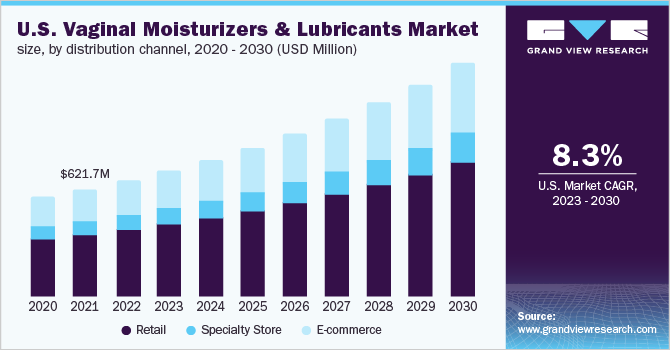
The U.S. vaginal moisturizers and lubricants market size was valued at USD 621.7 million in 2021 and is expected to expand at a compound annual growth rate (CAGR) of 9.18% over the forecast period from 2022 to 2030. Market growth can be attributed to growing awareness regarding sexual wellness and increasing prevalence of vaginal dryness. Open conversations around sexual health, coupled with reduced social stigma, is likely to fuel the market for vaginal moisturizers and lubricants over the forecast period.

U.S. vaginal moisturizers & lubricants market size, by distribution channel, 2020 - 2030 (USD Million)

The ongoing movement involving the LGBTQ+ community and the increasing acceptance is likely to increase the demand for various sexual wellness products. June is celebrated as Pride Month in the U.S., which is aimed at promoting equality and dignity coupled with increasing awareness. Women reaching menopause often face difficulty in having sexual intercourse due to thinning vaginal tissues and dryness owing to the lack of estrogen. Gel or liquid lubricants are often recommended for women with mild vaginal dryness.

Gather more insights about the market drivers, restraints, and growth of the U.S. Vaginal Moisturizers And Lubricants market

A considerable number of young people are not aware of sexual health, which can increase the prevalence of STDs. According to the CDC, around 20.0 million new cases of STDs occur every year, and young people aged between 15 and 24 contribute to around half of them. Various social media movements, such as the third wave of feminism, are aimed at breaking taboos around sexual health and assisting in changing the general attitude towards sex. OTT platforms are launching several web series regarding sex education to increase awareness among teenagers and young adults. Over the past few years, the sexual wellness industry has shifted its focus toward women’s products.

The growth of the sexual wellness industry in the U.S. has encouraged a lot of indigenous brands to launch their products. There has been an increase in demand for wellness products that are vegan and/or cruelty-free, which is likely to drive the market. For instance, The Yes Yes Company Ltd. offers plant-based products. Its products do not contain any chemicals, parabens, or phthalate plasticizers, which is in line with ongoing trends in the beauty and wellness industry.

Browse through Grand View Research's Medical Devices Industry Related Reports

Vaginal Rejuvenation Market - The global vaginal rejuvenation market size was estimated at USD 1.5 billion in 2021 and is expected to expand at a compound annual growth rate (CAGR) of 13.1% by 2030.

Personal Lubricants Market - The global personal lubricants market size was valued at USD 1.3 billion in 2022 and is expected to expand at a compound annual growth rate (CAGR) of 9.65% from 2023 to 2030.

U.S. Vaginal Moisturizers and Lubricants Industry Segmentation

Grand View Research has segmented the U.S. vaginal moisturizers and lubricants market on the basis of distribution channel:

U.S. Vaginal Moisturizers And Lubricants Distribution Channel Outlook (Revenue, USD Billion, 2017 - 2030)

  • Retail
  • Specialty Store
  • E-Commerce

Market Share Insights:

January 2020: Dare Bioscience and Bayer AG entered into an agreement pertaining to commercial rights to develop a hormone-free monthly contraceptive Ovaprene for the U.S. market.

October 2017: Searchlight Pharma made a financial partnership with Emerillon Capital and Fonds de solidarité FTQ and is expected to promote the growth of Searchlight Pharma.

Key Companies profiled:

Some prominent players in the U.S. Vaginal Moisturizers and Lubricants Industry include

  • Church & Dwight Co., Inc.
  • Bayer AG
  • Reckitt Benckiser Group plc.
  • The Yes Yes Company Ltd.
  • Searchlight Pharma
  • KESSEL medintim GmbH

 Order a free sample PDF of the U.S. Vaginal Moisturizers and Lubricants Market Intelligence Study, published by Grand View Research.
U.S. Healthcare Discount Plan Market Top Players are Carrington International Corporation and Coverdell

U.S. Healthcare Discount Plan Industry Overview

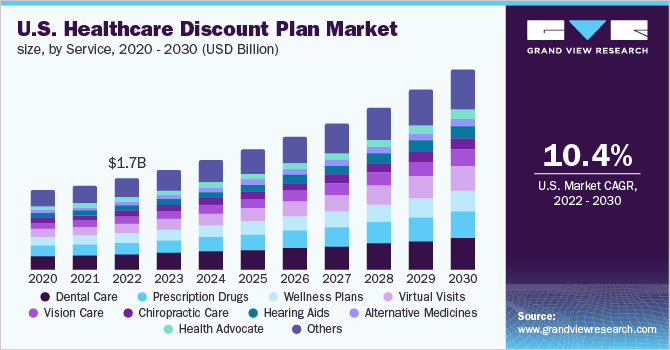
The U.S. healthcare discount plan market size was valued at USD 1.6 billion in 2021 and is projected to expand at a compound annual growth rate (CAGR) of 10.2% from 2022 to 2030. The strong presence of Discount Medical Plan Organizations (DMPOs) offering affordable discount plans for distinct services, such as health advocacy, vision care, virtual visits, chiropractic care, dental care, alternative medicines, and prescription drugs, in the U.S. is a key factor expected to boost the DMPOs familiarity among the U.S. patient population. The U.S. market has a wide array of highly discounted health programs packaged with multiple benefits, such as individual coverage & family coverage.

U.S. healthcare discount plan market size, by service, 2020 - 2030 (USD Billion)

Furthermore, these programs offer higher discounts as compared to traditional high monthly premium insurance plans. The abovementioned factors accelerate the adoption of healthcare discount plans. Key market players are focusing on devising strategies to increase public-private partnerships, collaborations, & investments and expand business coverage to minimize medication costs and offer users affordable & accessible healthcare solutions. Furthermore, increasing collaborative efforts among care providers and healthcare payers & insurance providers to reduce costs & expenses and enhance patient experience & quality of care is significantly improving clinical outcomes and boosting the market growth.

Gather more insights about the market drivers, restraints, and growth of the U.S. Healthcare Discount Plan market

However, the presence of affordable health insurance companies in the country offering multiple health service plans is hindering the market growth. Some players, such as United Healthcare, Cigna, BlueCross, Kaiser Permanente, and BlueShield, offer affordable and better insurance plans compared to medical discount plans. Thus, the high adoption of cheap insurance coverage plans over conventional discount plans is expected to limit the growth of the market. However, despite the presence of a significant number of players, there is a greater need to reinstate a well-structured insurance market, which is capable of providing healthcare coverage at reasonable prices to most individuals not covered by employer-sponsored insurance policies or who are not considered under public entitlement programs.

The growing healthcare costs are driving consumers to rapidly adopt health discount plans. Although healthcare bundled payments offer value for providers, payers, and patients, consumers are not capable of exploiting their full potential. However, a wide range of healthcare discount solutions is being actively developed in the private health sector with the motive of encouraging demand for forward-looking health plans. Key market participants are focusing on devising innovative product & service offerings to expand their portfolio and serve the growing demand. These key players promote affordable medical treatment plans through their service portfolio.

For instance, the Health Care Transformation Task Force-an association of key health payers and health providers including Anthem, Aetna, and state-level Blue Cross Blue Shield plans, Sentara Healthcare, and Geisinger-had around 50.0% of its payer and provider members’ payment arrangements done via APMs in 2017, which is expected to increase to nearly 75.0% by 2020. Similarly, United Healthcare in March 2019, through its California Health Care Investment Program, invested USD 19 million to develop multiple health centers in California, improve the patient care experience, enhance clinical outcomes across California and deliver care to underserved communities of Santa Clara, Solano, and Santa Barbara.

The growing demand for health/medical discount plans to curb rising costs is anticipated to propel market growth. According to Centers for Medicare & Medicaid Services (CMS) and National Health Expenditure Accounts (NHEA) estimates, the healthcare spending in the U.S. in 2020 is USD 4.1 trillion or USD 12,530 per individual, accounting for 19.7% of the country’s overall GDP, thus, making the U.S. healthcare industry one of the largest industries. A growing number of mergers & acquisitions, collaborations, partnerships, and joint ventures among industry players enhance the quality of care, offer affordable treatment options, and deliver patient satisfaction.

For instance, in April 2020, Cigna & Express Scripts partnered with Buoy Health to provide screening tools for COVID-19 and help customers & members understand their risks regarding the pandemic. In December 2019, Humana acquired Enclara and this acquisition helped Humana advance in its clinical management expertise by expanding and leveraging Enclara’s capabilities.

Browse through Grand View Research's Healthcare IT Industry Related Reports

U.S. Advance Care Planning Solutions Market - The U.S. advance care planning solutions market size was valued at USD 85.9 billion in 2021 and is anticipated to expand at a CAGR of 12.7% from 2022 to 2030.

Surgical Planning Software Market - The global surgical planning software market was valued at USD 102.1 million in 2022 and is estimated to expand at a compound annual growth rate (CAGR) of 6.5% from 2023 to 2030.

U.S. Healthcare Discount Plan Industry Segmentation

Grand View Research has segmented the U.S. healthcare discount plan market based on service:

U.S. Healthcare Discount Plan Service Outlook (Revenue, USD Million, 2016 - 2030)

  • Health Advocate
  • Virtual Visits
  • Alternative Medicines
  • Prescription Drugs
  • Dental Care
  • Vision Care
  • Hearing Aids
  • Chiropractic Care
  • Nurse Services
  • Vitamins & Supplements
  • Wellness Plans
  • Podiatry Plans
  • Others

Market Share Insights:

January 2020: Cigna and Oscar entered a strategic partnership to deliver commercial health solutions to small businesses, enabling them to expand their network & product choice, while remaining cost-effective.

June 2019: Optum acquired DaVita Medical Group serving more than 80 health plans to lower healthcare costs (primary, specialty, urgent, and surgical care) and improve patient experience & health.

Key Companies profiled:

Some prominent players in the U.S. Healthcare Discount Plan Industry include

Discount Medical Plan Organizations (DMPOs)

  • New Benefits, Ltd.
  • Access One Consumer Health, Inc.
  • CARRINGTON International Corporation
  • Ameriplan
  • Coverdell
  • Alliance Healthcard of Florida, Inc.

Marketer

  • United Health Group
  • American Dental Care Partners, Inc.
  • Blue Cross and Blue Shield Association
  • DentalPlans.com, Inc.
  • Sam’s West, Inc.
  • Humana, Inc.
  • Cigna
  • Freshbenies
  • Discounts by Design
  • Xpress Healthcare

 Order a free sample PDF of the U.S. Healthcare Discount Plan Market Intelligence Study, published by Grand View Research.
Mobile Cardiac Telemetry Systems Market is fuelled by Presence of Advanced Healthcare Infrastructure

Mobile Cardiac Telemetry Systems Industry Overview

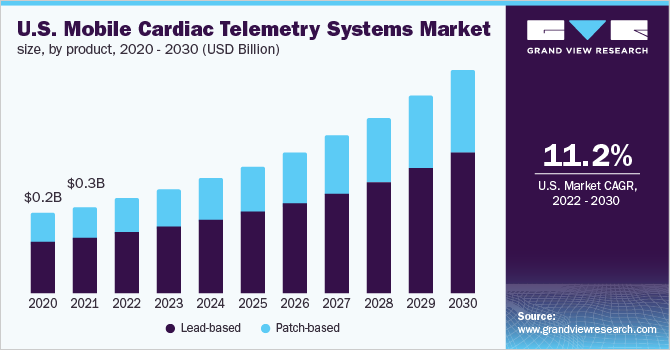
The global mobile cardiac telemetry systems market size was estimated at USD 833.8 million in 2021 and is expected to register a compound annual growth rate (CAGR) of 12.1% from 2022 to 2030. The increasing prevalence of cardiovascular disorders and associated mortality has increased awareness about the benefits of Mobile Cardiac Telemetry (MCT) devices, which is propelling market growth. For instance, according to the Centers for Disease Control and Prevention (CDC), in 2017, 800,000 deaths were reported due to cardiac disorders in the U.S., which is also the leading cause of death in the country. Furthermore, physical inactivity due to a sedentary lifestyle coupled with tobacco smoking and obesity has increased cardiac disorder morbidities.

U.S. mobile cardiac telemetry systems market size, by product, 2020 - 2030 (USD Billion)

The COVID-19 outbreak caused due to SARS-CoV-2, already affected millions of people globally as of June 2020. The contagious coronavirus is also having an economic impact and implications on most of the sectors including the medical device industry. Initially, the patients showed improvement with the combined usage of hydroxychloroquine and azithromycin, but it has a risk of prolonging the QT interval. Mobile cardiac telemetry is widely used in such patients to remotely monitor them to reduce hospitalization.

Gather more insights about the market drivers, restraints, and growth of the Global Mobile Cardiac Telemetry Systems Market

Moreover, the device is also helpful for the rapid detection of arrhythmogenic risks for such COVID-19 patients in the outpatient setting. Hospitals are currently overburdened with patients due to the pandemic and in such cases, these devices are very helpful for remote monitoring, which is further boosting the growth of the market for the mobile cardiac telemetry system. For instance, in March 2020 Biotelemetry, Inc. expanded its mobile cardiac outpatient telemetry monitoring program to COVID-19 patients in various institutions in the U.S. to monitor QT prolongation associated with hydroxychloroquine and azithromycin medication.

The increasing prevalence of arrhythmia is one of the major factors contributing to the growth of the market for mobile cardiac telemetry system. According to the Centres for Disease Control and Prevention (CDC), around 12.1 million people are expected to suffer from atrial fibrillation (AFib), a type of heart arrhythmia, by 2030. As per the same source, AFib was mentioned on 183,321 death certificates in the U.S. in 2019. The industry players are constantly trying to develop micro-sized handy devices to sustain their market share. For instance, in September 2019, iRhythm Technologies, Inc. collaborated with Verily Life Sciences to combine iRhythm’s AI-based system with Verily’s data analytical technology to screen, monitor, and diagnose atrial fibrillation.

Browse through Grand View Research's Medical Devices Industry Related Reports

Cardiac Resynchronization Therapy Market - The cardiac resynchronization therapy market size was valued at USD 4.26 billion in 2022 and is estimated to expand at a compound annual growth rate (CAGR) of 4.8% from 2023 to 2030.

Cardiac Catheters & Guidewires Market - The global cardiac catheters & guidewires market was valued at USD 12.98 billion in 2021 and is expected to expand at a compound annual growth rate (CAGR) of 7.56% from 2022 to 2030.

Mobile Cardiac Telemetry Systems Industry Segmentation

Grand View Research has segmented the global mobile cardiac telemetry systems market on the basis of application, end use, and region:

Mobile Cardiac Telemetry Systems Application Outlook (Revenue, USD Million, 2017 - 2030)

  • Lead-based
  • Patch-based

Mobile Cardiac Telemetry Systems End-use Outlook (Revenue, USD Million, 2017 - 2030)

  • Hospitals
  • Cardiac Centers
  • Others

Mobile Cardiac Telemetry Systems Regional Outlook (Revenue, USD Million, 2017 - 2030)

  • North America
  • Europe
  • Asia Pacific
  • Latin America
  • MEA (Middle East & Africa)

Market Share Insights:

May 2021: VitalConnect launched the VitalPatch RTM mobile cardiac telemetry solution. The solution has a flexible and programmable platform, which covers various cardiac monitoring needs.

July 2019: Biotelemetry acquired ADEA Medical AB. This acquisition is aligned with BioTelemetry’s longer-term strategy to expand its international business in the Nordics and other European countries.

Key Companies profiled:

Some prominent players in the global Mobile Cardiac Telemetry Systems Industry include

  • BioTelemetry, Inc.
  • ScottCare
  • Biotricity Inc
  • Welch Allyn
  • Applied Cardiac Systems Inc
  • Medicomp Inc.
  • Preventice Solutions
  • Telerhythmics LLC
  • Zoll Medical Corporation
  • iRhythm Technologies, Inc.

Order a free sample PDF of the Mobile Cardiac Telemetry Systems Market Intelligence Study, published by Grand View Research.

Artificial Intelligence in Diagnostics Market is driven by Increasing Use of AI in Chronic Disease Management

Artificial Intelligence in Diagnostics Industry Overview

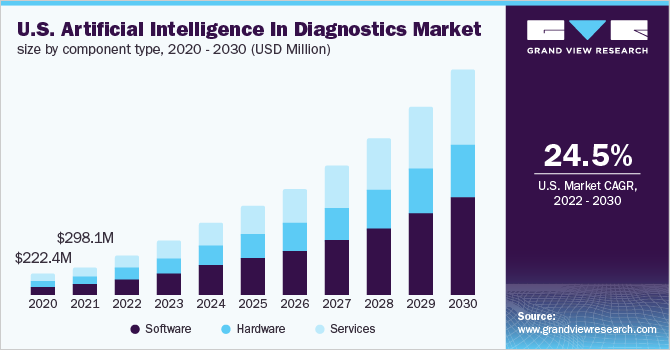
The artificial intelligence in diagnostics market size was valued at USD 576.3 million in 2021 and is projected to grow at a compound annual growth rate (CAGR) of 26.3% from 2022 to 2030. The healthcare industry is rapidly integrating artificial intelligence (AI)-powered solutions in various verticals to achieve higher operational & clinical outcomes, which is a key contributing factor to the growth. Overburdened healthcare systems struggling with the rapidly rising global prevalence of chronic diseases are driving the demand for automated, innovative processes. Furthermore, the shortage of care providers is contributing to the growing demand for AI-powered systems. For instance, the WHO estimates in 2019 recorded the shortage of care providers to be approximately 4.3 million across the globe.

U.S. Artificial Intelligence In Diagnostics market size by component type, 2020 - 2030 (USD Million)

The ongoing COVID-19 pandemic exposed the shortcomings of the existing healthcare system and accelerated the adoption of digital technologies, such as AI in diagnostics, to accurately analyze complex datasets, thereby, reducing the burden of administrative & operational tasks on clinicians. The emergence of startups and growing recognition in form of funding & investments boosted the market growth. Healthcare startups rapidly began adopting AI-powered systems and receive recognition in the form of favorable government support and funding from private investors & venture capitalists. For instance, in May 2020, Arterys raised an investment of USD 28 million in Series C funding led by Benslie Investment Group and Temasek Holdings to expand its product portfolio.

Gather more insights about the market drivers, restraints, and growth of Global Artificial Intelligence in Diagnostics Market

Similarly, in September 2020, Aidoc received funding of USD 20 million in a Series B round led by Peg Capital. Key players are focusing on devising innovative product development strategies utilizing AI-backed solutions in diagnostics. For instance, in June 2020, GE Healthcare’s Thoracic Care Suite was used in detecting chest anomalies using AI-based diagnostic solutions. In November 2020, Alivecor received U.S. FDA approval for Kardia AI V2 used in advanced ECG diagnostics. The medical diagnostics market is constantly transforming and rapidly adopting innovative, advanced solutions, such as AI-backed algorithms.

Advancements in healthcare IT infrastructure and regular technological developments in cloud storage, computer processing, and machine learning algorithms are supporting the integration of AI-powered systems in diagnostics to provide efficient & accurate diagnosis allowing care providers to devise timely & adequate treatment plans. Pathology and radiology services are witnessing a widespread adoption of AI-based algorithms. For example, AI-powered radiology solutions can collect multiple datasets from imaging modalities and accurately analyze them from the radiologist. Furthermore, several research studies on AI integration in pathology are being conducted and some of the studies are on chronic kidney disease & kidney function tests, and metastatic breast cancer detection.

Moreover, AI-powered diagnostics have played a vital role in detecting & diagnosing the coronavirus strains in patients during the pandemic. The global incidence rate of chronic diseases is rapidly rising and is directly contributing to the surge in demand for early diagnosis and initial treatment management plans, which is positively impacting the development and growth of the market. For instance, as per the WHO estimates in 2018, the global cancer prevalence rate was 18.1 million and is anticipated to reach 22 million by 2034. Most chronic diseases are preventable if detected early, thereby, boosting the adoption rate of AI-based diagnostics, which aids care providers in devising treatment plans to prevent or delay chronic disease. Healthcare professionals can provide a preventive and proactive care approach instead of a reactive approach by using these advanced diagnostic solutions.

Key participants are focusing on innovating solutions to deliver an accurate and rapid diagnosis of chronic diseases. For instance, in February 2018, Verily introduced an AI-powered algorithm, which could be used in detecting cardiovascular diseases through analyzing retinal scans. Key market players are focusing on their product development strategies to expand their portfolios. Furthermore, key participants are devising their collaborations and mergers & acquisition strategies to gain a competitive edge in the market and expand their business. For instance, in April 2020, Lucid Health collaborated with Riverain Technologies to develop AI-based solutions for medical imaging and radiology. In June 2020, Inui Health was acquired by Healthy.io and through this acquisition, Healthy.io plans to deliver advanced home healthcare urinalysis solutions.

Browse through Grand View Research's Healthcare IT Industry Related Reports

AI In Life Science Analytics Market - The global AI in life science analytics market size was valued at USD 1.5 billion in 2022 and is expected to expand at a compound annual growth rate (CAGR) of 11.1% from 2023 to 2030.

AI In Precision Medicine Market - The global artificial intelligence in precision medicine market size was valued at USD 946.0 million in 2021 and is expected to grow at a compound annual growth rate (CAGR) of 35.7% over the forecast period from 2022 to 2030.

Artificial Intelligence in Diagnostics Industry Segmentation

Grand View Research has segmented the global artificial intelligence in diagnostics market report on the basis of component, diagnosis type, and region:

AI In Diagnostics Component Outlook (Revenue, USD Million, 2016 - 2030)

  • Software
  • Hardware
  • Services

AI In Diagnostics Diagnosis Type Outlook (Revenue, USD Million, 2016 - 2030)

  • Cardiology
  • Oncology
  • Pathology
  • Radiology
  • Chest & Lung
  • Neurology
  • Others

Artificial Intelligence In Diagnostics Regional Outlook (Revenue, USD Million, 2016 - 2030)

  • North America
  • Europe
  • Asia Pacific
  • Latin America
  • MEA (Middle East & Africa)

Market Share Insights:

November 2020: Zebra Medical Vision and Storm ID partnered to develop advanced AI-based algorithms to diagnose osteoporosis by analyzing multiple medical image datasets and electronic health information.

Key Companies profiled:

Some prominent players in the global Artificial Intelligence In Diagnostics Industry include

  • Aidoc
  • AliveCor, Inc.
  • Vuno, Inc.
  • Digital Diagnostics, Inc.
  • Siemens Healthineers
  • Neural Analytics
  • Riverain Technologies
  • Zebra Medical Vision, Inc.
  • GE Healthcare
  • Imagen Technologies

Order a free sample PDF of the Artificial Intelligence In Diagnostics Market Intelligence Study, published by Grand View Research.

Urban Growth and Electricity Demand Expand the Footprint of the Protective Relay Market

Protective relays rarely make headlines, but power systems depend on them. They detect faults, isolate the affected section in milliseconds,...